13 Common Causes of Brown Leaf Tips
Brown leaf tips are one of the most common problems people notice on indoor plants. You may see the edges of leaves turning brown, dry, crispy, or slightly yellow before the damage spreads further. While brown leaf tips do not always mean that a plant is dying, they are often a sign that something in the plant’s environment needs attention.
The good news is that most causes of brown leaf tips are easy to identify and correct. Problems such as underwatering, low humidity, too much fertilizer, poor water quality, and incorrect lighting can all affect the appearance of your leaves.
In this guide, we will cover 13 common causes of brown leaf tips, explain how to recognize each problem, and share simple ways to help your indoor plants recover.
1. Underwatering
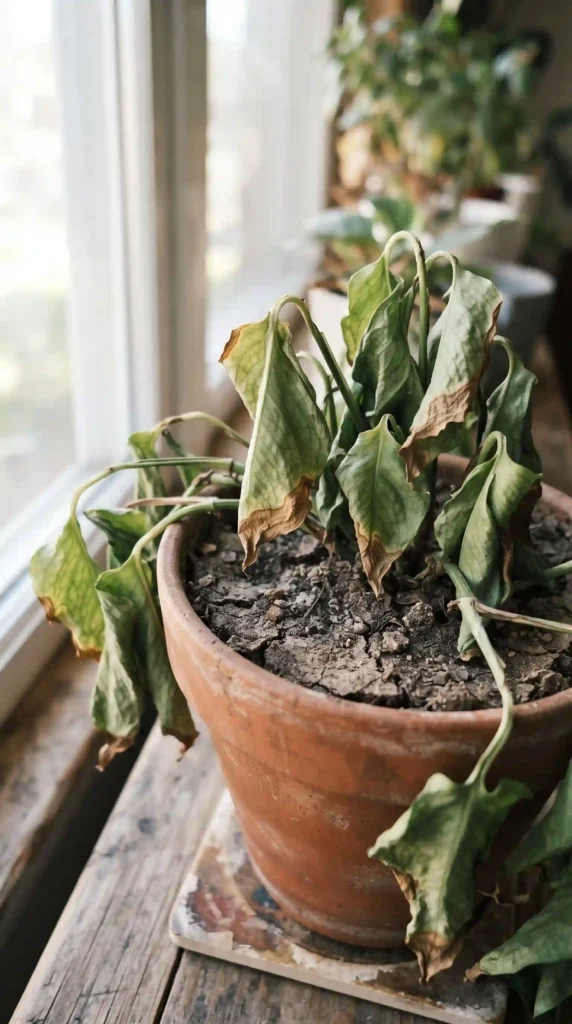
One of the most common causes of brown leaf tips is underwatering. When a plant does not receive enough water, its leaves may lose moisture and start becoming dry and crispy.
The leaf tips are often affected first because they are farther away from the plant’s main water supply. If the soil stays dry for too long, the brown areas may slowly move toward the center of the leaf.
Check the soil before watering. If the top few inches feel completely dry and the plant looks droopy, it may need more water.
Try to create a regular watering routine based on the plant’s needs rather than watering randomly.
2. Low Humidity
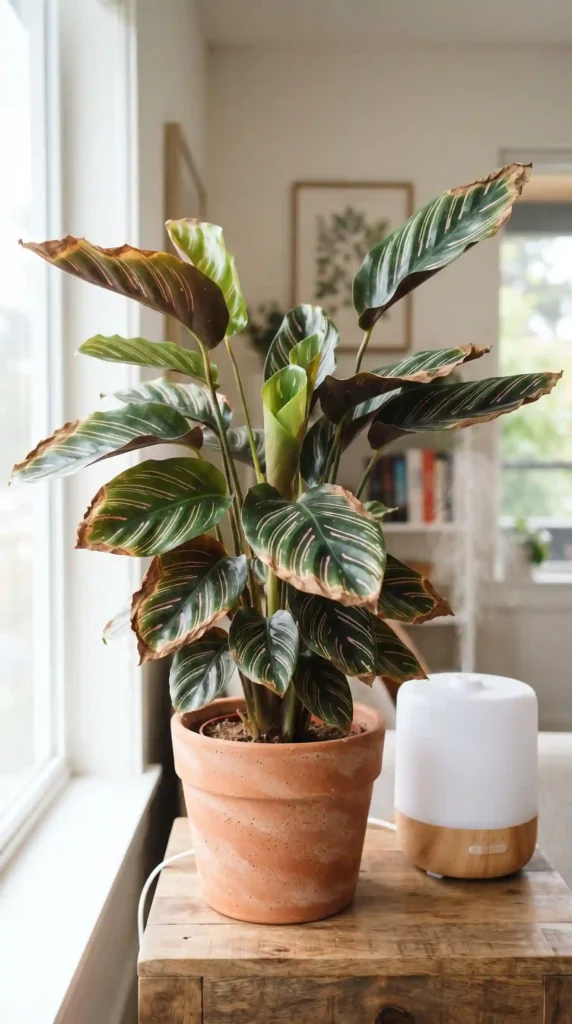
Many popular houseplants come from naturally humid environments. Indoor air can become very dry, especially when air conditioners, heaters, or fans are running frequently.
Low humidity can cause leaves to lose moisture faster than the roots can replace it. This often results in brown, crispy leaf tips.
Plants such as ferns, calatheas, prayer plants, and some tropical houseplants are particularly sensitive to dry air.
You can improve humidity by grouping plants together, using a humidifier, or placing plants in naturally more humid areas of your home.
3. Overwatering
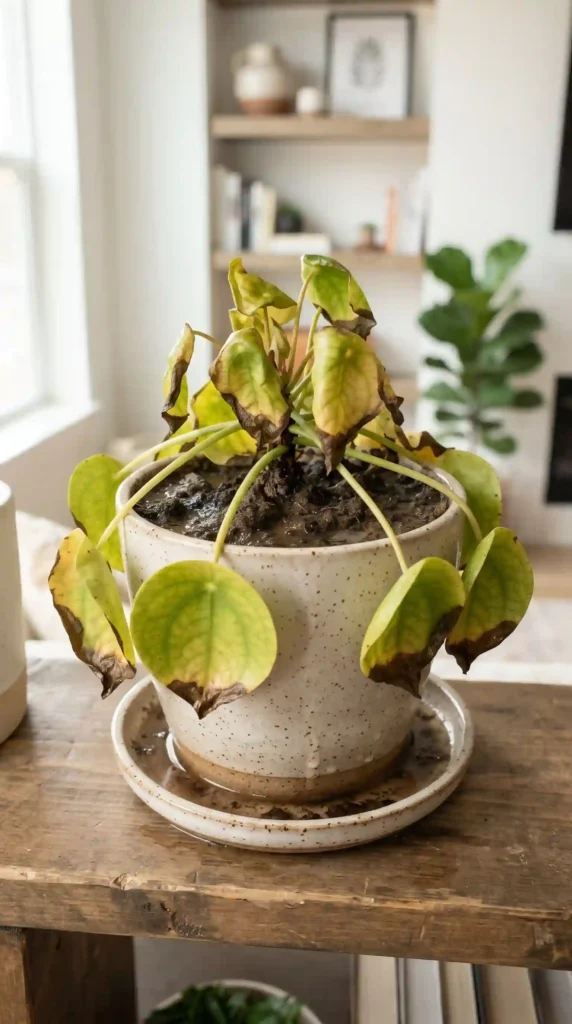
Although underwatering can cause brown leaf tips, too much water can create a similar problem.
When plants are constantly sitting in wet soil, their roots may struggle to get enough oxygen. Poorly functioning roots cannot absorb water and nutrients properly, even when plenty of water is available.
Overwatering can also increase the risk of root problems.
Look at the soil before watering again. If it remains wet for many days, reduce watering frequency and make sure the pot has drainage holes.
4. Poor Drainage
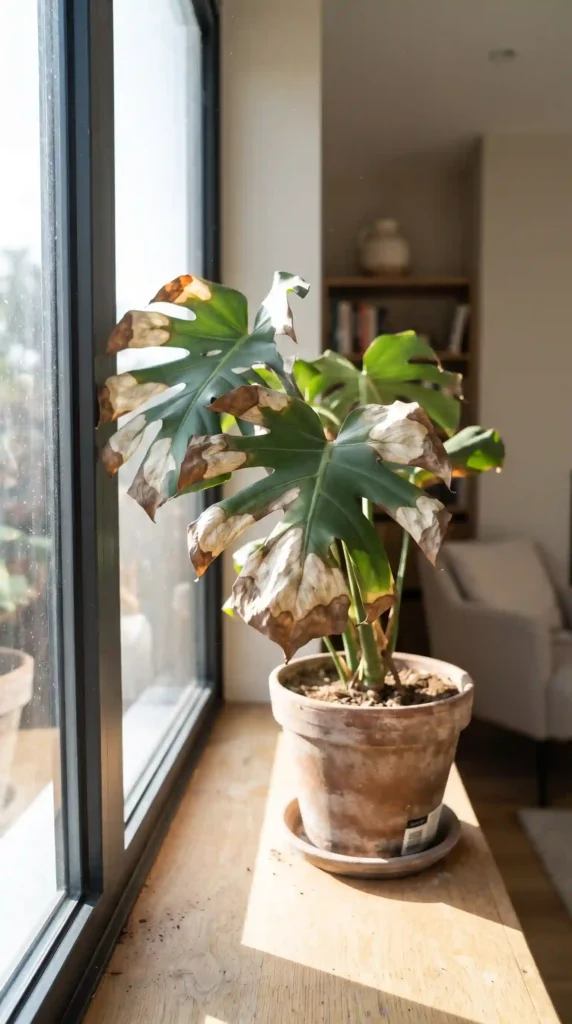
Poor drainage is another major reason plants develop unhealthy leaves.
If excess water cannot escape from the pot, the soil can remain saturated for too long. This can damage roots and eventually show up as yellowing or browning leaves.
Always choose a container with drainage holes. Avoid letting your plant sit in a tray full of standing water for long periods.
A well-draining potting mix can also help prevent water from staying around the roots.
5. Too Much Fertilizer
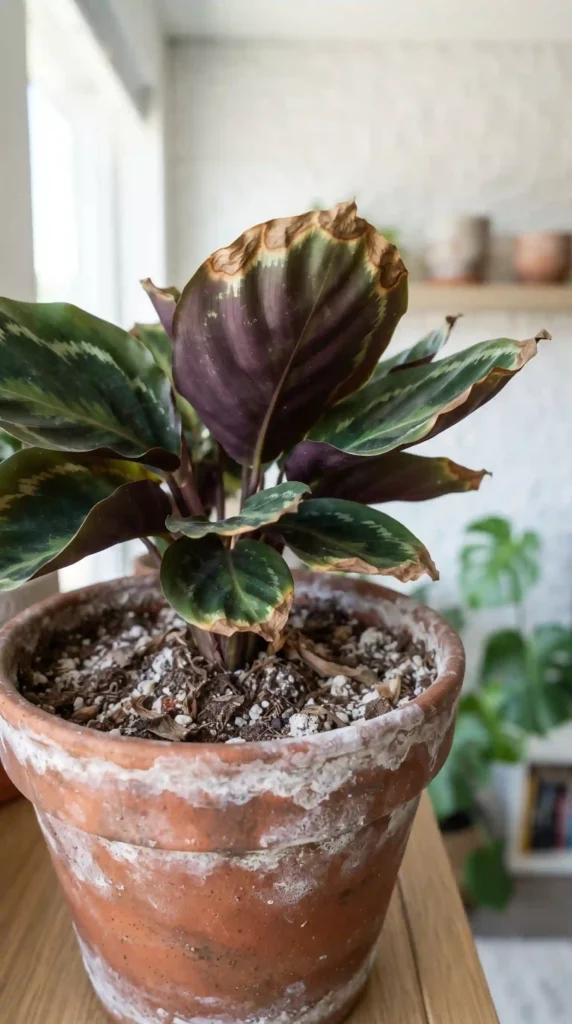
Fertilizer provides nutrients that help plants grow, but using too much can damage the roots.
Excess fertilizer can build up in the soil and create a high concentration of salts. These salts can interfere with water absorption and may cause brown or burned-looking leaf tips.
If you regularly fertilize your houseplants and suddenly notice crispy brown edges, fertilizer buildup may be responsible.
Follow the recommended fertilizer instructions and avoid applying more than the plant needs. Occasionally flushing the soil with clean water can help remove excess salts, provided the pot drains properly.
6. Poor Water Quality
The water coming from your tap may contain minerals, salts, chlorine, or other substances that some sensitive plants do not tolerate well.
Over time, mineral deposits can build up in the soil. Sensitive plants may respond with brown leaf tips or edges.
If you notice white mineral deposits around the soil or pot, your water may be contributing to the problem.
Depending on the plant, filtered water, rainwater, or another suitable water source may help. However, not every houseplant requires special water, so consider the plant’s specific needs before making changes.
7. Too Much Direct Sunlight
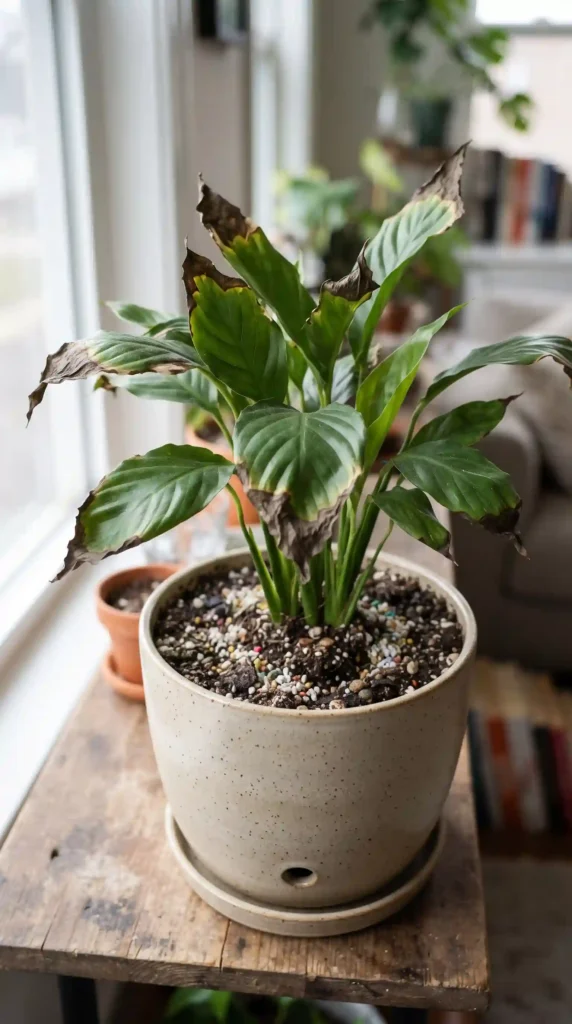
Light is essential for healthy plant growth, but too much intense sunlight can damage leaves.
Plants that prefer indirect light may develop brown, dry, or scorched areas when placed directly in strong sunlight for long periods.
Brown patches caused by sun exposure are often found on the parts of the leaves facing the window or strongest light source.
Move sensitive plants slightly farther away from the window or use a sheer curtain to soften intense sunlight.
8. Not Enough Light
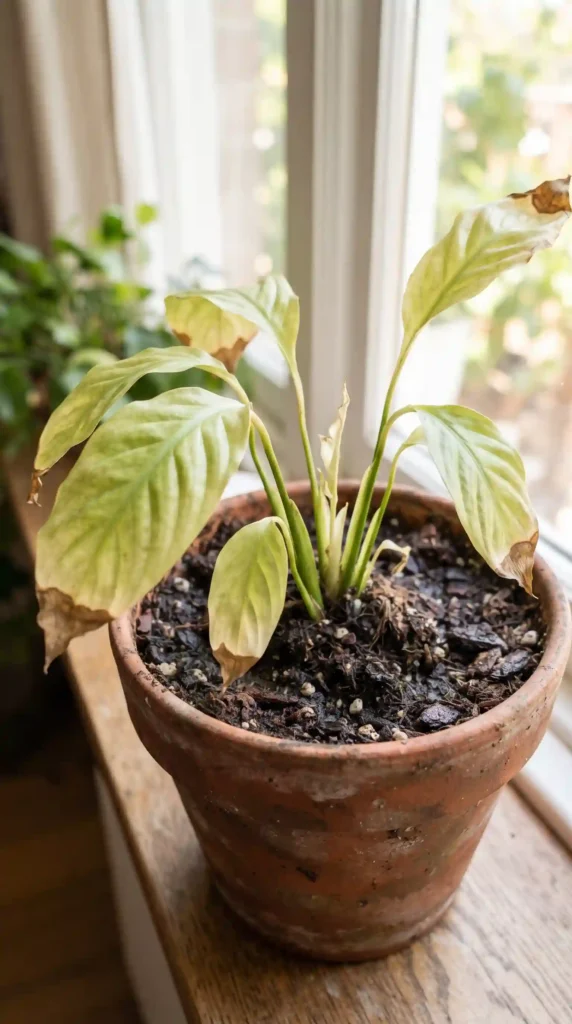
Low light can also contribute to unhealthy leaves, although the symptoms may be different from direct sun damage.
When plants receive too little light, they may grow slowly, produce smaller leaves, or lose their normal color. Weak growth can make the plant less capable of maintaining healthy foliage.
If your plant is far away from any natural light source, consider moving it closer to a bright window with indirect light.
Artificial grow lights can also help plants that do not receive enough natural sunlight indoors.
9. Temperature Stress
Sudden temperature changes can cause stress and contribute to brown leaf tips.
Houseplants generally prefer stable conditions. Placing a plant next to a cold window, heating vent, radiator, or air-conditioning outlet can expose it to uncomfortable temperature changes.
Cold drafts can be especially damaging to tropical plants.
Try to keep plants away from strong heating and cooling sources. A stable indoor temperature is usually better than frequent changes.
10. Too Much Salt in the Soil
Salt buildup can happen naturally when fertilizer is used repeatedly or when irrigation water contains minerals.
Over time, these substances can accumulate in the potting soil. The roots may have difficulty taking up water normally, leading to dry and brown leaf tips.
If you notice a white crust on the soil surface or around the edge of the pot, salt buildup may be present.
Using appropriate amounts of fertilizer and occasionally flushing the soil with water can help reduce accumulation.
11. Root Problems
Healthy roots are extremely important for healthy leaves. If roots become damaged because of overwatering, poor drainage, disease, or compacted soil, the plant may struggle to absorb water and nutrients.
The result can be yellowing leaves, wilting, slow growth, and brown tips.
If the problem continues despite proper watering and lighting, inspect the roots when appropriate. Healthy roots generally look firm and have a normal appearance for the plant, while severely damaged roots may be soft or unpleasant-smelling.
Repotting may be necessary when the root system is seriously affected.
12. Natural Aging
Not every brown leaf tip means something is wrong.
Older leaves naturally become less productive as plants grow. Some leaves may gradually turn yellow, brown, and eventually fall from the plant.
If only one or two of the oldest leaves are changing while the rest of the plant looks healthy, natural aging may be the reason.
Look at the overall condition of the plant rather than focusing on a single older leaf.
13. Environmental Changes
Plants can react to sudden changes in their environment.
Moving a plant from one room to another, changing its lighting, repotting it, changing watering habits, or bringing it home from a garden center can cause temporary stress.
This stress may appear as brown leaf tips, yellowing, drooping, or leaf drop.
Give the plant time to adjust. Try to make changes gradually instead of changing several environmental conditions at the same time.
How to Identify the Cause of Brown Leaf Tips
Finding the exact cause becomes easier when you look at several symptoms together.
Check the soil first. If it is extremely dry, underwatering could be responsible. If it stays wet for a long time, overwatering or poor drainage may be involved.
Next, examine the plant’s location. Ask yourself whether it receives intense direct sunlight, very little light, cold drafts, or hot air from a heater or air conditioner.
You should also check your fertilizing routine and water quality.
Looking at the entire plant gives you more useful information than examining the brown tips alone.
How to Fix Brown Leaf Tips
The best solution depends on the cause.
If the plant is too dry, improve your watering routine. If humidity is low, increase moisture around the plant. For fertilizer buildup, reduce feeding and consider flushing the soil.
If the plant receives too much direct sunlight, move it to a location with suitable indirect light. If poor drainage is causing problems, use a pot with drainage holes and an appropriate potting mix.
Avoid making too many changes at once. Changing everything suddenly can create additional stress and make it difficult to determine what actually helped.
Should You Cut Off Brown Leaf Tips?
You can trim brown leaf tips if you want the plant to look cleaner. Brown tissue will not become green again, so removing damaged areas can improve its appearance.
Use clean, sharp scissors and follow the natural shape of the leaf. Avoid cutting into healthy green tissue more than necessary.
Remember that trimming only improves the appearance. It does not solve the underlying cause of brown leaf tips.
You still need to correct the watering, humidity, lighting, temperature, fertilizer, or other environmental issue responsible for the damage.
How to Prevent Brown Leaf Tips
Prevention is usually easier than trying to correct repeated leaf damage.
Start by learning the basic requirements of each plant. Different houseplants need different amounts of water, light, humidity, and fertilizer.
Check the soil before watering instead of following a fixed schedule. Make sure containers have drainage holes and avoid leaving plants in standing water.
Keep plants away from strong drafts and extreme temperatures. Fertilize carefully and avoid giving plants more nutrients than recommended.
Regularly inspect your plants for changes. Early signs are easier to manage than severe damage.
Brown Leaf Tips on Different Types of Houseplants
Different plants may show brown tips for different reasons.
For example, tropical plants may be especially sensitive to low humidity, while drought-tolerant plants can suffer when they are watered too frequently.
Ferns often prefer consistently moist conditions and higher humidity. Snake plants and ZZ plants generally tolerate drier conditions better, but they can still develop problems when their environment is unsuitable.
This is why it is important to identify the plant before changing its care routine.
Why Brown Tips Do Not Always Mean Your Plant Is Dying
Seeing brown tips can be worrying, but a few damaged leaves do not necessarily mean that the entire plant is unhealthy.
Plants can experience temporary stress from changes in their surroundings. Older leaves can also naturally decline.
If the plant continues producing healthy new growth and most leaves look normal, the issue may be minor.
Focus on the overall condition of the plant, including new growth, soil moisture, root health, and general leaf color.
A Simple Care Routine for Healthier Leaves
A simple routine can help prevent many common causes of brown leaf tips.
Check your plants once or twice a week. Feel the soil before watering and inspect leaves for changes. Make sure each plant receives the amount of light it needs.
Remove dead or badly damaged leaves when appropriate and clean dusty leaves gently so they can make better use of available light.
During the growing season, provide suitable fertilizer according to the plant’s requirements. Avoid overfeeding.
Most importantly, pay attention to changes. Your plants often show small signs before a larger problem develops.
Final Thoughts
There are many possible reasons for brown leaf tips, including underwatering, low humidity, overwatering, poor drainage, fertilizer buildup, poor water quality, excessive sunlight, insufficient light, temperature stress, root problems, natural aging, and environmental changes.
The key is to look at the complete picture. Check the soil, light, humidity, temperature, watering habits, fertilizer use, and condition of the roots before deciding what to change.
Brown tips themselves cannot turn green again, but correcting the underlying problem can help new leaves grow healthier. With consistent care and a little observation, most indoor plants can continue producing fresh, attractive foliage.