9 Smart Irrigation Systems to Save Water and Money
Watering your garden is important, but using too much water can increase your bills and harm plant roots. A smart irrigation system helps you water your plants at the right time and in the right amount. It can use timers, soil moisture sensors, weather information, and automatic controls to make garden watering easier.
You do not need a large garden or an expensive setup to start saving water. Simple upgrades, such as drip irrigation or a rain sensor, can help reduce unnecessary watering. More advanced systems can also let you manage your garden from your phone.
In this guide, we will explore 9 smart irrigation systems to save water and money, explain how they work, and share practical tips for choosing a system that fits your garden and budget.
1. Smart Irrigation Controllers
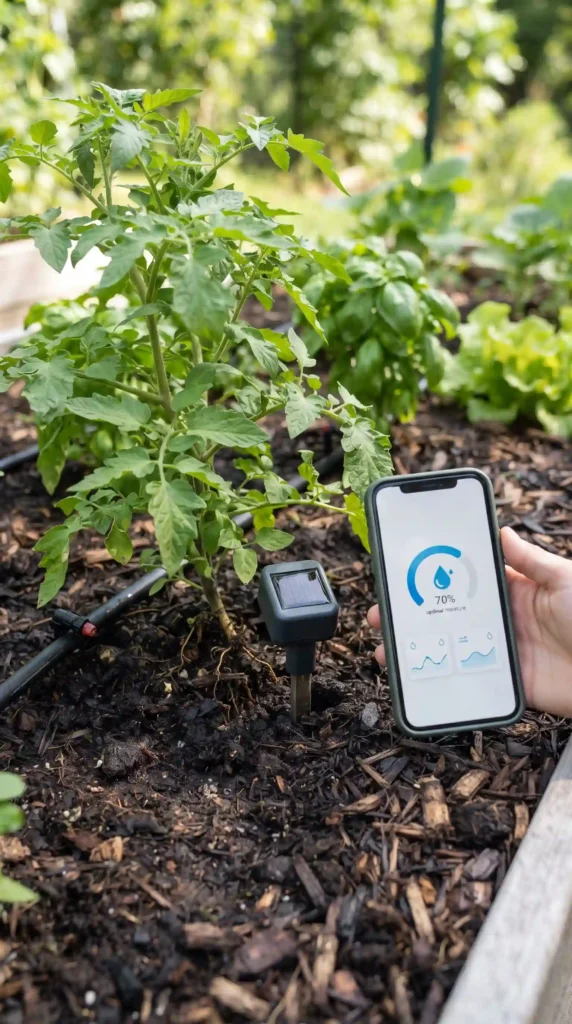
A smart irrigation controller is the central unit that manages when your garden receives water. Unlike a basic timer that follows a fixed schedule, a smart controller can adjust watering based on information such as weather conditions or soil moisture.
Some controllers connect to Wi-Fi and allow you to manage watering through a mobile app. Others work with sensors or existing irrigation equipment.
Benefits:
- Helps avoid unnecessary watering.
- Makes irrigation schedules easier to manage.
- Can adjust watering as conditions change.
- May allow remote control through a phone.
- Can help reduce wasted water when properly configured.
How to use it:
Choose a controller that works with your existing irrigation system. Set up watering zones according to the needs of your plants, and review the schedule as the weather changes.
A smart controller still needs correct settings. If the watering schedule is too long or the system is installed incorrectly, it may continue wasting water.
2. Soil Moisture Sensor Irrigation
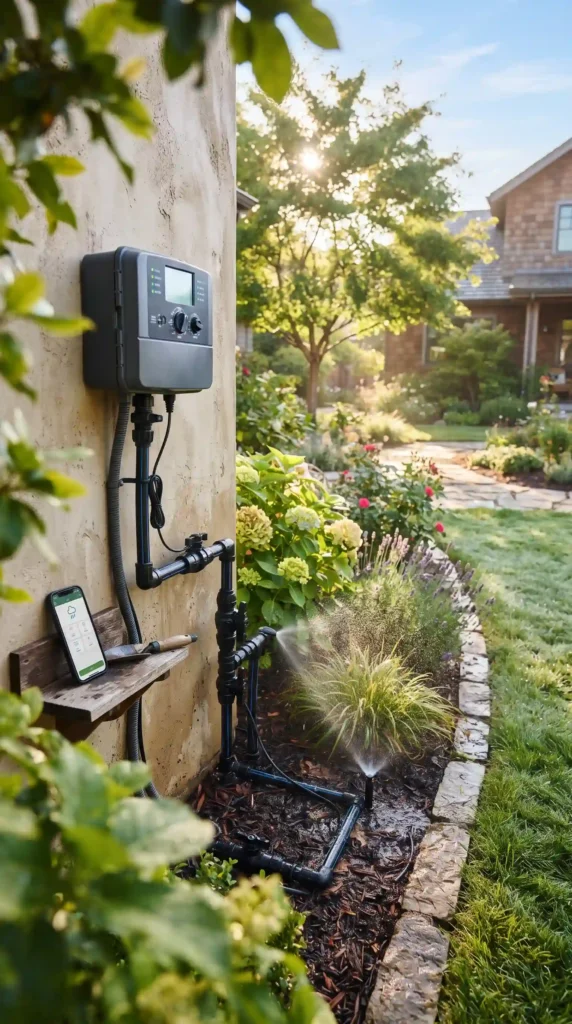
Soil moisture sensors measure how much water is present in the soil. They help you understand whether plants actually need watering instead of relying only on a fixed schedule.
Some sensors can connect directly to an irrigation controller. When the soil has enough moisture, the controller can delay or skip a watering cycle. <Cite refs={[“turn0search2″,”turn0search4”]}/>
Benefits:
- Reduces watering when the soil is already moist.
- Helps prevent unnecessary irrigation.
- Provides information about conditions around plant roots.
- Can work with some existing automatic irrigation systems.
- Helps make watering decisions more consistent.
How to use it:
Place the sensor in the root zone of the plants you want to monitor. Follow the manufacturer’s instructions for installation and settings.
Different plants have different moisture needs, so a sensor placed in one garden area may not represent the conditions in another. Use separate monitoring zones when necessary.
3. Weather-Based Smart Irrigation
Weather-based irrigation systems use weather information to help decide when and how much to water. Depending on the controller, this information may include rainfall, temperature, humidity, sunlight, and wind.
These systems can adjust irrigation schedules when conditions change, helping avoid watering during or after rainfall. <Cite refs={[“turn0search2″,”turn0search7”]}/>
Benefits:
- Helps adapt watering to changing weather.
- Can reduce unnecessary irrigation after rain.
- May adjust watering according to seasonal conditions.
- Reduces the need for constant manual schedule changes.
- Can be useful for gardens with automatic irrigation.
How to use it:
Choose a controller that can access reliable local weather information. Enter the correct garden details and check that its location settings are accurate.
Weather information may not perfectly reflect the conditions in your garden. A shaded corner and a sunny flower bed can dry out at different rates, even when they experience the same weather.
4. Smart Drip Irrigation Systems
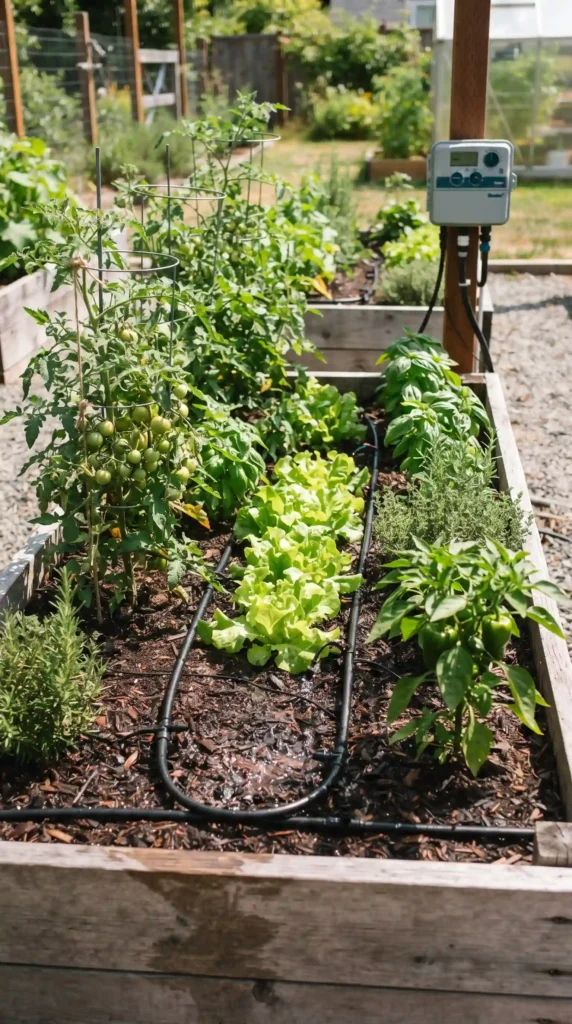
Drip irrigation delivers water slowly through small emitters or tubes near plant roots. When paired with a smart controller, it can provide water at suitable times while reducing unnecessary watering.
Drip irrigation is especially useful for many flower beds, vegetable gardens, shrubs, and container plants. It applies water more directly than many overhead watering methods, helping reduce losses from evaporation and runoff when designed correctly. <Cite refs={[“turn0search7″,”turn0search10”]}/>
Benefits:
- Delivers water close to plant roots.
- Can reduce water loss from spraying open areas.
- Works well with separate garden watering zones.
- Can be automated with a timer or smart controller.
- Helps make watering more convenient.
How to set it up:
- Choose a suitable drip line or tubing.
- Add a filter if required by the system.
- Place emitters according to plant needs.
- Connect the system to a suitable water supply.
- Set a watering schedule based on soil and weather.
Drip lines can become clogged, especially when water contains sediment. Inspect the system regularly and clean filters and emitters according to the manufacturer’s instructions.
5. Smart Sprinkler Systems
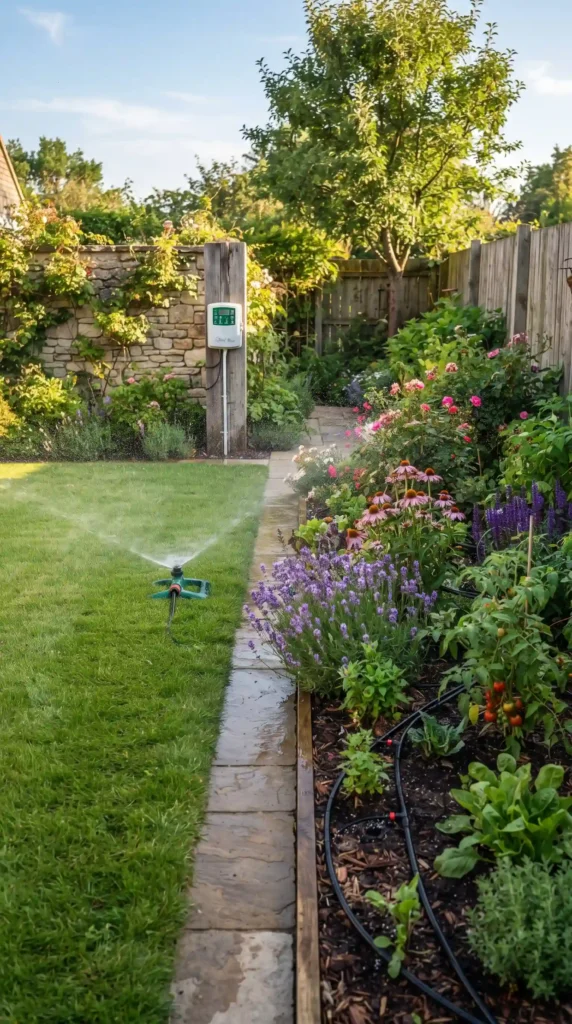
Smart sprinklers are useful for areas such as lawns where water needs to cover a wider surface. They can use automatic controllers, rain sensors, or weather-based scheduling to improve watering management.
Some systems can also control different sprinkler zones separately, allowing you to adjust watering for different parts of the garden.
Benefits:
- Covers lawn areas more evenly when correctly designed.
- Can automate regular watering.
- May skip irrigation during rainfall.
- Allows different zones to have different schedules.
- Can reduce unnecessary watering when properly adjusted.
How to use it:
Check that sprinkler heads are positioned correctly and that water reaches the intended area. Avoid spraying paths, walls, driveways, and other surfaces that do not need watering.
Wind can carry sprinkler water away from plants, so adjust the schedule and sprinkler type to suit local conditions.
6. Rain Sensors for Automatic Watering
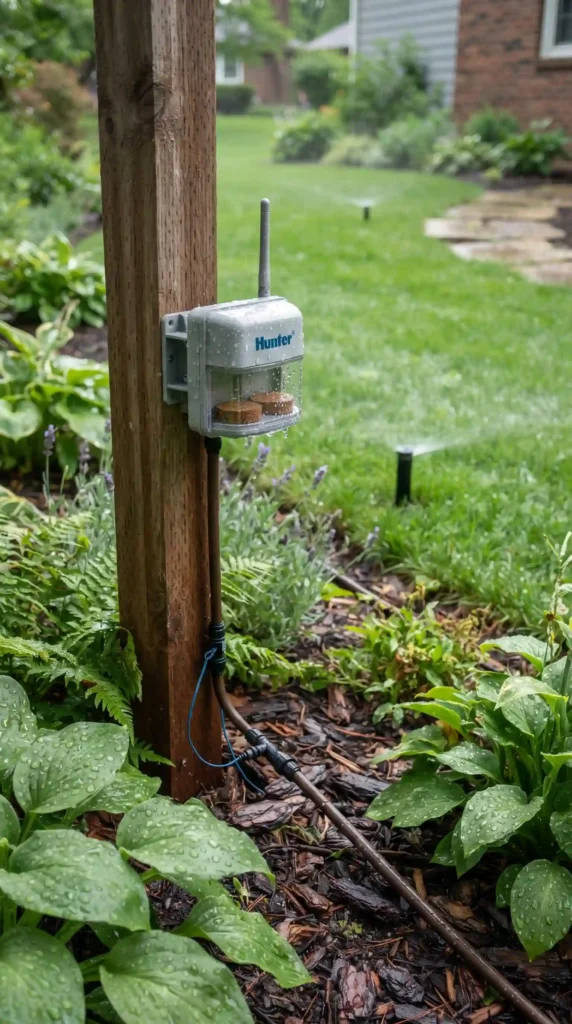
A rain sensor detects rainfall and can signal an irrigation controller to pause watering. It is a relatively simple way to prevent a garden from being watered unnecessarily during rainy conditions.
Rain sensors can be especially useful when an automatic system follows a regular schedule. Some controllers also use online weather information to delay watering when rain is expected. <Cite refs={[“turn0search7″,”turn0search2”]}/>
Benefits:
- Helps prevent watering during rainfall.
- Can work with compatible irrigation controllers.
- Reduces the need to pause schedules manually.
- May help avoid overly wet garden beds.
- Provides a practical upgrade for existing systems.
Installation tips:
Place the sensor in a suitable outdoor location where it can detect rainfall accurately. Avoid positioning it under roofs or branches that block rain.
Check the sensor regularly and make sure it communicates properly with the irrigation controller.
7. Smart Irrigation with Flow Sensors
A flow sensor measures the amount of water moving through an irrigation system. When connected to a compatible controller or monitoring setup, it can help identify unusual water use.
For example, unexpected high flow may indicate a damaged pipe or leaking connection. Very low flow may suggest a blockage or water supply problem.
Benefits:
- Helps monitor irrigation water use.
- Can identify unusual flow patterns.
- May help detect leaks or broken lines.
- Makes it easier to check system performance.
- Can support more careful water management.
How to use it:
Install a compatible flow sensor according to the manufacturer’s instructions. Check the normal flow rate of your irrigation system and learn how to interpret alerts.
A flow sensor does not automatically identify every problem. Regular inspection is still important, especially for drip lines, valves, and connections.
8. Wi-Fi Smart Hose Timers
A Wi-Fi smart hose timer connects to a garden tap and controls when water flows through a hose or compatible irrigation setup. Depending on the model, it may let you manage schedules and check watering status using a mobile app.
This option can be useful for small gardens, patios, raised beds, and container plants.
Benefits:
- Makes tap-based watering easier to automate.
- Can reduce the need to remember watering times.
- May allow remote schedule adjustments.
- Works with compatible hoses and drip systems.
- Can be a convenient starting point for smart watering.
How to use it:
Choose a timer that matches your tap connection, water pressure, and irrigation equipment. Follow the setup instructions and check for leaks after installation.
A hose timer may follow a schedule without knowing whether every plant needs water. If the model does not use soil or weather data, you will still need to adjust its schedule as conditions change.
9. Solar-Powered Smart Irrigation Systems
Solar-powered irrigation systems use energy from sunlight to operate some of their components. Depending on the design, solar power may run a pump, controller, or other irrigation equipment.
These systems can be useful in locations where access to mains electricity is limited. Some small setups are designed for container gardens, while larger systems may be used in agricultural settings.
Benefits:
- Can reduce dependence on mains electricity.
- May support irrigation in suitable off-grid locations.
- Can be combined with timers or sensors.
- Offers an option for sunny outdoor spaces.
- May help automate watering where power access is limited.
How to use it:
Choose a system sized for your water supply and garden requirements. Check the solar panel capacity, pump performance, battery needs, and maintenance instructions.
Solar power does not automatically make irrigation water-efficient. The watering schedule and delivery system still need to match the needs of your plants.
How to Choose the Right Smart Irrigation System
The right system depends on your garden size, plant types, water supply, and budget. A small balcony garden may only need a smart hose timer, while a larger garden with several planting areas may benefit from a controller and separate watering zones.
Consider Your Garden Size
For a few pots, a simple timer or small drip kit may be enough. Larger gardens may need several valves, multiple zones, and a more advanced controller.
Think about how much water your garden uses and how complicated the existing setup is before investing in new equipment.
Check Your Plants’ Water Needs
Lawns, vegetables, shrubs, trees, and container plants may need different watering schedules. Group plants with similar water needs into the same irrigation zone.
This helps prevent one part of the garden from receiving too much water while another part remains dry.
Choose the Right Level of Automation
Some systems only follow a fixed schedule. Others respond to soil moisture, rainfall, or weather information.
A basic timer can be convenient, but a sensor-based controller may be more useful if your garden experiences changing weather or has different watering needs.
Consider Installation and Maintenance
Before purchasing a system, check whether it can work with your existing tap, pipes, valves, or sprinkler equipment.
You should also consider how easy it is to clean filters, replace batteries, inspect sensors, and repair leaks.
Compare the Total Cost
The purchase price is only one part of the cost. You may also need tubing, emitters, valves, sensors, batteries, installation, or replacement parts.
Choose a system that fits your budget and solves a real watering problem rather than paying for features you will not use.
Practical Ways to Save More Water and Money
Smart irrigation equipment can help, but good watering habits are also important.
- Water when evaporation is lower: Early morning is often a practical time for outdoor watering.
- Check soil moisture: Avoid watering simply because it is a scheduled day.
- Use mulch where suitable: Mulch can help reduce moisture loss from exposed soil.
- Fix leaks quickly: Damaged hoses and connections can waste water.
- Group plants by water needs: Keep plants with similar requirements in the same zone.
- Adjust schedules seasonally: Plants may need different amounts of water during cooler and hotter periods.
- Inspect irrigation coverage: Make sure water reaches the intended plants rather than paths or walls.
- Avoid excessive watering: More water does not always mean healthier plants.
The U.S. Environmental Protection Agency reports that replacing a standard clock-based irrigation controller with a WaterSense-labeled controller can save an average home up to 15,000 gallons of water annually. Actual savings depend on the existing system, local conditions, and correct installation and use. <Cite refs={[“turn0search2″,”turn0search4”]}/>
Common Smart Irrigation Mistakes to Avoid
Using the Same Schedule for Every Plant
Different plants have different water needs. A single schedule may overwater some areas and underwater others.
Create separate zones when plant types or growing conditions differ significantly.
Ignoring Soil Conditions
A timer cannot always tell whether the soil is already wet. Check soil moisture and consider sensors where they are useful.
Forgetting Regular Maintenance
Drip emitters can clog, sprinkler heads can move, and pipes can develop leaks. Inspect the system regularly to make sure it is working as expected.
Overwatering Because the System Is Automatic
Automation does not guarantee efficient watering. Check schedules, soil moisture, and plant condition rather than assuming the system always knows what your garden needs.
Buying More Technology Than You Need
A large smart irrigation setup may be unnecessary for a small garden. Start with the simplest system that solves your watering problem, then upgrade if needed.
Conclusion
Smart irrigation systems can help you save water, manage your garden more easily, and reduce unnecessary watering. From soil moisture sensors and weather-based controllers to drip irrigation, rain sensors, and smart hose timers, there are options for gardens of many sizes.
The most suitable choice depends on your plants, garden layout, water supply, and budget. Start by checking where water is being wasted and which areas need different watering schedules.
With the right setup, regular maintenance, and sensible watering habits, you can keep your garden healthy while using water more carefully.