AI Plant Scams: How to Spot Fake Seeds and Plants Sold Online
Shopping for seeds and plants online can be convenient, but a new problem is making it harder for gardeners to know what they are actually buying: AI plant scams.
Online sellers can now use artificial intelligence to create incredibly realistic images of flowers and plants that don’t actually exist. A listing might show a rose with an impossible combination of colors, a sunflower with unusual shapes, or a plant covered in flowers that would never naturally grow that way. The images can look completely genuine, especially to someone who isn’t familiar with the plant.
The problem doesn’t stop with unrealistic photographs. Some fraudulent listings use AI-generated descriptions, fake customer reviews, misleading product names, and extremely cheap prices to make questionable seeds appear legitimate.
That doesn’t mean every unusual plant advertised online is a scam. But if an offer looks too good to be true, it’s worth doing some research before spending your money.
Here’s how to spot fake seeds and plants sold online and avoid some of the most common gardening scams.
What Are AI Plant Scams?
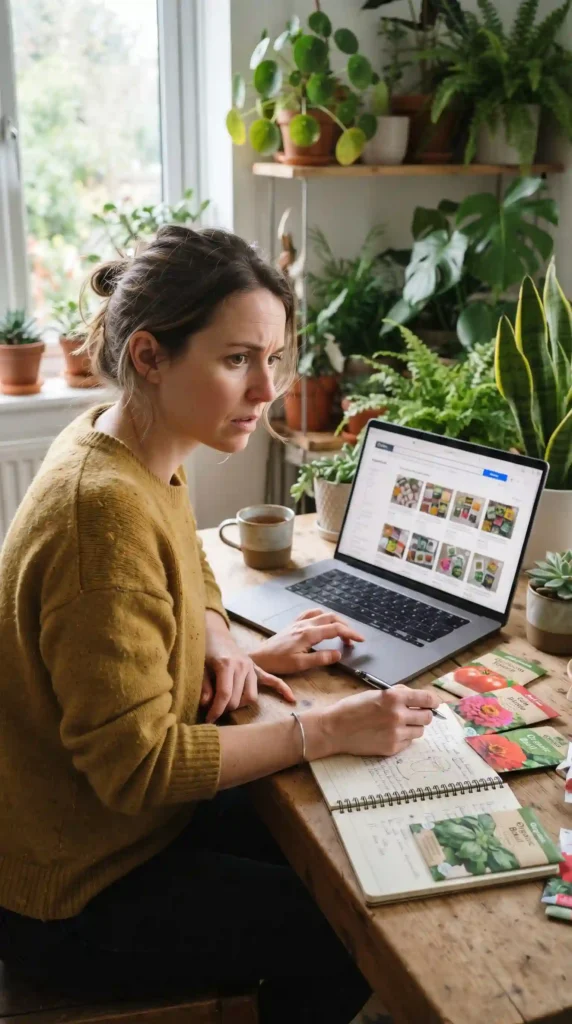
AI plant scams involve misleading online listings that use artificial intelligence-generated images or content to sell seeds or plants that may not match what is advertised.
AI makes it possible to create convincing images of plants with almost any appearance. A seller can generate a picture of an imaginary flower, add it to a product listing, and claim that its seeds will produce the pictured plant.
Recent reporting has highlighted listings featuring supposedly impossible flowers with unusual shapes, colors, and patterns. These listings have appeared on major online marketplaces, making it difficult for shoppers to assume that a product is legitimate simply because it is sold through a familiar platform. Malwarebytes
In many cases, buyers may receive ordinary seeds, the wrong species, seeds with poor germination, or nothing resembling the advertised plant.
Why Are Fake Seeds So Difficult to Spot?
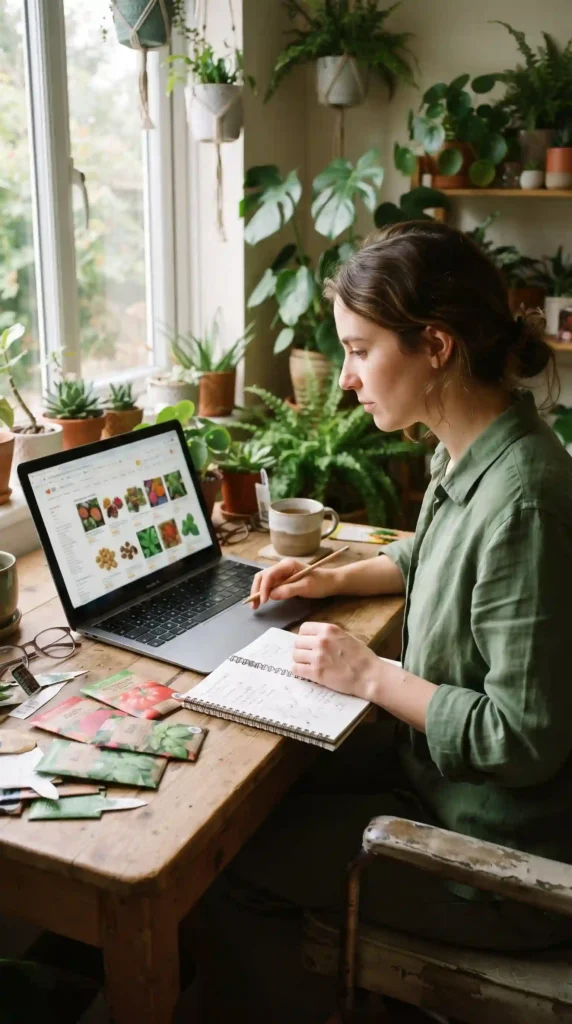
Traditional fake seed listings were sometimes relatively easy to identify because the photographs looked obviously edited.
AI-generated images have changed that.
Modern image-generation tools can produce highly detailed photographs that look like they were taken in a real garden. An inexperienced gardener may not immediately recognize that the plant has impossible characteristics.
AI can also be used to create:
- Product photographs
- Garden backgrounds
- Flower colors
- Realistic-looking leaves
- Product descriptions
- Marketing copy
- Fake lifestyle photographs
This creates an important rule for online gardeners: don’t trust a product photograph by itself.
The photograph should be just one part of your research.
1. Be Suspicious of Impossible Plant Characteristics
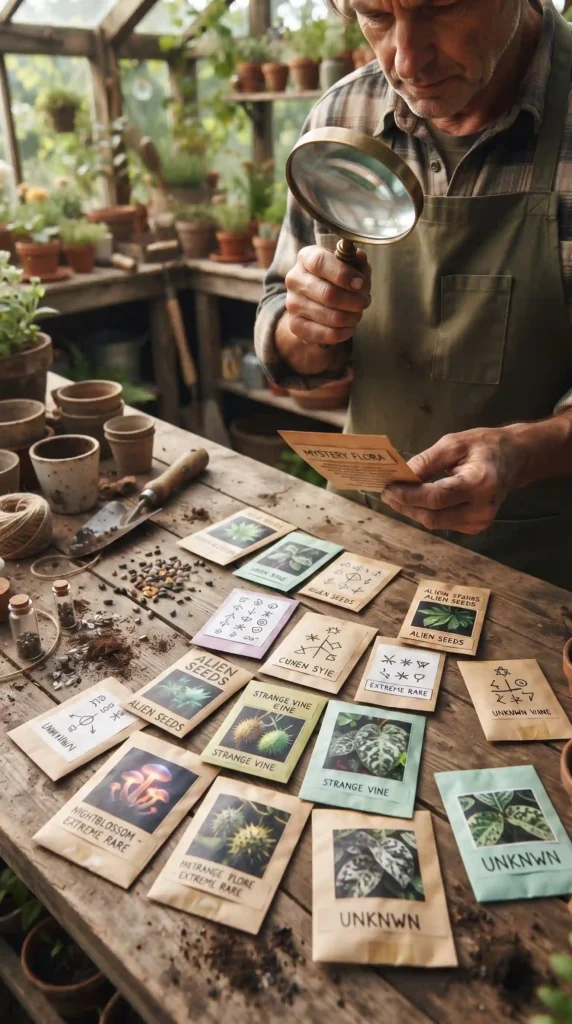
One of the easiest ways to identify a questionable listing is to examine the plant itself.
Ask whether the advertised characteristics are biologically plausible.
Be cautious when a listing promises flowers with:
- Extremely unusual color combinations
- Multiple unrelated flower shapes
- Perfect rainbow coloration
- Metallic-looking petals
- Impossible gradients
- Cartoon-like shapes
- Several different flower species growing from one ordinary seed
- Completely unrealistic plant sizes
Some genuine plants have extraordinary colors and shapes, so unusual doesn’t automatically mean fake.
The important question is whether the advertised characteristics are consistent with what is scientifically known about that plant.
Search for the plant’s scientific name and compare photographs from reputable botanical gardens, universities, horticultural organizations, and established seed companies.
2. Reverse-Search the Product Image
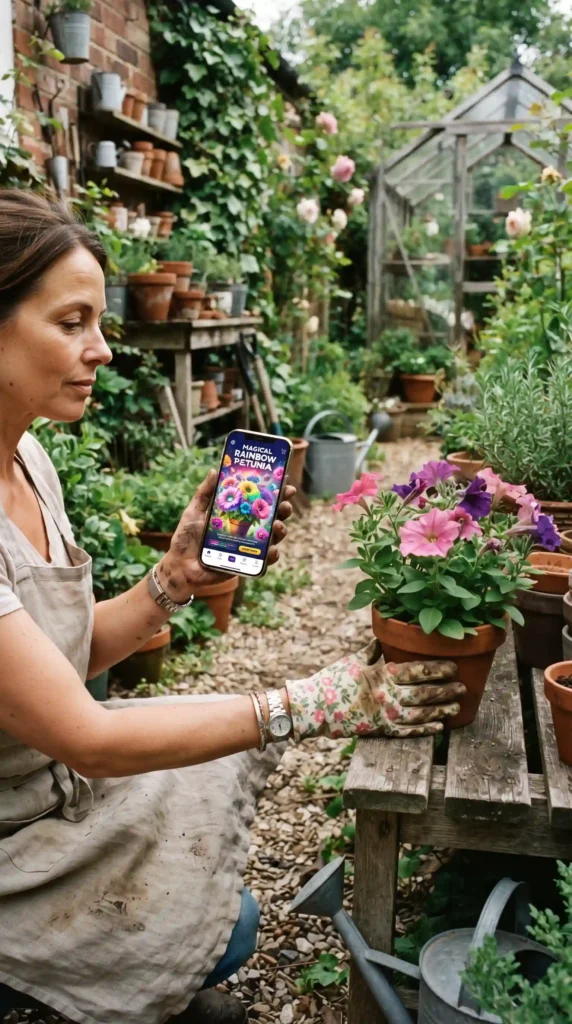
If you see an unusual plant online, don’t immediately purchase it.
Try searching for the image or using a reverse-image search tool to find where else the photograph appears.
You may discover that the same photograph is being used by numerous unrelated sellers.
That’s a major warning sign.
A legitimate seed company will generally have product information connected to a specific species or cultivar. A photograph appearing across dozens of unrelated stores with different product names deserves extra scrutiny.
Also look closely at the image itself. AI-generated plants can sometimes contain subtle inconsistencies, although image quality is improving rapidly.
3. Look for the Scientific Name
A credible seed listing should provide useful information about the plant.
Look for the scientific name, variety or cultivar name, growing requirements, approximate mature size, and other useful details.
Be cautious about listings that rely entirely on phrases such as:
“Rare magical flower”
or
“World’s most beautiful blue rose seed.”
Marketing language isn’t proof that a product is fraudulent, but legitimate horticultural information should be available alongside promotional claims.
A scientific name gives you something specific to research.
4. Check Whether the Plant Actually Exists
Before purchasing a supposedly rare plant, search for it independently.
Don’t search only for the exact seller’s product page.
Look at reputable gardening websites, botanical references, university extension resources, horticultural societies, and established nurseries.
Ask:
- Does this plant actually exist?
- Is the color naturally occurring?
- Is the advertised flower shape possible?
- Does this variety produce viable seeds?
- Is the claimed size realistic?
- Is the plant normally propagated from seeds, cuttings, bulbs, or divisions?
This is particularly important when sellers claim that a single inexpensive packet can produce an extremely rare or highly unusual plant.
5. Be Careful With “Rare” Seeds at Extremely Low Prices
A rare plant generally has a reason for being rare.
If a seller is offering supposedly valuable or difficult-to-propagate seeds for an unusually low price, investigate before buying.
A low price isn’t automatically evidence of fraud. Sellers may run promotions or clear old inventory.
But a combination of rare plant + unbelievable appearance + extremely low price + unknown seller should raise your suspicion.
Scammers often rely on impulse buying. The goal is to make the customer think they have discovered something extraordinary before they have time to research it.
Take that time.
6. Read Reviews Carefully
Customer reviews can be useful, but they shouldn’t be treated as proof.
Look for detailed reviews that discuss:
- Germination
- Plant development
- Packaging
- Delivery
- Correct labeling
- Flower characteristics
- Photographs taken at different growth stages
Be cautious when every review is extremely enthusiastic but provides little useful information.
Also watch for reviews that appear nearly identical or contain photographs that don’t seem connected to the product.
AI can make fraudulent marketing content more convincing, so shoppers should evaluate the entire listing rather than relying on star ratings alone.
7. Research the Seller
Before purchasing seeds online, investigate the seller.
Look for:
- A legitimate business identity
- A clear contact method
- A physical business address where appropriate
- Detailed product information
- A history of selling plants or seeds
- Transparent shipping information
- Clear refund or return policies
A brand-new store selling dozens of supposedly rare plants at unbelievable prices deserves more scrutiny than an established specialist seed company with a documented horticultural history.
Buying locally can also reduce some risks. USDA guidance recommends buying locally when possible and emphasizes checking documentation when purchasing plants online, particularly when material is coming from another country. APHIS
8. Understand the Difference Between Fake Seeds and Illegal Seeds
Not every questionable seed purchase is simply a financial scam.
There is another important concern: plant health and import regulations.
Seeds and plants can carry pests, diseases, or invasive species. Imported planting material may therefore be subject to permits, certificates, inspections, labeling requirements, or restrictions.
For example, USDA APHIS explains that U.S. buyers importing plants and seeds from other countries are responsible for meeting applicable import requirements. Some products require permits or phytosanitary certificates, while certain plants and seeds are restricted or prohibited. APHIS+1
Rules differ by country, so always check the regulations that apply where you live.
9. Be Especially Careful With Overseas Sellers
An online store may look local while the actual seller or shipping operation is located in another country.
USDA APHIS reports that some non-compliant seed shipments were purchased intentionally from websites that appeared to be U.S.-based but were actually operated overseas. APHIS
That doesn’t mean overseas sellers are automatically fraudulent.
It means you should know where the seeds are actually coming from and whether importing them is legal.
For international purchases, check the seller’s country, shipping origin, required documentation, and your country’s plant-import rules before ordering.
10. Never Plant Unsolicited Mystery Seeds
One of the most important rules is simple:
Don’t plant seeds you didn’t order.
There have been cases of people receiving unsolicited seed packages in the mail. Authorities have warned that such seeds can create plant-health risks because their contents may be unknown and may not comply with import requirements.
USDA APHIS currently advises people who receive non-compliant seeds not to plant them and to report them according to the applicable procedures. APHIS
The European Commission has similarly advised people receiving unsolicited seed packages not to plant them and to contact their national plant-health authority. Food Safety
Don’t assume an unexpected packet is simply a harmless free gift.
What If You Already Bought Fake Seeds?
Don’t panic.
First, save all evidence.
Keep:
- The product listing
- Seller information
- Order confirmation
- Payment records
- Shipping information
- Photographs of the packaging
- Photographs of the seeds
- Screenshots of the advertised plant
If the product is significantly different from what was advertised, use the marketplace’s dispute or refund process.
If you paid by card or another payment service, check its procedures for disputing fraudulent or misrepresented purchases.
You can also report suspicious sellers to the marketplace.
If the issue involves potentially illegal or imported plant material, contact the relevant agricultural or plant-health authority in your country.
How to Buy Seeds Online Safely
The safest approach is to slow down before purchasing.
Use this checklist:
- Research the plant independently.
- Look for the scientific name.
- Check whether the advertised characteristics are realistic.
- Reverse-search suspicious photographs.
- Research the seller.
- Read detailed customer reviews.
- Compare prices with established suppliers.
- Check the seller’s location.
- Review shipping and refund policies.
- Check import requirements for international purchases.
- Avoid unsolicited mystery seeds.
- Keep records of your purchase.
For U.S. buyers, USDA APHIS provides specific guidance on buying plants and seeds online, including information about permits, certificates, shipping requirements, and restricted products. APHIS
Final Thoughts
AI plant scams are changing the way gardeners need to shop for seeds online. A beautiful photograph is no longer enough to prove that a plant is real, and increasingly sophisticated AI-generated images can make impossible flowers look completely believable.