11 Small Garden DIY Ideas
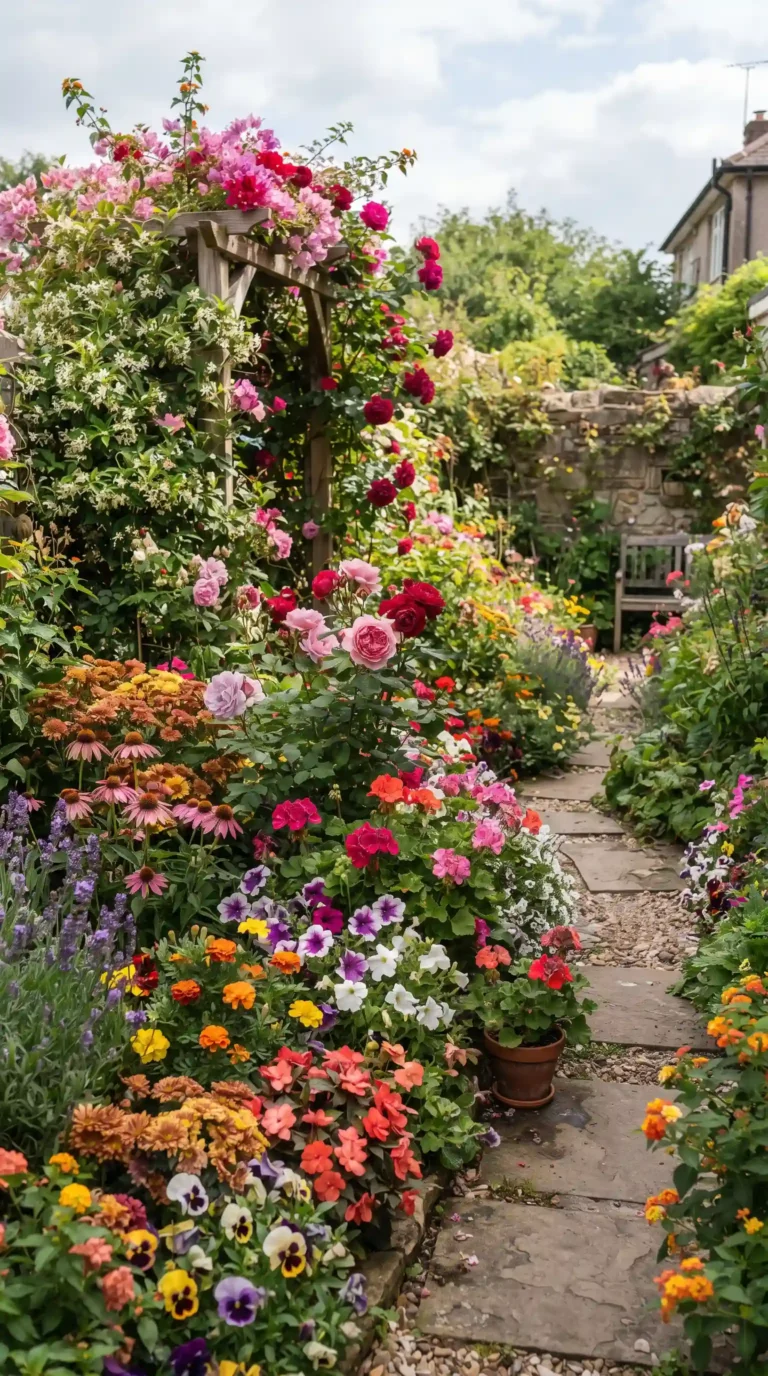
You do not need a large backyard to create a beautiful and relaxing garden. Even a small balcony, patio, narrow side yard, or tiny outdoor corner can become a green space with a little creativity. The right small garden DIY ideas can help you save money, use available space wisely, and add a personal touch to your home.
With simple materials, such as wooden pallets, old containers, pots, and recycled items, you can build attractive garden features without spending too much. Many projects are also suitable for beginners and can be completed over a weekend.
In this guide, you will discover 11 creative small garden DIY ideas that can make your outdoor space greener, more useful, and more enjoyable.
1. Create a Vertical Garden with Wall Planters
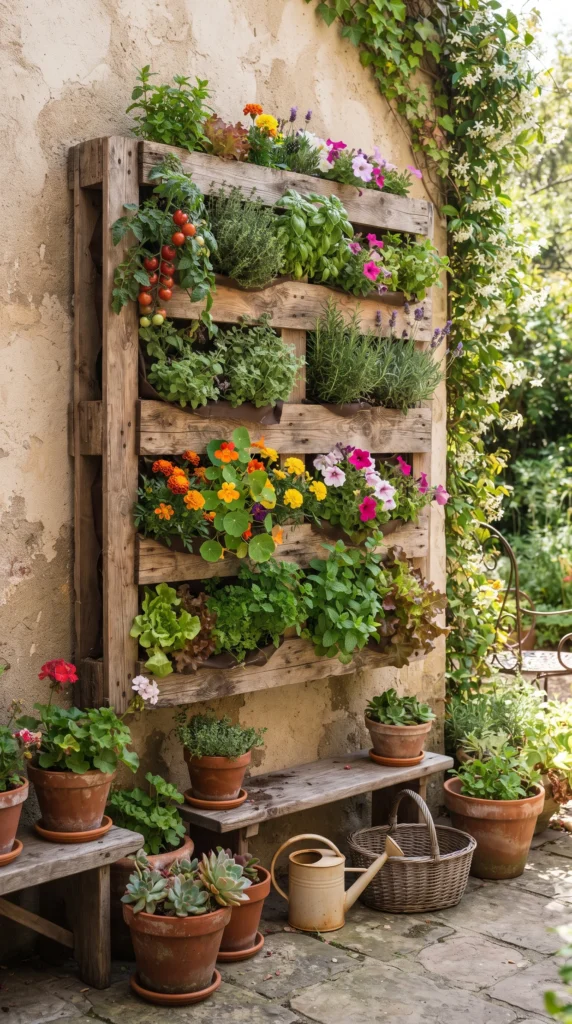
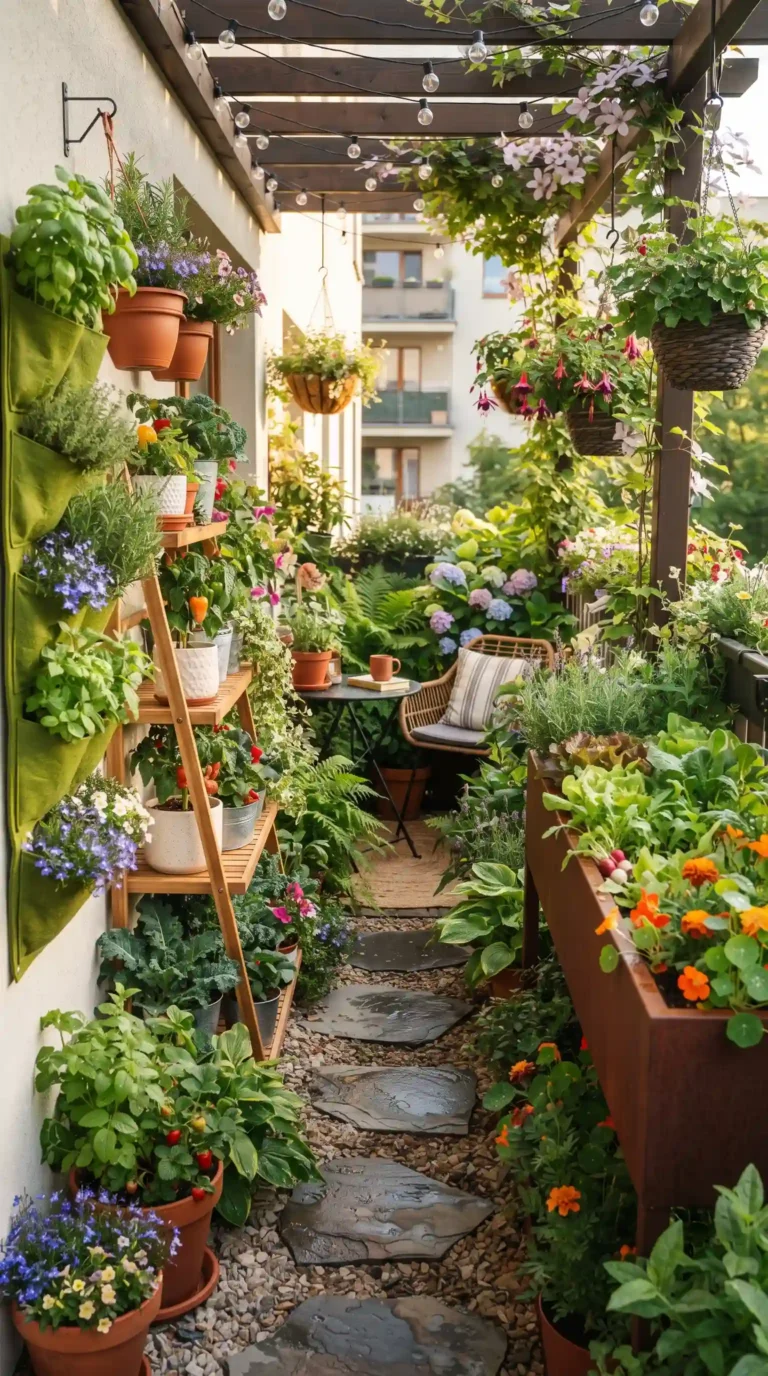
A vertical garden is a smart solution when you have limited floor space. Instead of placing every plant on the ground, you can grow plants upward using a wall, fence, or sturdy frame.
You can make a simple vertical garden with wall-mounted pots, wooden shelves, or recycled containers. Choose a sunny wall for herbs and many flowering plants, or select shade-tolerant plants for areas that receive less sunlight.
How to make it:
- Choose a strong wall, fence, or frame.
- Attach secure shelves or suitable plant holders.
- Add pots with drainage holes.
- Fill them with potting mix and plants.
- Water carefully so excess water does not damage the wall.
Herbs such as mint, parsley, and thyme can work well in vertical planters when their light and watering needs are met. Keep heavier pots near the bottom and make sure the structure can safely support their weight.
2. Turn Old Containers into Creative Plant Pots
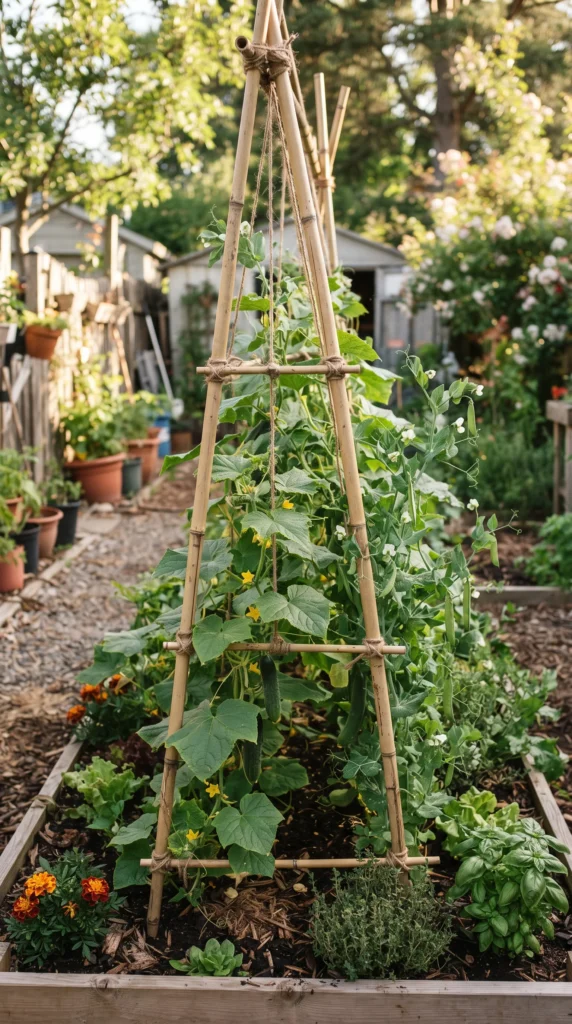
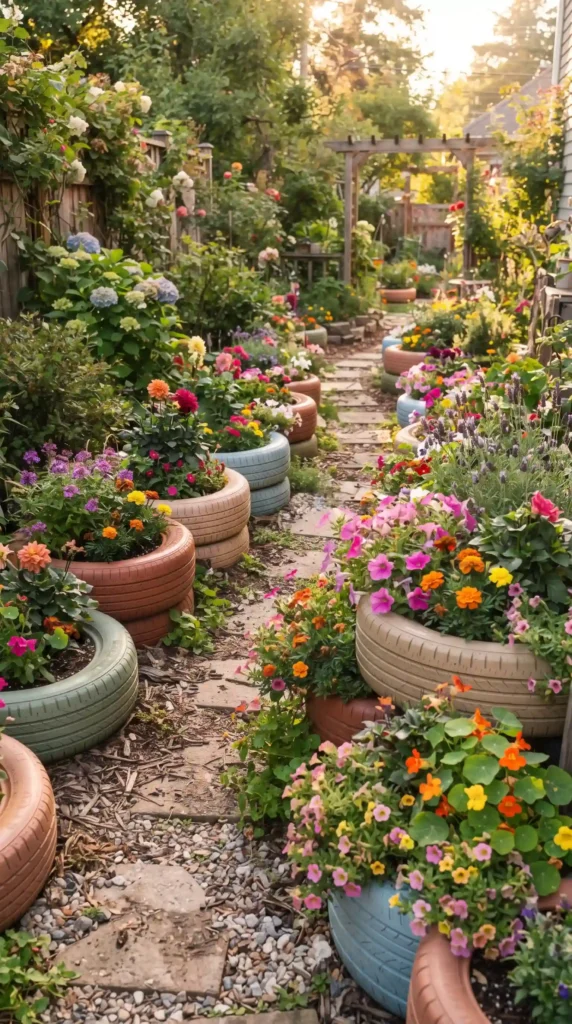
You can give old containers a new purpose by turning them into decorative plant pots. This is an affordable way to add greenery while reducing waste.
Look around your home for unused buckets, sturdy tins, wooden boxes, or suitable plastic containers. Before planting, check that the material is safe for growing plants and can handle outdoor conditions.
Simple steps:
- Clean the container thoroughly.
- Make drainage holes if the material allows it safely.
- Paint or decorate the outside with weather-resistant materials.
- Add suitable potting mix.
- Plant flowers, herbs, or compact vegetables.
Avoid containers that previously held harmful chemicals. If you use metal cans, smooth or cover sharp edges to prevent cuts. Place a saucer underneath pots when needed to protect floors and patios.
3. Build a Small Raised Garden Bed
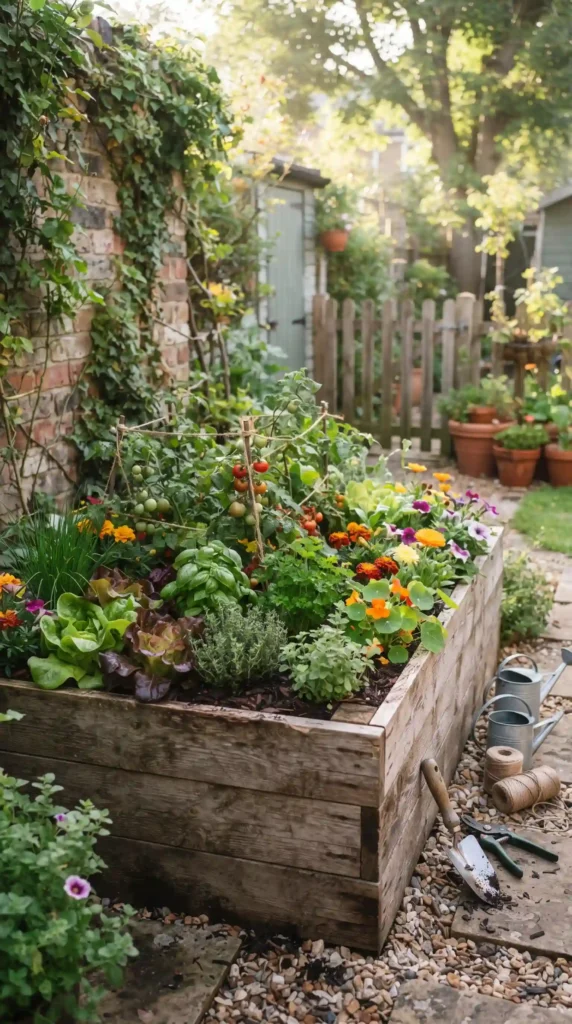
A raised garden bed can make a small outdoor space easier to organize. It creates a defined growing area and can be useful when the existing soil is poor or difficult to work with.
You can build a compact rectangular bed from untreated, garden-suitable wood or use a ready-made raised-bed kit. Choose a size that allows you to reach the center from the sides without stepping on the soil.
How to build it:
- Select a level location with enough sunlight for your plants.
- Measure the available area.
- Assemble a sturdy frame using suitable materials.
- Place it on well-drained ground.
- Fill it with a suitable growing mix and compost.
- Plant vegetables, herbs, or seasonal flowers.
A raised bed is useful for leafy greens, radishes, and other compact crops. Make sure the bed is deep enough for the plants you choose and that water can drain freely.
4. Make a DIY Hanging Basket Garden
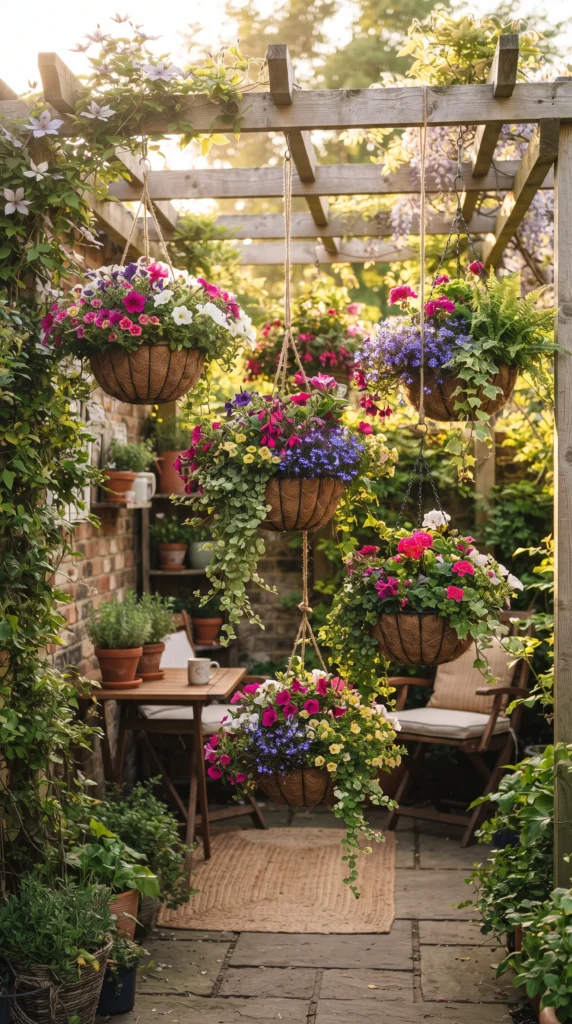
Hanging baskets help you use overhead space while keeping the ground clear. They can add color to a balcony, porch, or small patio.
Choose baskets with drainage and secure hooks that can safely support the weight of the container, soil, and water. Hanging baskets can become surprisingly heavy after watering, so avoid attaching them to weak fixtures.
Steps to create one:
- Choose a basket suitable for outdoor use.
- Add a liner that allows proper drainage.
- Fill it with lightweight potting mix.
- Plant flowers or trailing plants suited to your climate.
- Hang it in a location with the right amount of sunlight.
Check hanging baskets regularly because they may dry out faster than larger pots. Water when the soil needs it, rather than following a fixed schedule.
5. Use Wooden Pallets for a Garden Feature
Wooden pallets can be reused to create a rustic garden feature. Depending on their condition and design, they can become a vertical planter, a pot stand, or a decorative background.
Before using a pallet, check its markings and condition. Choose wood that is suitable for your intended use, and avoid pallets that may have been exposed to harmful substances.
DIY ideas include:
- Turning a suitable pallet into a vertical planter.
- Using it as a stand for small pots.
- Creating a simple garden backdrop.
- Adding hooks for lightweight garden tools.
Sand rough surfaces carefully and secure the structure so it cannot tip over. If you plan to add soil directly, use a suitable liner and ensure water can drain without damaging nearby surfaces.
6. Create a Mini Herb Garden
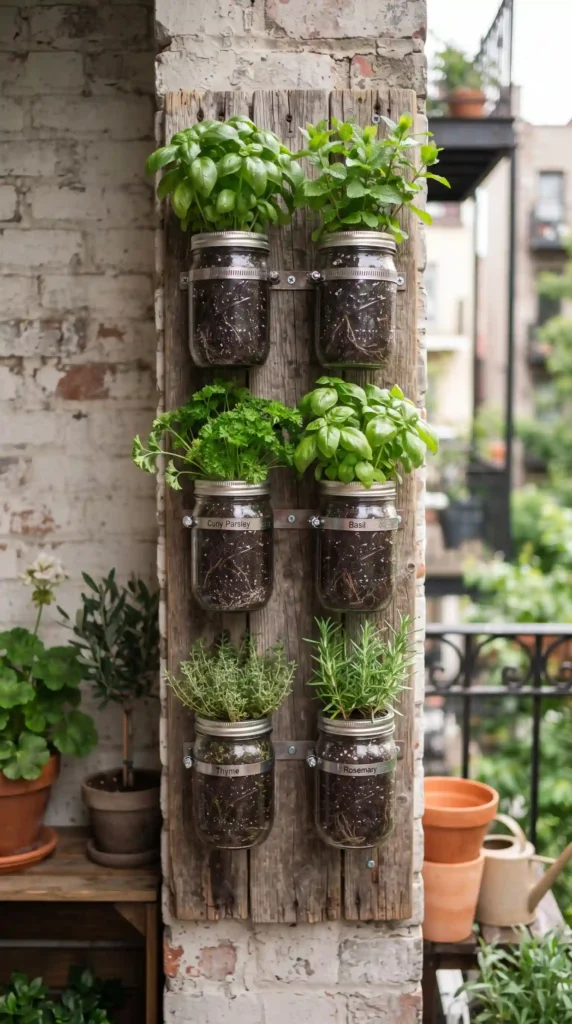
A mini herb garden is practical for people who enjoy cooking and want fresh herbs close to home. You can grow several herbs in a small raised bed, window box, or collection of pots.
Start with herbs that suit your local climate and the amount of sunlight your space receives. Basil, parsley, coriander, and thyme are possible choices, depending on the growing conditions.
How to get started:
- Select a sunny location for herbs that need direct light.
- Use containers with drainage holes.
- Choose a suitable potting mix.
- Label each herb so you can identify it easily.
- Harvest small amounts regularly, as appropriate for each plant.
Some herbs, such as mint, spread quickly. Growing mint in its own container can help prevent it from taking over nearby plants.
7. Add a DIY Pebble Garden Path
A simple garden path can make a small outdoor space look organized and easier to walk through. You do not need an elaborate stone walkway to create a clear route between plants or seating areas.
You can use stepping stones, suitable gravel, or decorative pebbles to form a simple path. Choose materials that are comfortable and safe to walk on.
Steps to make a basic path:
- Decide where people need to walk.
- Mark the path with string or garden markers.
- Remove weeds and loose debris.
- Prepare a stable, well-drained base.
- Place stepping stones or spread suitable path material.
- Check that the surface is even and secure.
Avoid placing loose stones where they could easily spill onto a walkway. Leave enough room around plants so they can grow without blocking the path.
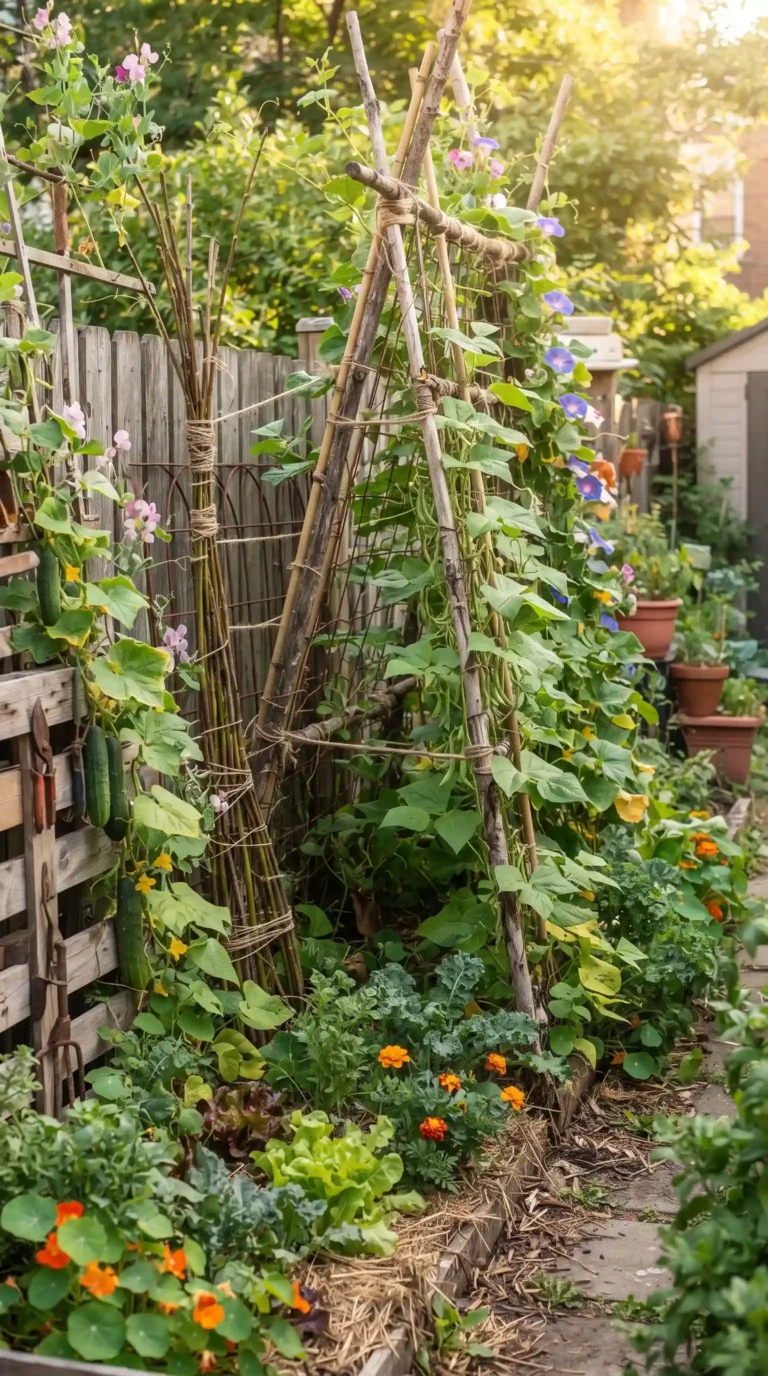
8. Build a Small DIY Trellis for Climbing Plants
A trellis gives climbing plants a place to grow upward. This can help make better use of a narrow garden and create a green background without taking up much ground space.
You can build a simple trellis using garden-suitable wooden strips, bamboo canes, or a ready-made trellis panel. Make sure it is strong enough for the mature plant, especially if the plant becomes heavy or catches the wind.
How to create one:
- Select a suitable location near the plant.
- Choose a trellis size that fits your available space.
- Secure it firmly to a wall, fence, or stable support.
- Plant a suitable climber nearby.
- Guide young stems gently onto the support.
Choose climbing plants according to your climate, sunlight, and available space. Check the plant’s mature size before planting so it does not overwhelm the small garden.
9. Make a DIY Garden Bench from Reused Materials
A small bench can turn an unused corner into a comfortable place to relax. You can build a basic bench from suitable reclaimed wood or refresh an existing outdoor seat.
The most important part is making sure the bench is stable, weather-resistant, and safe to sit on. Do not use damaged boards or materials with exposed nails.
Simple project tips:
- Measure the space before choosing a bench size.
- Use sturdy materials designed for outdoor conditions.
- Sand rough edges and splinters.
- Secure all joints properly.
- Place the bench on a level surface.
- Add a weather-resistant cushion if desired.
Keep enough room around the bench for walking and plant maintenance. In very small gardens, a narrow bench or folding seat may be more practical than a large piece of furniture.
10. Create a Small Garden Lighting Feature
Garden lighting can make a small outdoor area more inviting after sunset. Solar lights are a convenient option in places that receive enough daylight to charge them.
You can place small solar stake lights along a path, use outdoor-rated string lights, or add lantern-style lights around a seating area.
Ideas for simple lighting:
- Place solar lights near the edges of a path.
- Hang outdoor-rated string lights securely.
- Use a lantern to highlight a seating corner.
- Add soft lighting near a garden feature.
- Keep lights away from areas where they may get damaged by watering.
Choose products rated for outdoor use and follow their installation instructions. Avoid placing electrical connections where they can become wet, and do not overload extension cords.
11. Make a DIY Rainwater Collection Setup
Collecting rainwater can help you make use of rainfall for garden watering. A small rain barrel connected to a suitable downspout can be useful where local rules and conditions allow it.
This project requires care because standing water can attract mosquitoes, and an improperly installed barrel may overflow or become unstable.
Basic setup tips:
- Choose a suitable, stable rain barrel.
- Place it on a strong, level base.
- Use a properly fitted lid or screened opening.
- Direct overflow away from foundations and walkways.
- Keep the water covered to reduce mosquito access.
- Use collected water for appropriate garden plants.
Check local rules before installing a rainwater collection system. Do not use collected water for drinking unless it has been treated and tested for that purpose.
How to Plan a Small DIY Garden
Before starting several projects, take time to plan your garden. A simple layout can help you avoid overcrowding and make the space easier to maintain.
Measure Your Available Space
Measure the width and length of your garden, balcony, or patio. Note where doors, windows, paths, and drains are located. This helps you choose projects that fit without blocking access.
Check Sunlight and Shade
Observe how much sunlight different areas receive throughout the day. Some plants need several hours of direct sun, while others grow better in partial shade. Match your plant choices to the conditions rather than expecting every plant to thrive in the same spot.
Choose a Few Projects First
You do not need to complete all 11 ideas at once. Start with two or three projects that solve your biggest needs. For example, a vertical planter and a mini herb garden may be enough to make a small balcony more useful.
Select Suitable Materials
Use materials that are safe, durable, and appropriate for outdoor conditions. Consider rain, heat, wind, and the weight of containers filled with wet soil. Reusing materials can save money, but they should still be structurally sound and safe.
Leave Space for Plant Growth
Small gardens can become crowded quickly. Check the mature size of each plant and leave enough room for airflow, watering, and pruning. A little open space can make the garden look calmer and easier to manage.
Tips for Maintaining a Small DIY Garden
A beautiful garden needs regular care, but a simple routine can make maintenance manageable.
- Check soil moisture: Feel the soil before watering. Containers may dry out faster than garden beds.
- Remove weeds: Pull weeds when they are small so they do not compete heavily with your plants.
- Prune when needed: Remove damaged growth and trim plants according to their needs.
- Check drainage: Make sure pots and raised beds do not stay waterlogged.
- Inspect DIY structures: Check shelves, hooks, trellises, and benches for loose parts or damage.
- Watch for pests: Look at leaves regularly and use suitable, plant-safe control methods when needed.
- Refresh containers: Add fresh potting mix or repot plants when they outgrow their containers.
A short weekly check can help you spot problems early and keep your garden looking tidy.
Common Mistakes to Avoid in Small Garden DIY Projects
Even simple DIY projects can become difficult if you do not plan carefully. Avoiding a few common mistakes can save time and money.
Overcrowding the Garden
Adding too many pots, decorations, and structures can make a small garden feel cramped. Choose features that serve a purpose and leave clear walking space.
Ignoring Drainage
Plants need water, but their roots also need access to air. Containers without drainage can hold excess water and damage roots. Always consider drainage when selecting pots and planters.
Choosing Plants Without Checking Their Needs
A plant that thrives in full sun may struggle in a shaded corner. Check sunlight, watering, climate, and mature size before choosing plants.
Using Weak or Unsafe Materials
A poorly secured shelf or hanging basket can fall and cause damage or injury. Use suitable fasteners, stable supports, and materials designed for the intended weight.
Forgetting Maintenance
Some DIY features need regular cleaning, repainting, tightening, or pruning. Choose projects you can realistically maintain with the time and tools you have.
Conclusion
Creating a beautiful garden does not require a large yard or an expensive budget. With these 11 small garden DIY ideas, you can make better use of limited space and add greenery, color, and practical features to your home.
Start with simple projects such as recycled planters, a mini herb garden, or a vertical planter. As your confidence grows, you can add a trellis, a small seating area, garden lighting, or a rainwater collection setup.
The key is to plan carefully, choose safe materials, and select plants that suit your space and climate. With a little creativity and regular care, even the smallest outdoor corner can become a garden you enjoy every day.