15 Creative Garden Trellis Ideas on a Budget
A garden trellis is a simple structure that gives climbing plants the support they need to grow upward. It can make a garden look more organized while also saving valuable space. The good thing is that you do not need to spend a lot of money to create one.
With a few inexpensive materials and some creativity, you can build a beautiful trellis for vegetables, flowers, vines, and other climbing plants. Old wood, bamboo, garden wire, branches, pallets, and even recycled household items can become useful garden supports.
These creative garden trellis ideas on a budget are suitable for small gardens, patios, balconies, raised beds, and backyard spaces. Whether you want to grow cucumbers, beans, peas, tomatoes, roses, or flowering vines, there is an affordable idea you can try.
Why Use a Garden Trellis?
A trellis gives climbing plants a structure to hold onto as they grow. Instead of spreading across the ground, vines can grow vertically.
Vertical growing can help you make better use of limited garden space. It may also keep fruits and leaves away from wet soil and make some plants easier to inspect and harvest.
A trellis can also become a decorative feature. With the right design, it can create a natural wall, divide different garden areas, or add height and interest to an otherwise empty space.
What Makes a Good Budget Trellis?
A good budget trellis does not need to be expensive or complicated.
The structure should be strong enough to support the mature plant. It should also be suitable for the location and resistant enough to handle normal weather conditions.
Think about the plant before choosing the material. Lightweight vines may only need thin supports, while heavy climbing plants require a stronger structure.
1. Bamboo Garden Trellis
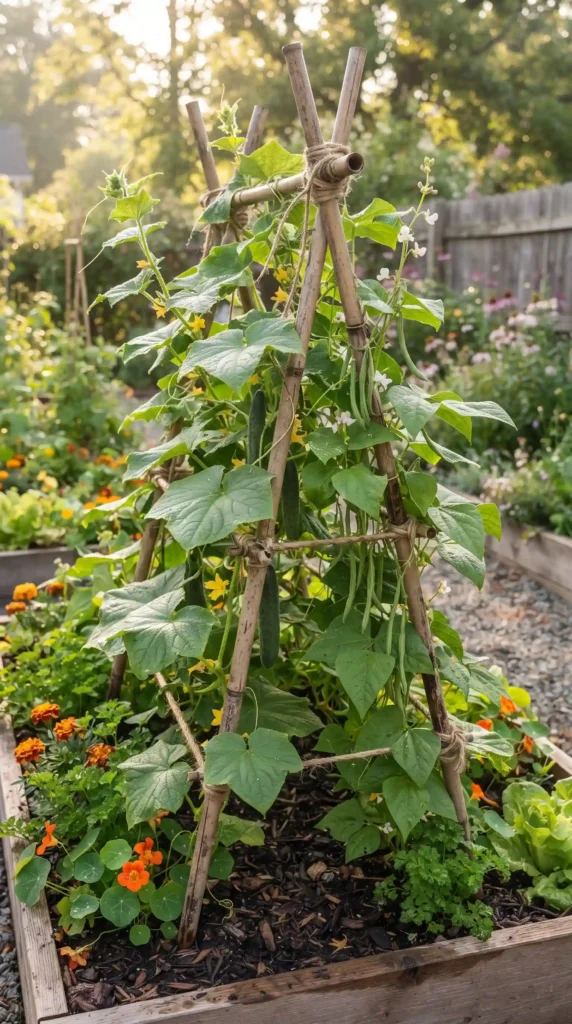
Bamboo is one of the easiest materials to use for a low-cost trellis.
You can arrange bamboo poles into a simple A-frame, ladder, or grid design. Secure the pieces together with garden twine or strong ties.
Bamboo works well for peas, beans, cucumbers, and other climbing plants.
It is also lightweight, making it easy to move when you need to change your garden layout.
2. Wooden Ladder Trellis
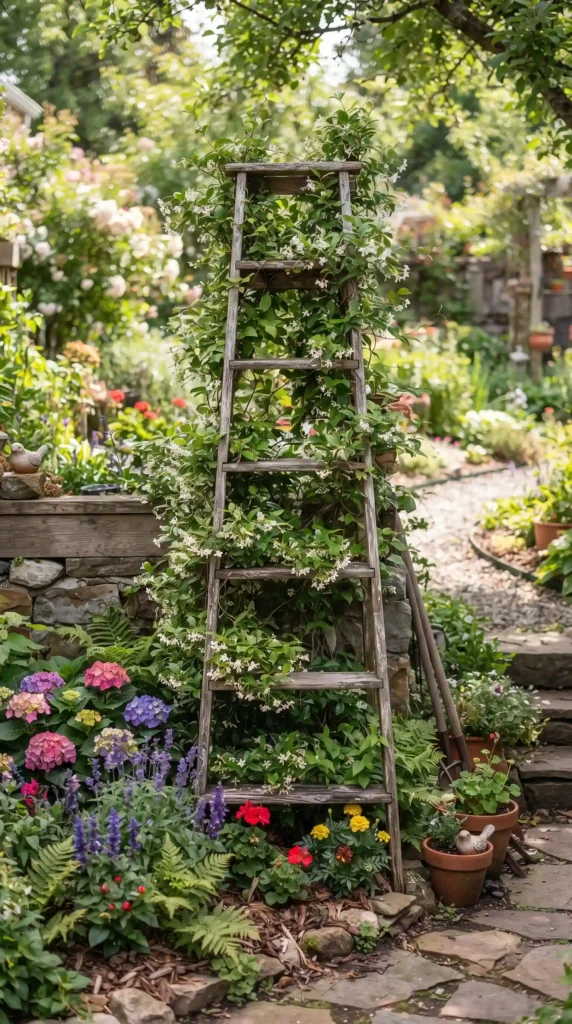
An old wooden ladder can be transformed into a creative garden trellis.
Simply place the ladder securely in the garden and allow climbing plants to grow around its sides and steps.
You can use it as a support for flowering vines or lightweight vegetables.
If the ladder is old, check that it is structurally sound before using it. Avoid materials that may contain unsuitable treatments or coatings for your garden.
3. DIY Branch Trellis
Fallen branches can become attractive natural trellises.
Collect straight, sturdy branches and arrange them into a simple frame. Tie crossing branches together with garden twine.
This creates a rustic appearance that blends naturally with outdoor spaces.
A branch trellis works especially well in cottage-style gardens and areas where you want a more natural look.
4. Pallet Trellis
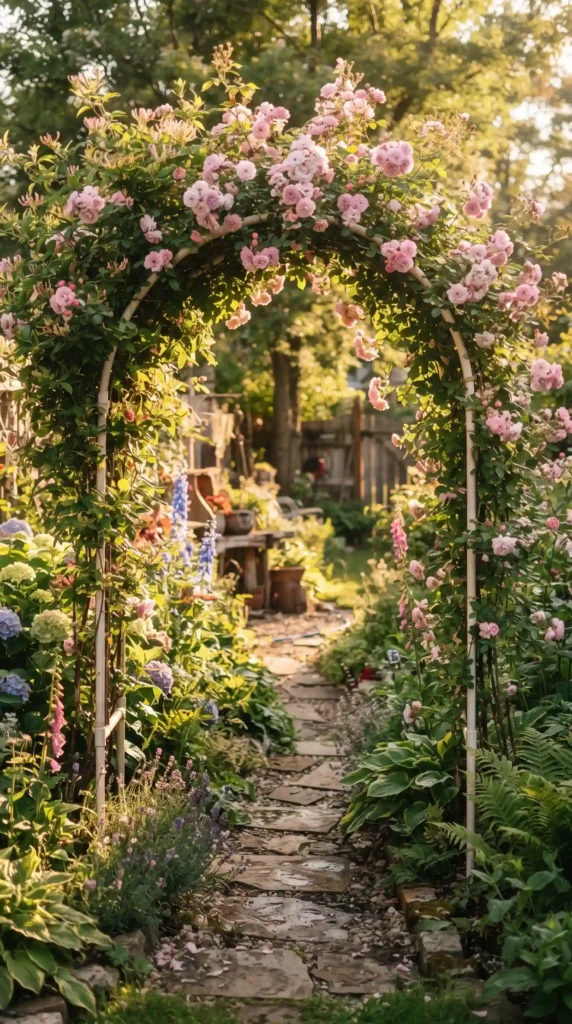
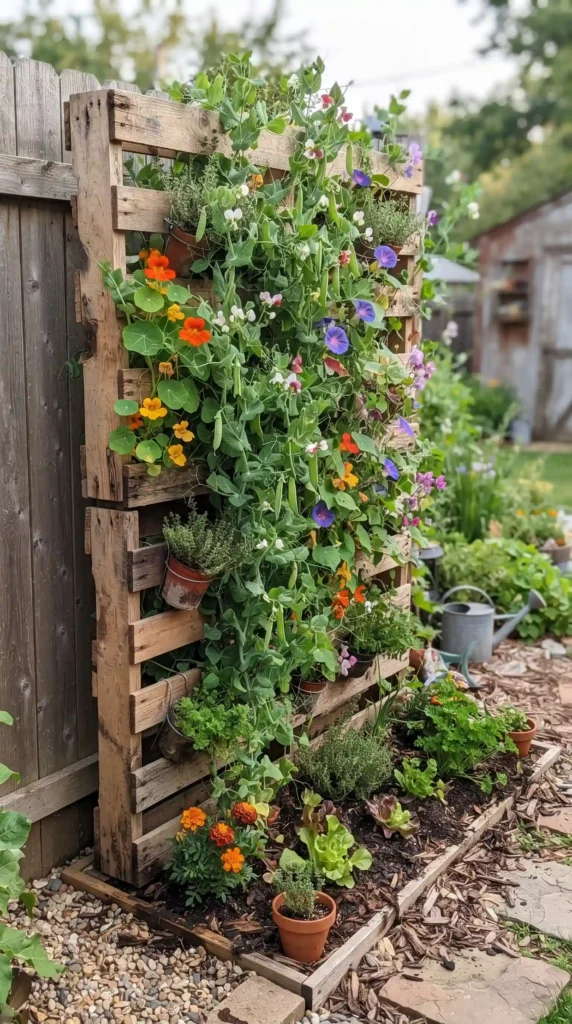
A wooden pallet can provide a ready-made framework for climbing plants.
Stand a suitable pallet vertically and secure it firmly so it cannot fall over.
The spaces between pallet boards can give vines places to climb.
Before using a pallet, check its condition and markings. Use only pallets made from suitable materials and avoid those that may have been exposed to harmful chemicals.
5. String Trellis for Climbing Vegetables
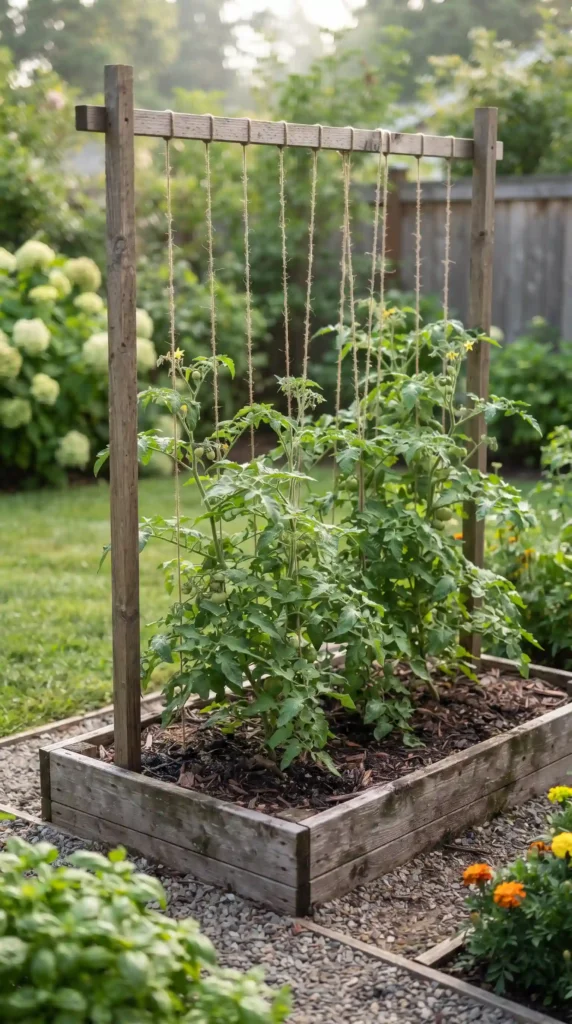
A string trellis is one of the cheapest options available.
Attach strong garden string or twine between a sturdy top support and the ground. Create several vertical or diagonal lines for plants to climb.
This design is particularly useful for beans, peas, and other lightweight vines.
It takes very little space and can be removed easily at the end of the growing season.
6. Cattle Panel Trellis
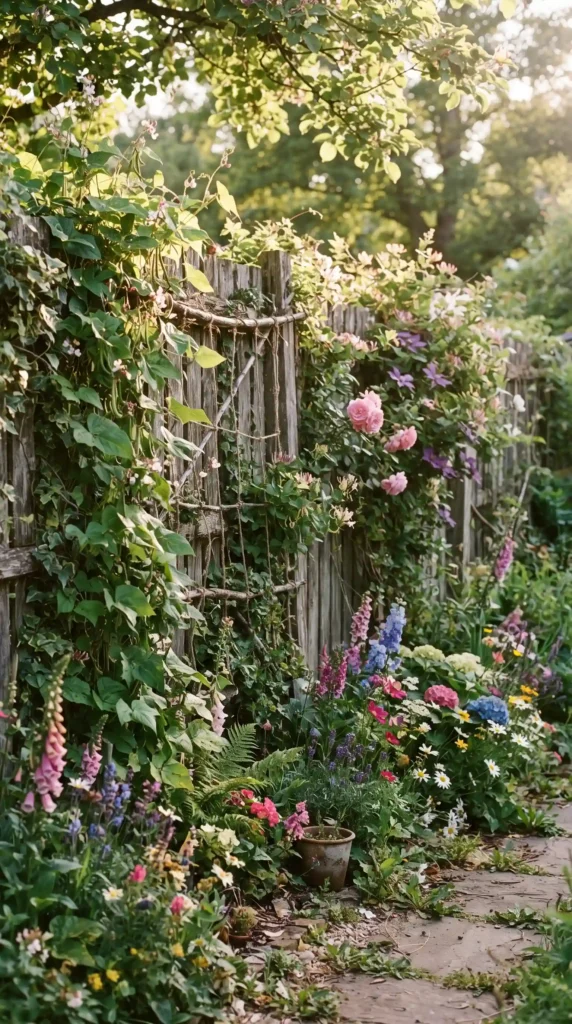
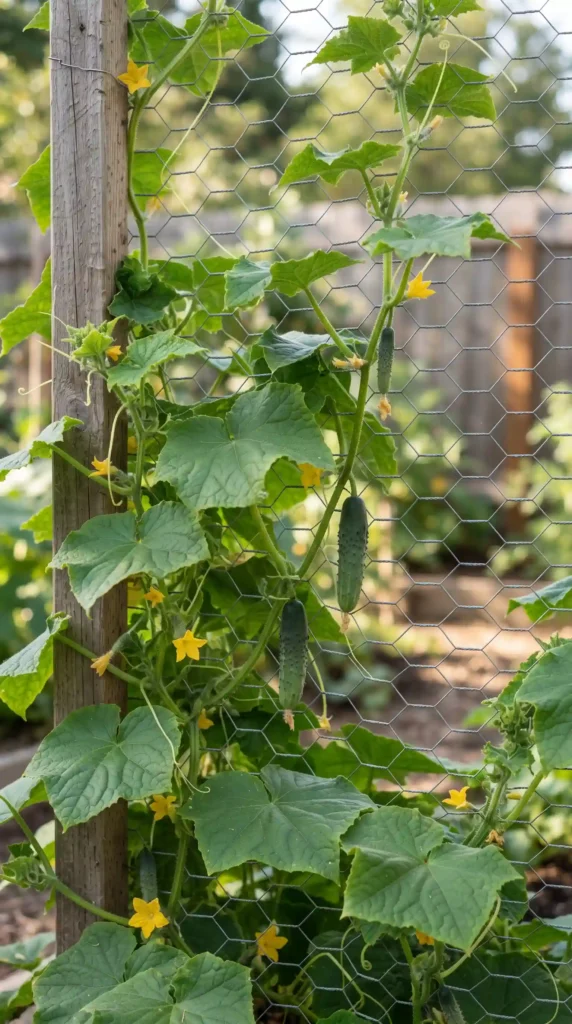
A piece of sturdy garden or livestock panel can create a strong climbing structure.
Secure the panel between posts or bend it into an arch.
This type of trellis can support heavier plants and is useful for vegetables that produce long vines.
Although the initial material may cost more than string or branches, it can last for multiple growing seasons when properly maintained.
7. Old Bicycle Wheel Trellis
An old bicycle wheel can become an unusual garden decoration and plant support.
Mount the wheel securely to a wall, fence, or strong frame. Add string or twine between different parts of the wheel to create climbing paths.
This idea works best with lighter vines.
It can also become an interesting conversation piece in a creative garden.
8. Wire Garden Trellis
Garden wire can be shaped into many simple designs.
Attach horizontal and vertical wires to wooden or metal supports to create a grid.
A wire trellis can fit into narrow areas and works well against walls or fences.
Make sure the wire is securely attached and does not have sharp exposed ends that could cause injuries.
9. A-Frame Trellis
An A-frame trellis is a practical choice for vegetable gardens.
Two sides lean toward each other and are connected at the top. You can cover the sides with wire, string, bamboo, or wooden strips.
This design allows plants to climb on both sides while leaving a walkway or growing area underneath.
It is especially useful for cucumbers, peas, and beans.
10. Teepee Trellis
A teepee trellis is simple to build using several long poles.
Place the poles in a circle and bring their tops together. Secure them at the top using strong twine.
The resulting cone-shaped structure gives climbing plants plenty of vertical support.
Teepee trellises are inexpensive, easy to build, and can look attractive in vegetable beds.
11. Wall-Mounted Trellis
If you have limited floor space, use a wall as the foundation for your trellis.
Attach a lightweight wooden frame, wire grid, or string system to a suitable wall.
Leave enough space between the support and the wall for airflow and plant growth.
Wall-mounted trellises are useful for balconies, patios, and narrow garden areas.
12. Recycled Window Frame Trellis
An old window frame can become a decorative trellis.
Remove or secure any broken glass and use the frame as a plant-support structure.
You can attach wire or string across the open sections to give vines additional places to climb.
Painted or natural wood can create different garden styles.
Make sure the frame is securely installed before allowing plants to grow on it.
13. Garden Arch Trellis
A simple arch can add height and style to a garden while providing climbing support.
You can make an inexpensive arch from flexible branches, bamboo, wire panels, or suitable garden materials.
Plant climbing flowers or vines near each side of the arch and guide their growth toward the top.
Over time, the plants can create a natural green entrance or walkway.
14. Tomato Cage Trellis
A tomato cage can be used for more than just tomatoes.
It can support smaller climbing or sprawling plants and is especially useful when you need a quick solution.
You can also create a homemade cage using sturdy garden wire.
Place the support around the plant while it is still young so the plant can grow naturally through the structure.
15. Recycled Fence Trellis
An old section of suitable garden fencing can be reused as a trellis.
Lean it against a wall, attach it to sturdy posts, or incorporate it into a raised garden bed.
The existing grid provides many points where climbing plants can grab onto the structure.
This is a practical way to reuse materials that might otherwise be thrown away.
Best Plants for a Budget Trellis
Many climbing plants can benefit from a trellis.
Vegetables such as peas, beans, cucumbers, and some varieties of tomatoes can grow vertically when given suitable support.
Flowering plants such as climbing roses, clematis, morning glory, and other vines can also use trellises.
Always check the growth habit and mature weight of your chosen plant before selecting a support.
Heavy plants need stronger structures than lightweight vines.
How to Choose the Right Trellis Material
The material should match the plant and the location.
Bamboo and string can work well for lightweight annual vegetables. Wood and strong wire may be better for larger or longer-lasting plants.
For permanent garden structures, choose materials that can handle outdoor conditions.
For temporary seasonal crops, inexpensive materials may be enough.
The goal is to create a structure that is safe, stable, and appropriate for the plant.
How to Build a Trellis Without Spending Much
Start by looking around your home or garden for materials you already have.
Old wooden pieces, branches, bamboo, wire, garden stakes, and unused frames can often be repurposed.
Keep the design simple. A basic grid or A-frame can work just as well as a complicated decorative structure.
Use strong ties to connect pieces and make sure the base is firmly secured in the soil.
How to Make a Trellis Stronger
A trellis needs to remain stable as the plant becomes larger.
Secure the bottom of the structure firmly. For taller designs, use stakes or posts to prevent movement.
Check the connections regularly. Twine can loosen over time, especially after rain or wind.
If a plant becomes very heavy, add additional support before the structure starts bending.
It is much easier to strengthen a trellis early than to repair one after it collapses.
Budget Trellis Ideas for Small Gardens
Small gardens can benefit greatly from vertical growing.
A wall-mounted wire trellis, string trellis, bamboo frame, or narrow A-frame can provide climbing space without taking up much ground area.
Place the structure near a suitable wall, fence, raised bed, or container.
Avoid creating a design that blocks walkways or prevents you from reaching your plants.
DIY Trellis Ideas for Raised Beds
Raised beds are excellent locations for simple trellises.
You can attach supports directly to the sides of the raised bed or place a separate structure at one end.
An A-frame or arch can work particularly well.
Position climbing crops where they will not shade smaller plants that require plenty of sunlight.
How to Train Plants on a Trellis
Young climbing plants may need some guidance.
Gently direct flexible stems toward the support. Use soft plant ties when necessary and avoid tying stems too tightly.
As the plant grows, check it regularly and guide new growth where you want it to go.
Some plants naturally wrap around supports, while others may need repeated guidance.
Never force stiff stems into positions that could cause them to break.
Common Trellis Mistakes to Avoid
One common mistake is choosing a support that is too weak for the mature plant.
Another is placing the trellis too late, after the plant has already spread across the ground.
Poor anchoring can also cause problems during windy weather.
Avoid using unsafe recycled materials that may contain harmful coatings, sharp edges, or chemical residues.
Finally, make sure the trellis does not block sunlight or airflow for nearby plants.
Benefits of Growing Plants Vertically
Vertical gardening can make better use of limited space.
It may also make harvesting easier because fruits and leaves are more visible.
Keeping vines above the ground can improve airflow around foliage and reduce contact with wet soil.
A well-designed trellis can also make a garden look cleaner and more organized.
For small gardens, vertical growing can be an especially practical approach.
Final Thoughts
You do not need expensive gardening equipment to build an attractive and useful plant support. These creative garden trellis ideas on a budget show how simple materials can become practical structures for climbing plants.
Bamboo, branches, old ladders, pallets, string, wire, bicycle wheels, window frames, fencing, and other recycled materials can all be used creatively.
Before building your trellis, consider the plant’s mature size, weight, and growing habit. Choose a strong enough material, secure the structure properly, and leave enough room for healthy growth.
With a little creativity, even a small garden can become a productive and attractive vertical growing space.