8 Perfect Plants for Bathroom Humidity
Bathrooms can be challenging spaces for many houseplants because they often have changing temperatures, limited natural light, and higher humidity than other rooms. However, that extra moisture can actually create an excellent environment for certain tropical and humidity-loving plants.
If you want to make your bathroom feel greener, fresher, and more relaxing, choosing the right plant is important. Plants that naturally grow in warm, humid environments can often adapt well to bathroom conditions when they receive suitable light and proper care.
In this guide, we will explore 8 perfect plants for bathroom humidity and explain why they work well in bathrooms. You will also learn about light requirements, watering, placement, drainage, and common mistakes to avoid when growing bathroom plants.
Why Are Humidity-Loving Plants Good for Bathrooms?
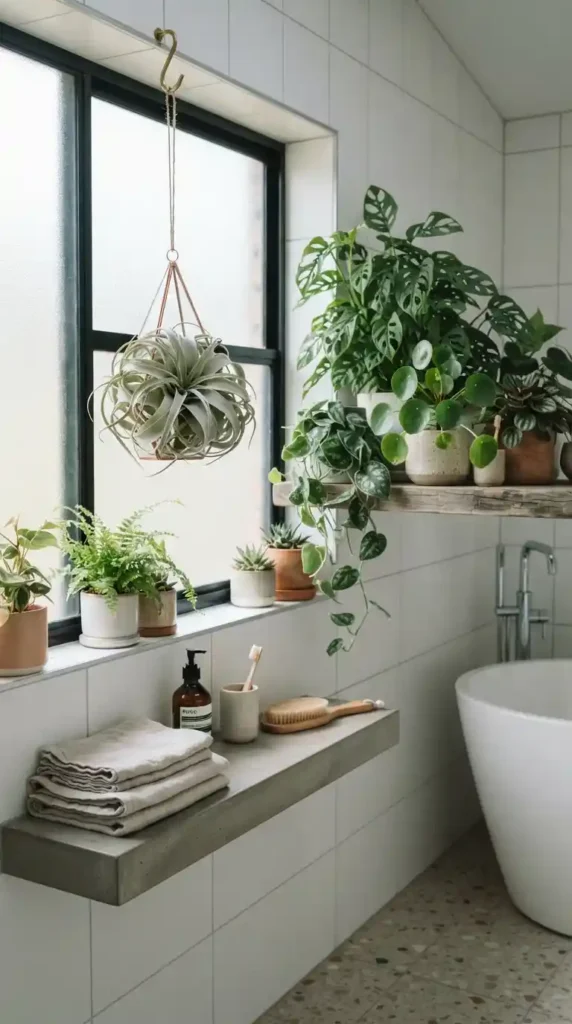
Bathrooms naturally produce moisture from showers, baths, and running water. This can create a more humid environment than bedrooms, living rooms, or other areas of the home.
Many tropical plants naturally grow in humid environments, so they may appreciate the additional moisture.
Humidity can be especially useful for plants that struggle with dry indoor air. Instead of constantly trying to increase humidity around them, placing suitable plants in a naturally humid bathroom can make their environment more comfortable.
However, humidity alone is not enough. Most plants still need appropriate light, good drainage, and suitable watering.
1. Boston Fern
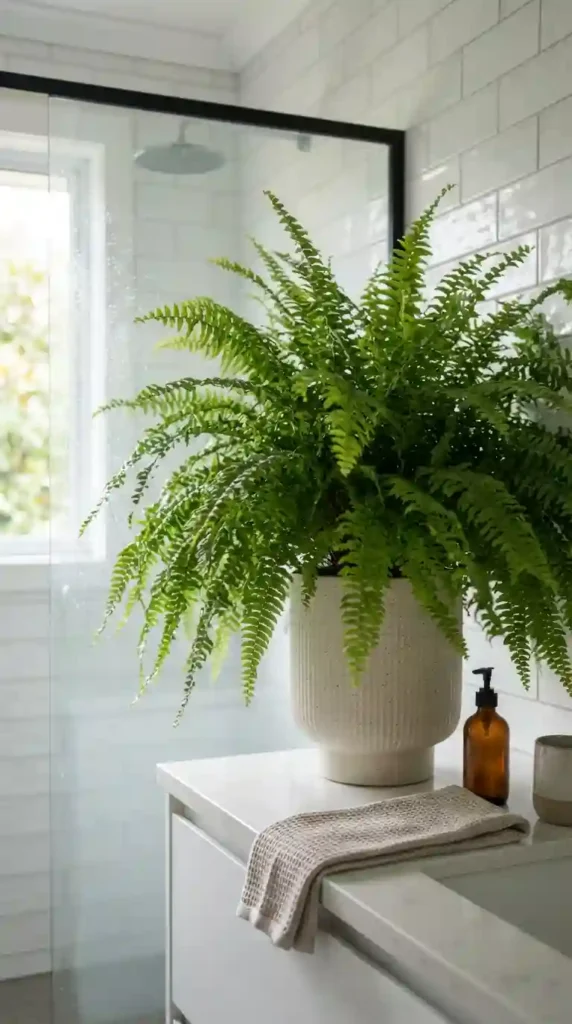
Boston fern is one of the classic choices for a humid bathroom. Its soft, arching fronds can make a bathroom feel more natural and attractive.
This plant enjoys moisture and generally prefers evenly moist soil. It can work particularly well in bathrooms where humidity remains relatively high.
Place the fern near a bright window with indirect light. Avoid intense direct sunlight because it can scorch delicate fronds.
Boston ferns can become dry when indoor air is too dry, so a naturally humid bathroom can provide a helpful environment.
2. Spider Plant
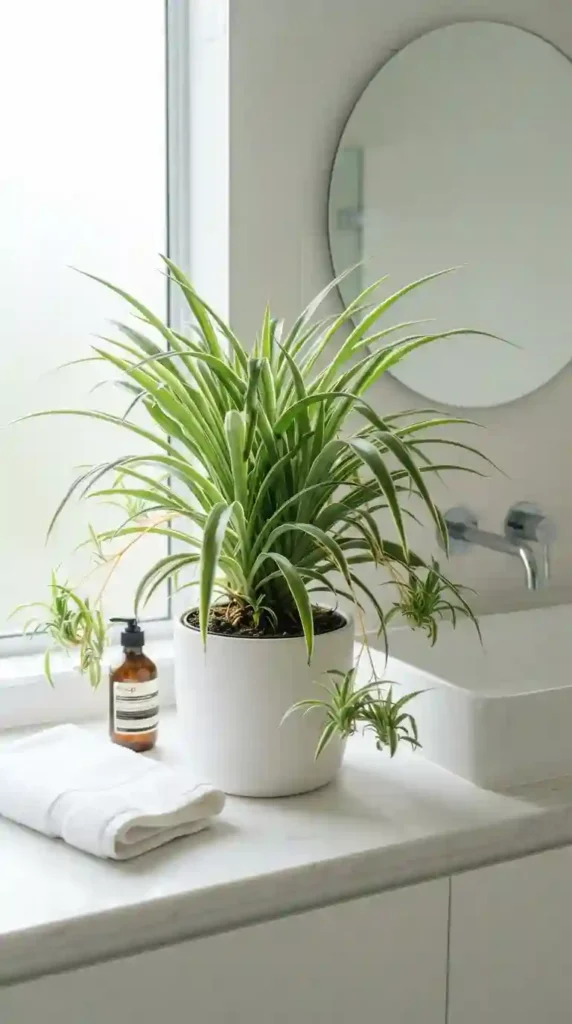
Spider plants are popular houseplants because they are relatively easy to care for and adapt to many indoor environments.
They can handle moderate humidity and usually prefer bright, indirect light. A bathroom with a suitable window can be a comfortable location.
Spider plants produce long, narrow leaves and may develop small plantlets that hang from the mother plant. These hanging growths make them especially attractive when placed on shelves or in hanging planters.
Avoid keeping the roots constantly wet. Good drainage is still important even in a humid bathroom.
3. Peace Lily
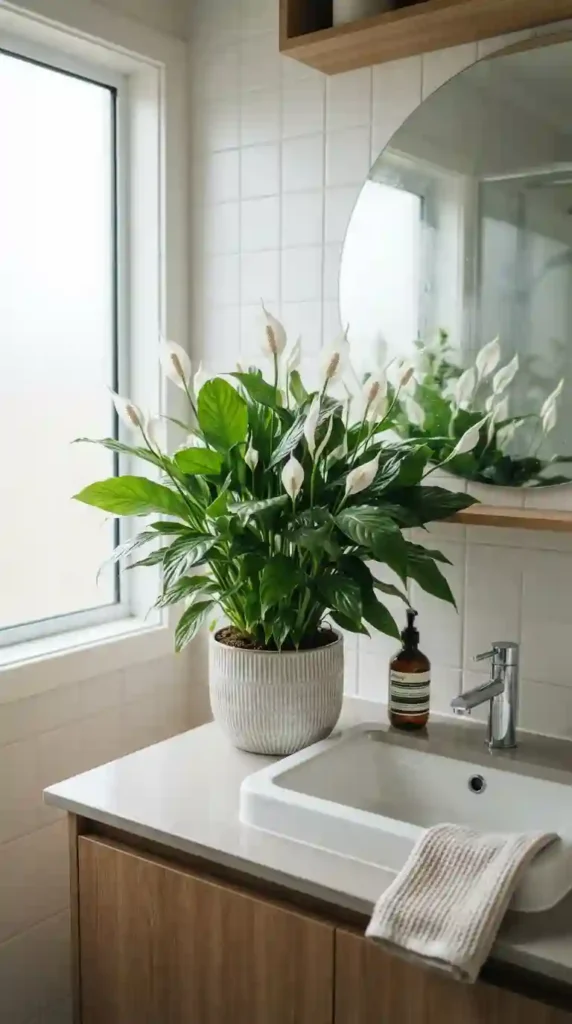
Peace lilies are attractive tropical houseplants known for their dark green foliage and white flowers.
They generally appreciate humidity and can work well in bathrooms that receive indirect light.
Place a peace lily away from harsh direct sunlight. Keep the soil moderately moist, but do not leave the pot sitting in water.
One advantage of the peace lily is its ability to tolerate lower light than some flowering houseplants. However, very low light can reduce flowering and affect overall growth.
4. Pothos
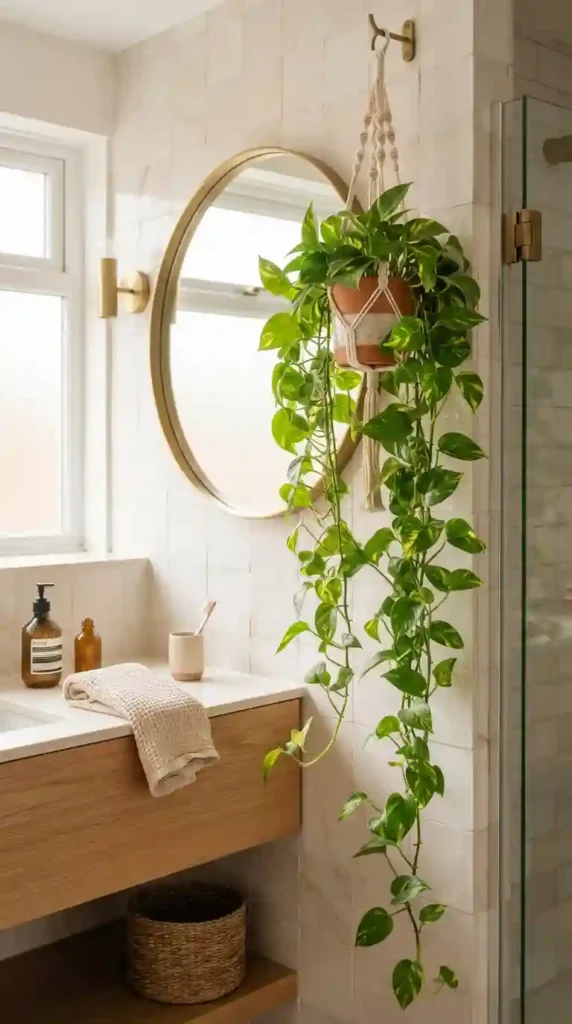
Pothos is another excellent option for humid bathrooms. Its trailing vines can create a beautiful green display when placed on a shelf, cabinet, or hanging planter.
Pothos can tolerate a range of indoor conditions, although bright indirect light usually supports stronger growth and attractive foliage.
Allow the soil to dry somewhat between waterings rather than watering automatically every day.
Because pothos can produce long vines, it is also useful when you want to add vertical greenery without taking up much floor space.
5. Snake Plant
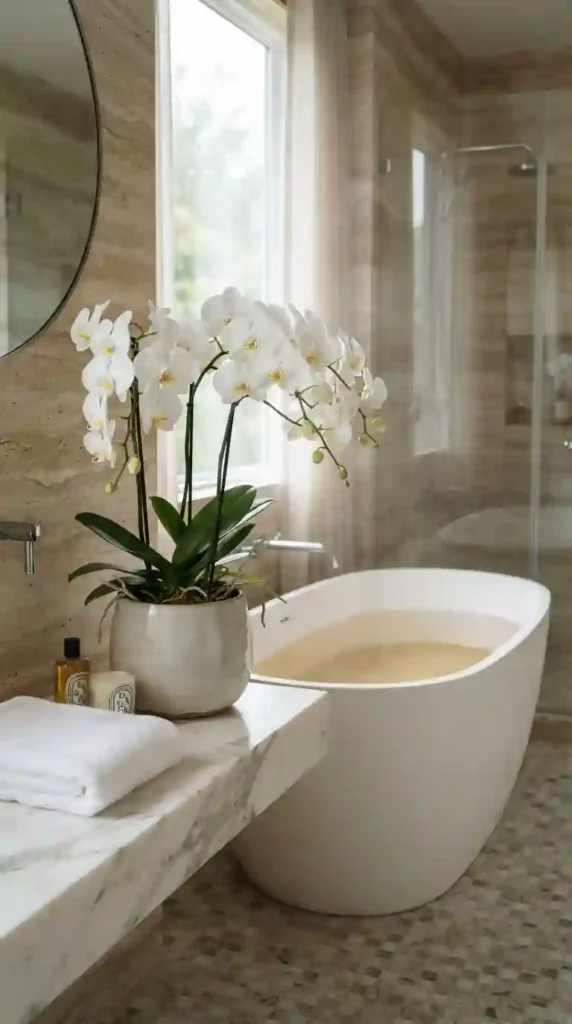
Snake plants are known for their upright leaves and ability to tolerate less-than-perfect indoor conditions.
Although snake plants do not require extremely high humidity, they can still grow in bathroom environments when the other conditions are suitable.
They are especially useful for bathrooms where humidity changes rather than remaining consistently high.
The most important thing to remember is not to overwater. Snake plants store moisture in their leaves and can suffer when their soil stays wet for too long.
Use a container with drainage holes and allow the soil to dry appropriately between waterings.
6. Calathea
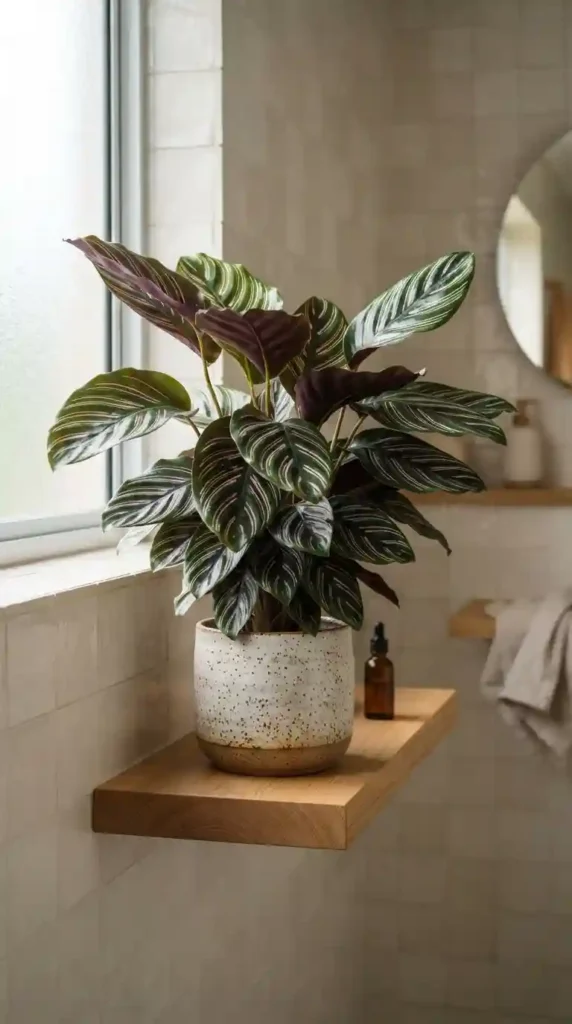
Calathea plants are known for their colorful and patterned foliage. Many varieties appreciate higher humidity, making them interesting choices for suitable bathrooms.
They generally prefer bright, indirect light and protection from harsh direct sun.
Calatheas can be more sensitive to dry air and inconsistent watering than some easier houseplants. A humid bathroom may help, but you still need to pay attention to their soil moisture.
Avoid placing them in a cold draft or directly beside an air-conditioning vent.
7. English Ivy
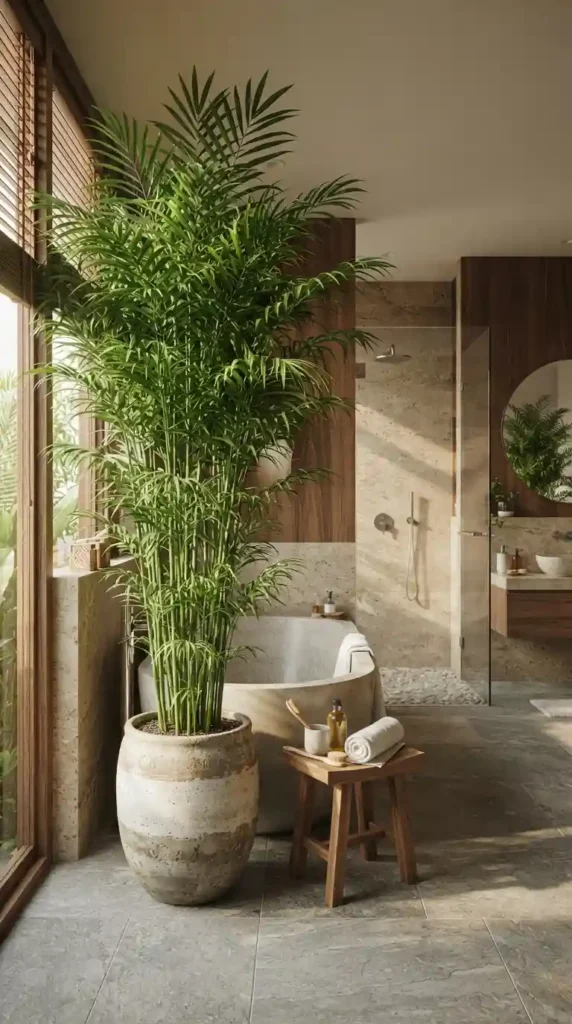
English ivy can add a trailing, decorative look to a bathroom. Its vines can be trained around shelves or allowed to hang naturally from a container.
It generally prefers bright, indirect light indoors. Good airflow is important because consistently wet foliage combined with poor ventilation can create an environment where plant problems become more likely.
Keep the soil appropriately moist without making it waterlogged.
If you have pets, research plant safety before bringing English ivy or any other plant into your home.
8. Lucky Bamboo
Lucky bamboo is a popular indoor plant that can work well in bathrooms because it handles humidity and can be grown in water or soil, depending on the setup.
Its upright stems and green foliage provide a simple, modern appearance.
If growing it in water, keep the water clean and change it regularly. If growing it in soil, use a container with proper drainage and avoid excessive watering.
Place lucky bamboo in bright, indirect light rather than strong direct sunlight.
How to Choose the Best Bathroom Plant
The best bathroom plant depends on more than humidity.
Before choosing a plant, consider:
- How much natural light the bathroom receives
- Whether the room stays warm
- How often the bathroom is used
- Whether ventilation is good
- How much space is available
- Whether you prefer hanging or floor plants
- How much plant care you want to provide
A humid bathroom with a large window can support a wider selection of plants than a dark bathroom without natural light.
Bathroom Plants for Low-Light Spaces
One of the biggest challenges with bathroom plants is insufficient sunlight.
A bathroom may have high humidity but almost no natural light. Unfortunately, humidity cannot replace light. Plants still need light to produce energy and grow.
If your bathroom has a small window, consider plants that tolerate lower light, such as snake plants or pothos.
Even these plants usually benefit from some natural light. If the room has no useful natural light at all, you may need to use an appropriate artificial grow light or move plants to a brighter location periodically.
Bathroom Plants for Bright Light
Bathrooms with large windows can provide excellent conditions for many houseplants.
However, bright sunlight through glass can sometimes be intense, particularly during the afternoon.
Plants such as spider plants and some tropical foliage plants may prefer bright indirect light rather than strong direct rays.
Watch the leaves for signs of light stress. If foliage develops bleached, scorched, or crispy areas, the plant may be receiving too much intense sunlight.
Where to Place Plants in a Bathroom
Placement can make a major difference in how well a bathroom plant grows.
Shelves are useful for smaller plants. Hanging planters work well for trailing plants such as pothos and spider plants.
A bathroom windowsill can provide useful light, but make sure the plant is not exposed to extreme heat or cold from the glass.
Keep plants away from areas where they can easily be knocked over or repeatedly splashed with hot water.
Bathroom Ventilation Still Matters
High humidity can benefit tropical plants, but a bathroom should not remain constantly damp and poorly ventilated.
After a shower, use the bathroom fan or open a window when appropriate to allow excess moisture to escape.
Good airflow helps the room dry out and can reduce the chance of fungal problems on plants.
The goal is a comfortable balance between humidity and ventilation rather than creating a permanently wet environment.
How Often Should You Water Bathroom Plants?
A humid bathroom does not automatically mean plants need less or more water.
Watering should be based mainly on the plant species, soil moisture, container size, temperature, and light conditions.
Before watering, check the soil with your finger or another simple method.
If the soil is still wet, wait. If the plant’s soil has dried to the level appropriate for that species, water thoroughly and allow excess water to drain.
Avoid leaving standing water inside decorative pots.
Use Containers With Good Drainage
Drainage is one of the most important factors when growing plants in bathrooms.
High humidity can make the air moist, but plant roots still need oxygen. If water remains trapped around the roots, the plant can become stressed.
Choose pots with drainage holes whenever possible.
If you use a decorative outer pot without drainage, remove the plant’s inner container when watering and allow excess water to drain before placing it back.
Best Soil for Bathroom Houseplants
Different plants have different soil preferences, but most bathroom houseplants benefit from a loose, well-draining potting mix.
Avoid heavy soil that remains wet for long periods.
A suitable potting mix should provide moisture while allowing excess water and air to move through the root zone.
Check the specific requirements of your plant before changing its soil.
Common Mistakes With Bathroom Plants
Even plants that enjoy humidity can struggle if their basic needs are ignored.
Common mistakes include:
- Choosing a plant for humidity without checking its light needs
- Watering too frequently
- Using pots without drainage
- Keeping plants in stagnant air
- Placing plants directly under strong sunlight
- Ignoring pests
- Leaving dead leaves in constantly damp conditions
- Forgetting to rotate plants for even growth
Avoiding these simple mistakes can make bathroom plant care much easier.
Signs Your Bathroom Plant Needs Help
Your plant’s leaves can provide useful clues about its growing conditions.
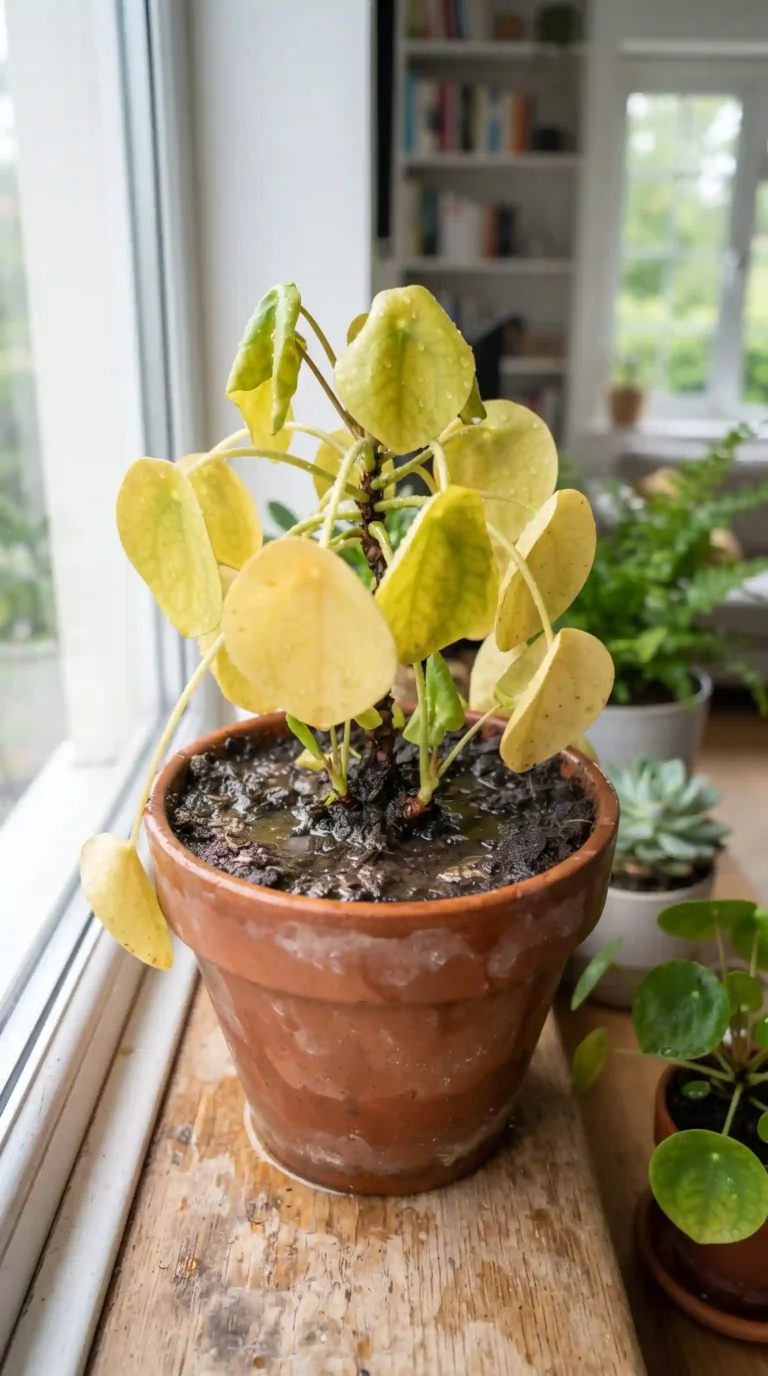
Yellow leaves may be linked to overwatering, natural aging, or other issues. Brown tips can be caused by dry conditions, watering problems, fertilizer buildup, or environmental stress.
Wilting can occur because of both underwatering and root problems caused by excessive moisture.
Look at the whole plant and its environment before making changes.
How to Keep Bathroom Plants Healthy
Regular maintenance does not need to be complicated.
Check your plants every few days. Look at the leaves, feel the soil, and make sure water is not collecting around the roots.
Remove dead or damaged leaves when necessary and inspect plants for insects.
Rotate plants occasionally if they receive light mainly from one direction.
Clean dusty leaves gently when needed because dust can reduce the amount of light reaching the foliage.
Benefits of Adding Plants to Your Bathroom
Bathroom plants can add more than decoration.
Green foliage can make a small room feel more welcoming and connected to nature. Trailing plants can soften hard surfaces, while upright plants can add height to empty corners.
Plants can also make your bathroom feel more relaxing, particularly when combined with natural materials and simple decor.
Choose plants based on actual growing conditions rather than appearance alone.
Best Hanging Plants for Humid Bathrooms
If floor space is limited, hanging plants can be an excellent solution.
Pothos and spider plants are especially attractive when allowed to trail downward.
Hanging planters can be placed near a bright window or on a suitable wall where they receive adequate indirect light.
Make sure the hanging container is secure and can handle moisture safely.
Avoid placing plants directly where hot shower water constantly hits the foliage.
How to Build a Simple Bathroom Plant Collection
You do not need to fill the entire bathroom with plants.
Start with one or two easy-care options and observe how they respond.
For a bright bathroom, you might choose a spider plant and pothos. For a more humid space with indirect light, a peace lily or Boston fern may be suitable.
Once you understand your bathroom’s conditions, you can gradually add more plants.
Final Thoughts on Perfect Plants for Bathroom Humidity
The 8 perfect plants for bathroom humidity can turn an ordinary bathroom into a greener and more relaxing space. Boston fern, spider plant, peace lily, pothos, snake plant, calathea, English ivy, and lucky bamboo each offer different shapes, textures, and care requirements.
The most important thing is to remember that humidity is only one part of successful plant care. Your plants also need suitable light, proper watering, good drainage, and reasonable airflow.
Choose a plant that matches your bathroom’s actual conditions instead of selecting one based only on appearance. With the right combination of humidity, light, and care, your bathroom can become a comfortable home for beautiful indoor plants.