20 Beautiful Hanging Plants for Indoor Spaces: Easy & Stylish Choices
Bringing greenery into your home is one of the easiest ways to make an indoor space feel fresh, relaxing, and welcoming. If you do not have much floor space, hanging plants can be an excellent solution. They allow you to enjoy beautiful greenery while using empty wall, window, shelf, or ceiling space.
There are many varieties of indoor hanging plants available, from fast-growing vines to colorful foliage and unusual trailing succulents. Some are perfect for beginners, while others need more attention and humidity.
In this guide, we explore 20 beautiful hanging plants for indoor spaces, including their main features, basic care requirements, and ideas for displaying them around your home. Whether you live in a small apartment or a spacious house, these plants can add natural beauty to almost any suitable room.
Why Hanging Plants Are Perfect for Indoor Spaces
Hanging plants offer several advantages over traditional floor plants. The biggest benefit is that they make use of vertical space. This is particularly helpful in small apartments, bedrooms, offices, and rooms where floor space is already limited.
Trailing plants can also create a soft and natural look. Their vines can hang over baskets and shelves, adding depth and texture to your interior décor.
Another advantage is flexibility. You can use hanging planters near suitable windows, in reading corners, above desks, or in other areas with enough light.
However, always make sure the hanging location is secure and can safely support the weight of the planter, soil, and mature plant.
How to Choose the Right Indoor Hanging Plant
Before buying a hanging houseplant, consider the conditions where you want to place it. Light is one of the most important factors.
Some plants prefer bright, indirect light, while others can tolerate moderate or lower-light conditions. You should also consider humidity, room temperature, watering requirements, and available space.
If you are a beginner, start with an easy-care plant such as Pothos or Spider Plant. If you have experience caring for plants, you can try more sensitive options such as Maidenhair Fern.
20 Beautiful Hanging Plants for Indoor Spaces
Here are 20 attractive options that can bring natural character to your home.
1. Pothos – An Easy-Care Trailing Favorite
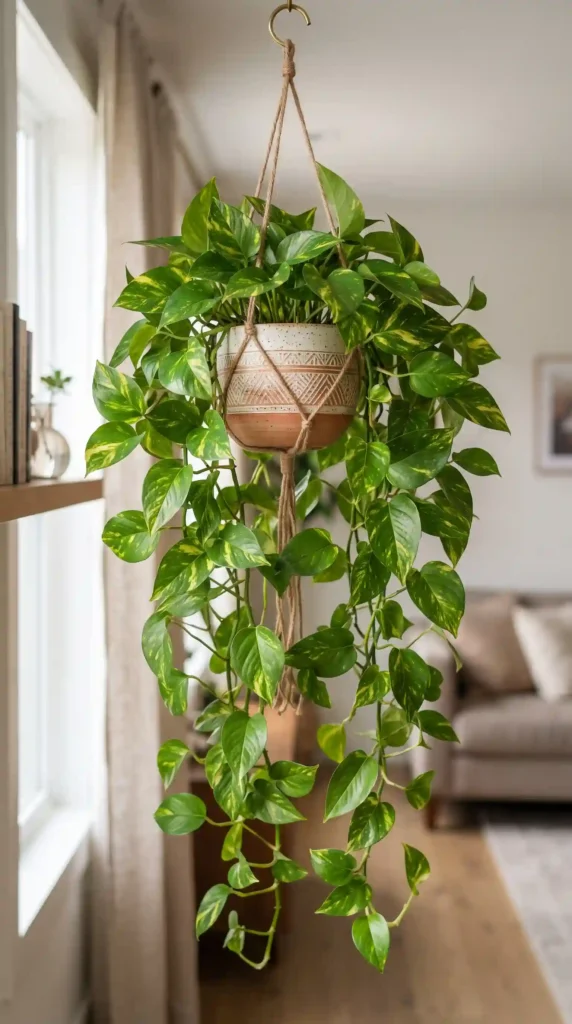
Pothos is one of the most popular indoor hanging plants. It has heart-shaped leaves and long trailing vines that look beautiful when they grow over the edge of a hanging basket.
It can tolerate a range of indoor conditions and generally prefers bright, indirect light. It can also handle periods of slightly dry soil, making it a convenient choice for busy plant owners.
Pothos is ideal for living rooms, bedrooms, offices, and other indoor areas with suitable lighting.
2. Spider Plant – A Classic Hanging Houseplant
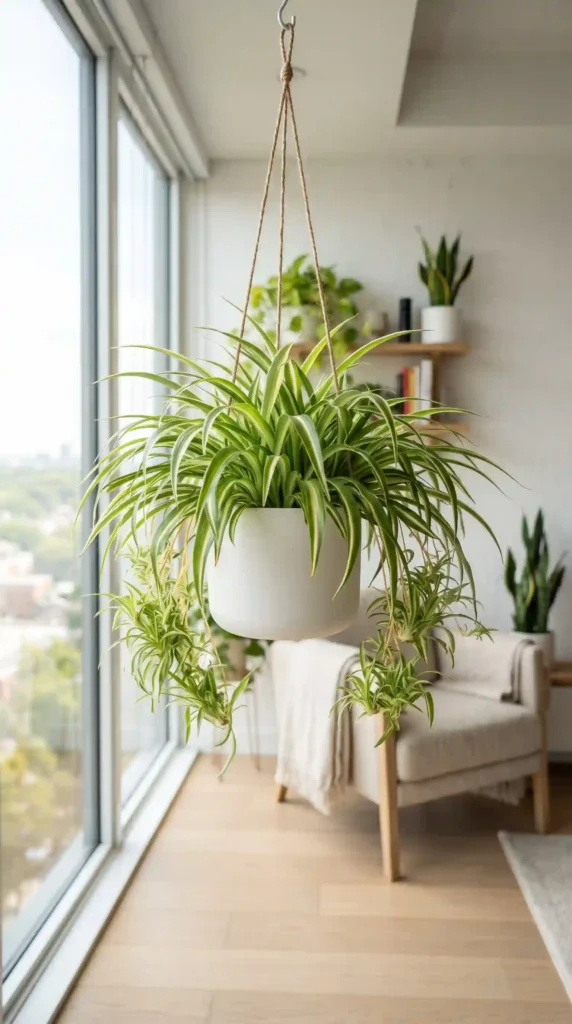
Spider Plant is another beginner-friendly choice. Its narrow leaves arch outward and downward, creating an attractive shape in a hanging planter.
Mature plants can produce small plantlets on long stems, giving the plant a unique cascading appearance.
Bright, indirect light and moderate watering can help keep Spider Plants healthy and attractive.
3. String of Pearls – A Unique Cascading Succulent
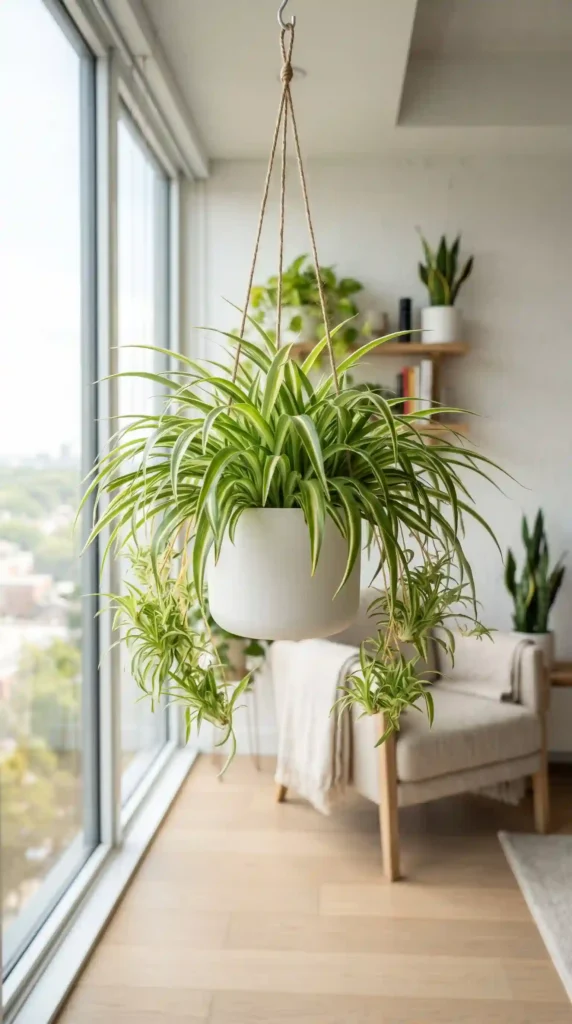
String of Pearls is instantly recognizable because of its small, round leaves that resemble green pearls.
Its long stems naturally cascade downward, making it perfect for elevated planters. It prefers bright light and well-draining soil.
Because it is a succulent, avoid frequent watering. Allow the soil to dry before watering again.
4. English Ivy – Elegant Trailing Greenery
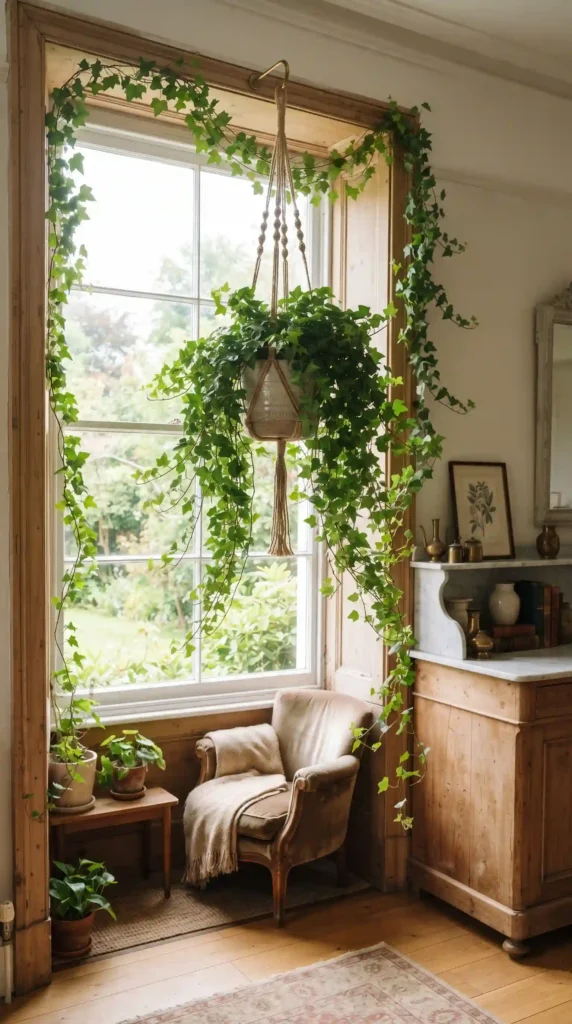
English Ivy can create a classic and elegant indoor display. Its vines can grow over the sides of a hanging basket and produce a lush trailing effect.
It generally prefers bright, indirect light and moderate moisture.
Regular pruning can help control its growth and maintain the shape you want.
5. Heartleaf Philodendron – Beautiful Heart-Shaped Vines
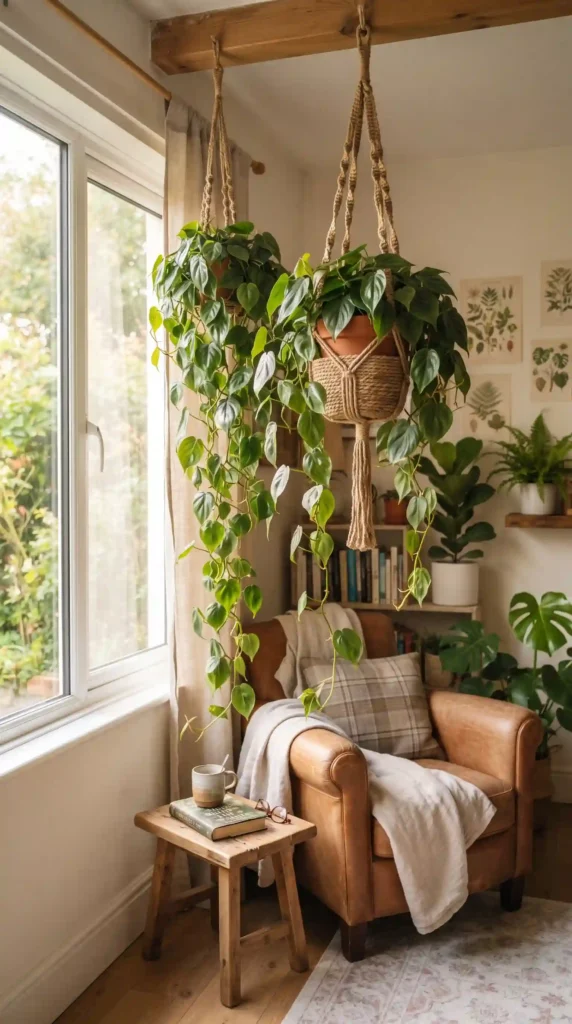
Heartleaf Philodendron is loved for its attractive heart-shaped leaves and trailing stems.
It can adapt to many indoor environments and generally performs well in moderate to bright indirect light.
Allow the upper portion of the soil to dry before watering. Its long vines make it especially attractive when displayed at an elevated height.
6. String of Hearts – A Delicate Indoor Favorite
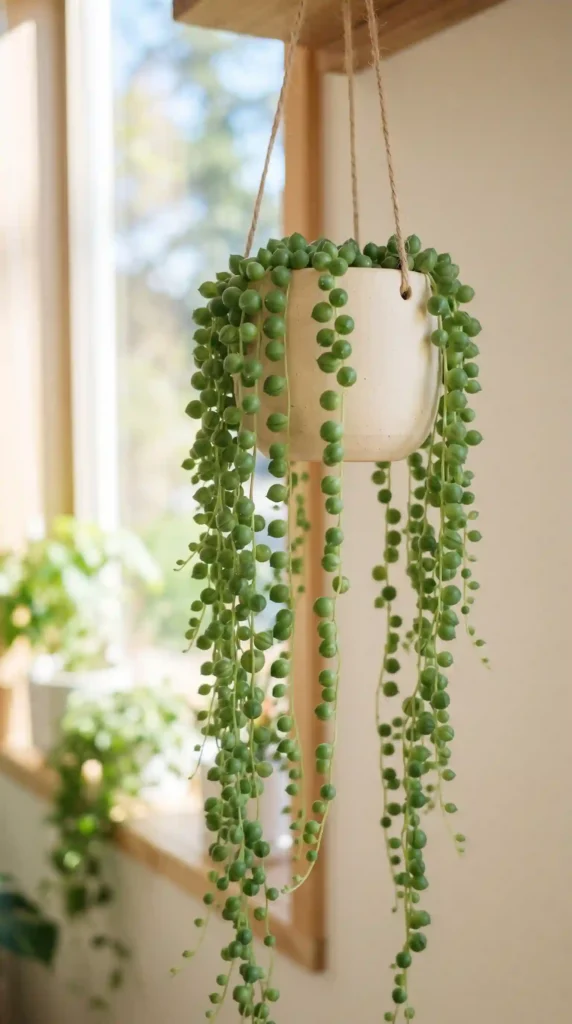
String of Hearts is a delicate-looking plant with small heart-shaped leaves arranged along thin trailing vines.
Its unusual foliage makes it a beautiful choice for bedrooms, offices, and living areas.
It generally prefers bright, indirect light and well-draining soil. Avoid keeping the soil constantly wet.
7. Boston Fern – Lush and Full Hanging Foliage
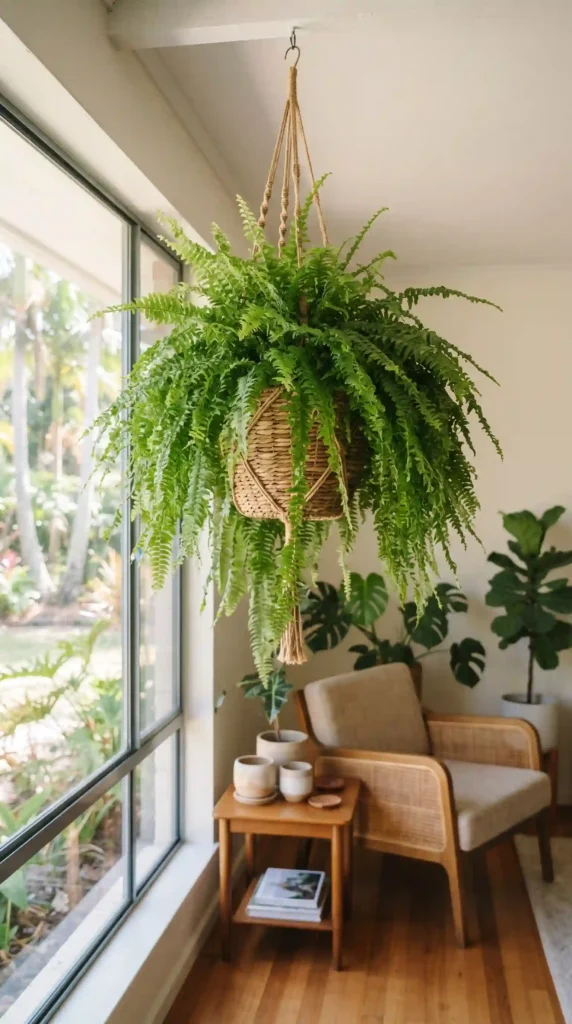
Boston Fern is perfect if you want a fuller and more tropical-looking hanging plant.
Its long, arching fronds can spill beautifully from a hanging basket. Unlike many succulents, Boston Fern generally appreciates higher humidity and consistently moist soil.
A bright bathroom or another humid room can work well if sufficient indirect light is available.
8. Tradescantia – Colorful Leaves and Fast Growth
Tradescantia can add extra color and texture to your indoor plant collection. Depending on the variety, its leaves may include green, purple, silver, or striped patterns.
It grows well in bright, indirect light and can develop long trailing stems.
Regular trimming can encourage a fuller appearance and prevent the plant from becoming too sparse.
9. String of Bananas – A Fun Trailing Succulent
String of Bananas is a unique succulent with curved leaves that look similar to tiny bananas.
Its unusual foliage makes it an excellent conversation piece. It prefers bright light and well-draining soil.
Like other trailing succulents, it should not be overwatered.
10. Hoya – Beautiful Leaves and Star-Shaped Flowers
Hoya is a popular houseplant known for its attractive foliage and beautiful flowers when growing conditions are suitable.
Its vines can trail from a hanging basket, creating an elegant display.
Hoyas generally prefer bright, indirect light and well-draining soil. Let the growing medium dry somewhat between watering sessions.
11. Burro’s Tail – A Stunning Cascading Succulent
Burro’s Tail has long trailing stems covered with small, fleshy leaves.
The stems can become impressive in length, making this plant especially suitable for hanging containers.
It prefers bright light and excellent drainage. Handle it carefully because the leaves can easily fall when the stems are disturbed.
12. Lipstick Plant – Add Color With Indoor Blooms
Lipstick Plant is named after its colorful tubular flowers, which can emerge from darker buds.
Its trailing stems make it attractive in hanging baskets, while its flowers can add a splash of color to the room.
It generally prefers bright, indirect light and moderate humidity. Avoid keeping the soil excessively wet.
13. Maidenhair Fern – Delicate and Elegant Foliage
Maidenhair Fern has soft and delicate foliage that gives it an elegant appearance.
It can look beautiful hanging near a bright window or in a humid indoor area. However, it usually requires more consistent care than tougher houseplants.
Keep the soil evenly moist without making it waterlogged, and provide suitable indirect light and humidity.
14. String of Turtles – A Unique Small-Space Plant
String of Turtles is a compact trailing plant with rounded leaves decorated with patterns that resemble turtle shells.
Its small size makes it particularly useful for apartments, offices, and other spaces where large plants may not be practical.
Bright, indirect light and careful watering can help maintain healthy growth.
15. Rhipsalis – An Unusual Trailing Houseplant
Rhipsalis is a tropical cactus with thin, trailing stems. Unlike desert cacti, it naturally grows in forest environments.
This makes it an interesting alternative for people who want a cactus with a softer, cascading appearance.
It generally prefers bright, filtered light and moderate moisture.
16. Satin Pothos – Silver-Marked Indoor Foliage
Satin Pothos features green leaves decorated with attractive silvery markings.
Its trailing vines make it an excellent choice for hanging baskets, shelves, and elevated plant stands.
Bright, indirect light can help maintain attractive foliage. Allow the upper soil layer to dry before watering again.
17. Creeping Fig – Create a Green Cascading Display
Creeping Fig has small leaves and trailing stems that can create a dense green appearance.
When grown in a hanging container, its vines can cascade naturally over the sides.
It generally prefers bright, indirect light and moderate moisture. Regular trimming can help maintain its shape.
18. Swedish Ivy – A Fast-Growing Hanging Plant
Swedish Ivy is a fast-growing indoor plant with rounded leaves and trailing stems.
It can quickly create a fuller hanging display and works well in living rooms, offices, and other bright indoor areas.
Pinching back the growing tips can encourage bushier growth.
19. Trailing Peperomia – Compact and Easy to Display
Trailing Peperomia varieties can be excellent choices for smaller hanging planters.
Their compact size and attractive foliage make them suitable for apartments, workspaces, bedrooms, and shelves.
They generally prefer bright, indirect light and well-draining soil. Avoid overwatering to help protect the roots.
20. String of Dolphins – A Fun and Unique Succulent
String of Dolphins is one of the most unusual plants on this list. Its leaves have a shape that resembles tiny dolphins.
Its trailing growth makes it particularly attractive in hanging baskets.
It generally prefers bright light, good drainage, and careful watering. Allow the soil to dry between watering sessions.
Best Hanging Plants for Low-Light Rooms
Not every room receives plenty of natural light. If your space has moderate or lower light, consider more adaptable indoor plants such as Pothos and Heartleaf Philodendron.
Spider Plant can also work well in many indoor conditions, although suitable indirect light is still important for healthy growth.
Remember that low-light tolerant does not mean no-light. Plants still need some light to grow and remain healthy.
Best Hanging Plants for Bright Indoor Spaces
Bright rooms provide more options for indoor hanging plants. String of Pearls, String of Hearts, String of Bananas, Hoya, Burro’s Tail, and String of Dolphins can be suitable choices when they receive the type of bright light they prefer.
Avoid assuming that a bright room always means direct sunlight is appropriate. Some plants can suffer leaf damage from intense direct sun, so check the specific requirements of each plant.
Easy-Care Hanging Plants for Beginners
If you are new to houseplant care, start with plants that are relatively forgiving.
Some beginner-friendly choices include:
- Pothos
- Spider Plant
- Heartleaf Philodendron
- Satin Pothos
- Swedish Ivy
- Some Peperomia varieties
These plants can be easier to manage than more sensitive species when their basic needs are met.
How to Care for Indoor Hanging Plants
Good care starts with understanding your plant’s specific requirements.
Water According to the Plant
Do not water every plant on the same schedule. Check the soil before watering and consider the plant species, container size, room temperature, and humidity.
Provide Proper Drainage
Good drainage is essential for many indoor plants. Excess water should have a way to escape so the roots are not sitting in constantly wet soil.
Choose the Right Light
Place each plant according to its light requirements. Bright indirect light is suitable for many popular houseplants, while some species can tolerate moderate light.
Prune When Needed
Trailing plants can become long and sparse over time. Pruning can help control their size and encourage fuller growth in suitable species.
Monitor for Pests
Check leaves, stems, and the surface of the soil regularly. Finding problems early can make them easier to manage.
Best Places to Hang Plants Inside Your Home
Hanging plants can work in many areas around the house. A living room corner can become more attractive with a cascading plant. A bedroom can benefit from a simple green accent, while a home office can feel more inviting with a hanging basket near a suitable window.
Bathrooms can be useful for humidity-loving plants such as ferns if they receive enough natural light.
You can also place hanging plants near shelves or windows to create different levels of greenery. Just make sure they are positioned safely and do not block walkways, doors, or important fixtures.
How to Create a Beautiful Indoor Hanging Plant Display
Creating an attractive indoor plant display does not require dozens of plants. Start with one or two hanging baskets and build your collection gradually.
Try combining plants with different leaf shapes and growth patterns. For example, a plant with large heart-shaped leaves can look interesting next to a fine-textured trailing plant.
You can also experiment with different planter styles. Simple containers can suit modern interiors, while woven or macramé hangers can create a more relaxed decorative look.
Keep enough space between plants to provide good airflow and room for natural growth.
Common Mistakes to Avoid With Hanging Plants
One common mistake is overwatering. More water does not always mean healthier growth. Always consider the specific plant’s needs.
Another mistake is placing a plant in the wrong lighting conditions. A shade-tolerant plant and a bright-light succulent have very different requirements.
Using containers without proper drainage can also cause problems. Finally, avoid hanging heavy planters in locations that cannot safely support their weight.
Frequently Asked Questions About Indoor Hanging Plants
Are hanging plants good for small rooms?
Yes. Hanging plants are especially useful for small rooms because they use vertical space instead of valuable floor or table space.
Which hanging plants are easiest to grow indoors?
Pothos, Spider Plant, and Heartleaf Philodendron are popular beginner-friendly options. They can adapt to many typical indoor conditions when their basic needs are met.
What hanging plants need the least water?
Trailing succulents such as String of Pearls, String of Hearts, String of Bananas, and String of Dolphins generally need less frequent watering than plants that prefer consistently moist soil.
Can hanging plants grow in low light?
Some plants tolerate lower-light conditions better than others. Pothos and Heartleaf Philodendron are commonly chosen for areas with moderate light, but all plants need an appropriate amount of light to remain healthy.
How often should indoor hanging plants be watered?
There is no universal schedule. Check the soil and consider the plant’s species, container, light, temperature, and humidity before watering.
Final Thoughts on Beautiful Hanging Plants for Indoor Spaces
These 20 beautiful hanging plants for indoor spaces provide plenty of options for adding greenery without using much floor space. From easy-care Pothos and Spider Plant to unusual choices such as String of Turtles and String of Dolphins, each plant can bring a different texture and personality to your home.
The best indoor hanging plant is one that matches your room’s lighting, humidity, temperature, and your ability to provide regular care. Start with an easy variety if you are new to houseplants, and gradually explore more demanding species as you gain experience.
With the right plant, planter, location, and basic care routine, hanging greenery can transform an empty corner into a beautiful and relaxing part of your indoor space.