10 Proven Methods to Revive a Dying Plant
A wilting plant can make any gardener worry. Yellow leaves, drooping stems, dry soil, brown edges, and falling leaves are common signs that something is wrong. But before throwing your plant away, take a closer look.
Many struggling plants can recover when you identify the problem early and correct the growing conditions. The key is not to give a dying plant everything at once. Instead, determine whether the problem involves water, light, roots, soil, pests, temperature, or nutrients.
In this guide, you’ll learn 10 proven methods to revive a dying plant and give it a better chance of producing healthy new growth.
1. Check Whether the Plant Is Still Alive
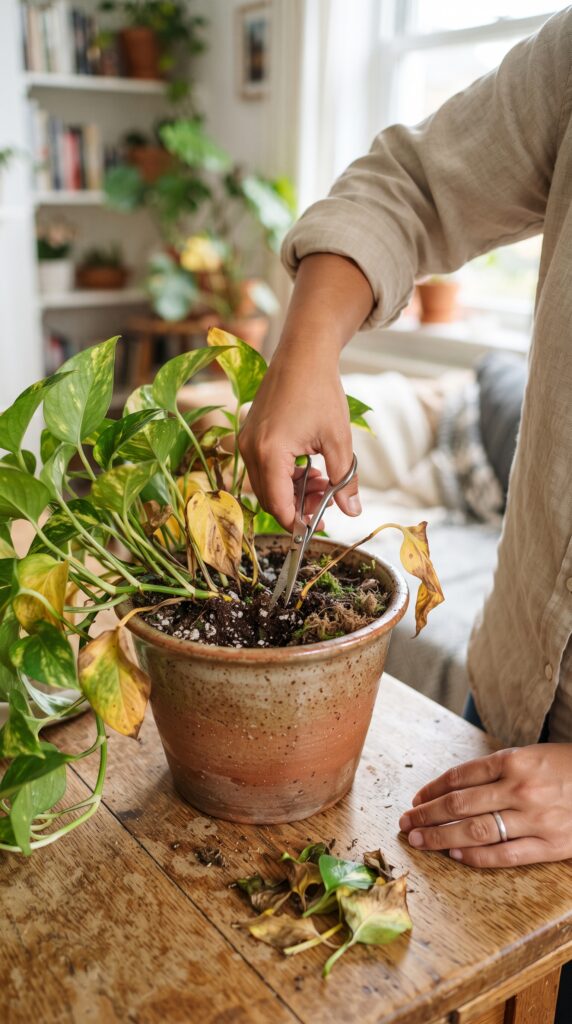
Before trying to revive a plant, determine whether it has living tissue.
Look closely at the stems. Gently scratch a small area of the outer stem with your fingernail. If the tissue underneath is green and moist, that section may still be alive. If it is completely brown and dry, move farther down the stem.
Don’t immediately remove every damaged leaf. A plant may look unhealthy while its roots and growing points are still alive.
If the roots and lower stems remain healthy, recovery may be possible.
2. Check the Soil Moisture
One of the most common reasons plants struggle is improper watering.
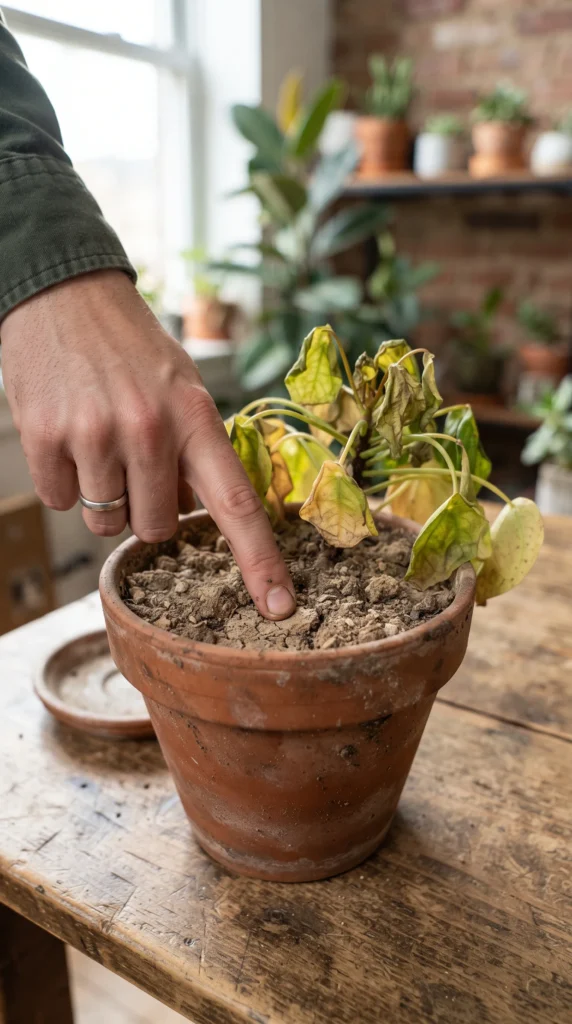
Insert your finger into the soil or use a moisture meter to determine how wet the root zone is.
If the soil is extremely dry
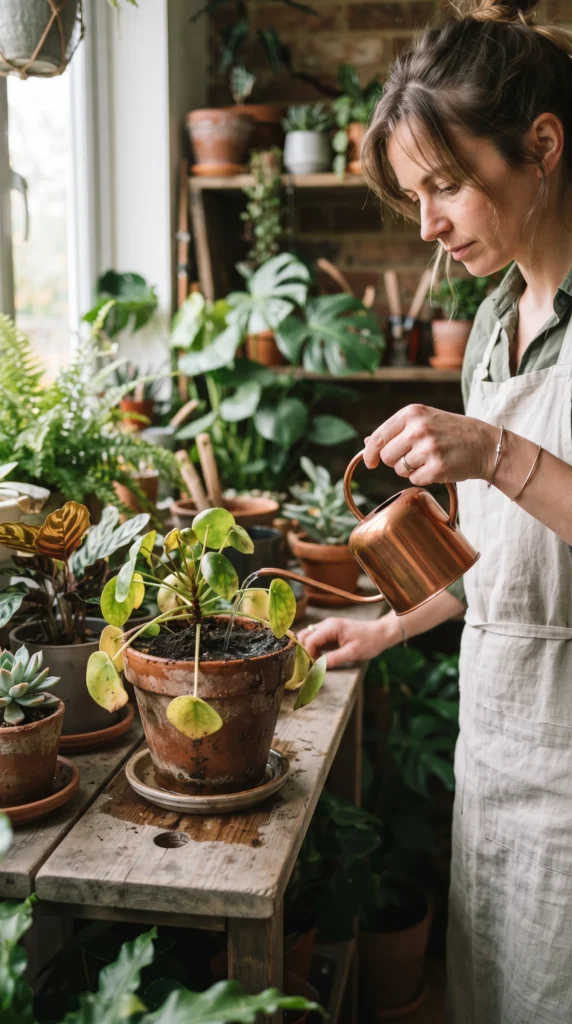
Water thoroughly until excess water begins draining from the bottom of the container.
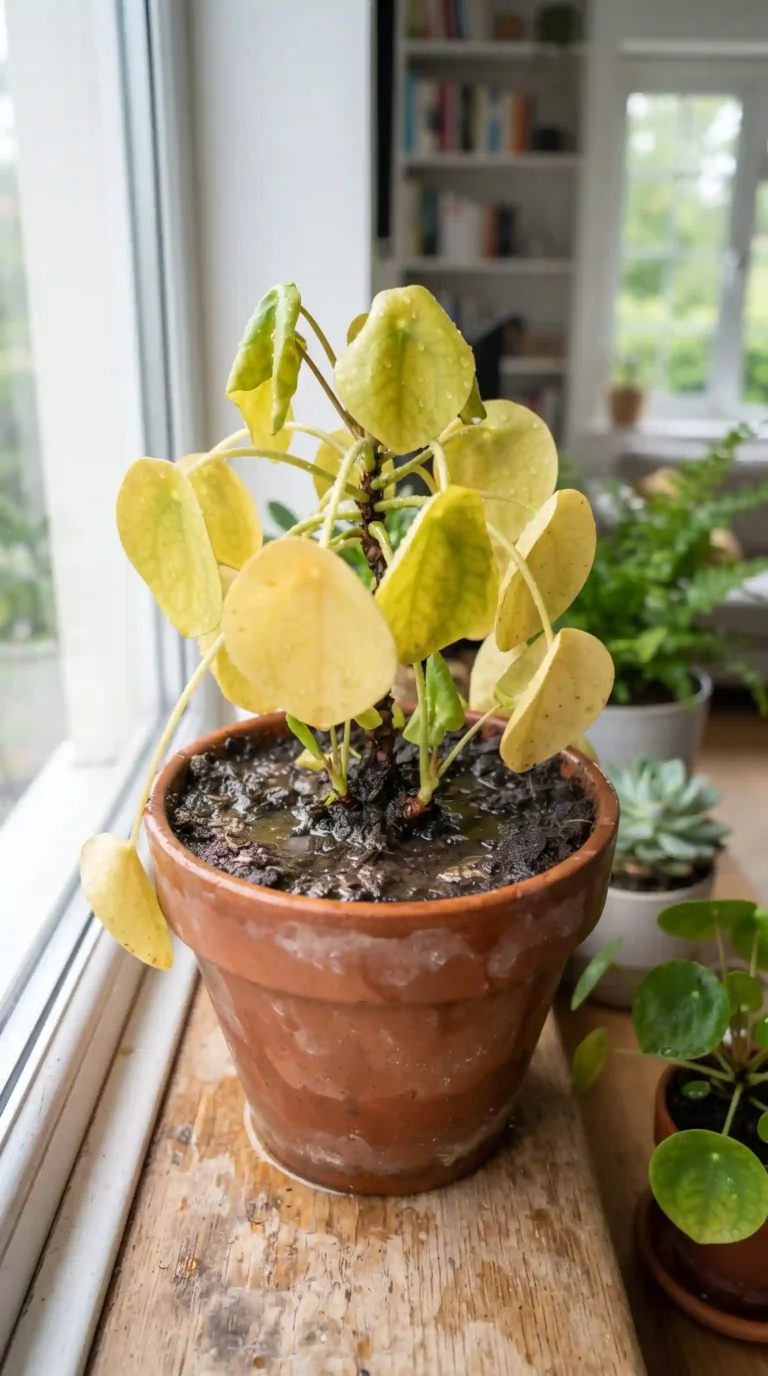
If the soil is constantly wet
Stop watering temporarily and allow the growing medium to dry appropriately.
Avoid following a rigid watering schedule. Plant water requirements change with temperature, humidity, sunlight, season, container size, and plant type.
3. Fix the Lighting
Light is essential for photosynthesis, and inadequate light can cause weak, stretched, pale, or slow-growing plants.
On the other hand, moving a shade-loving plant directly into intense sunlight can cause leaf scorch.
Research your plant’s preferred light conditions before changing its location.
For indoor plants, move the plant gradually toward a brighter area when appropriate.
For outdoor plants, consider whether nearby buildings, trees, or structures have changed the amount of sunlight reaching the plant.
4. Inspect the Roots
Healthy roots are essential for recovery.
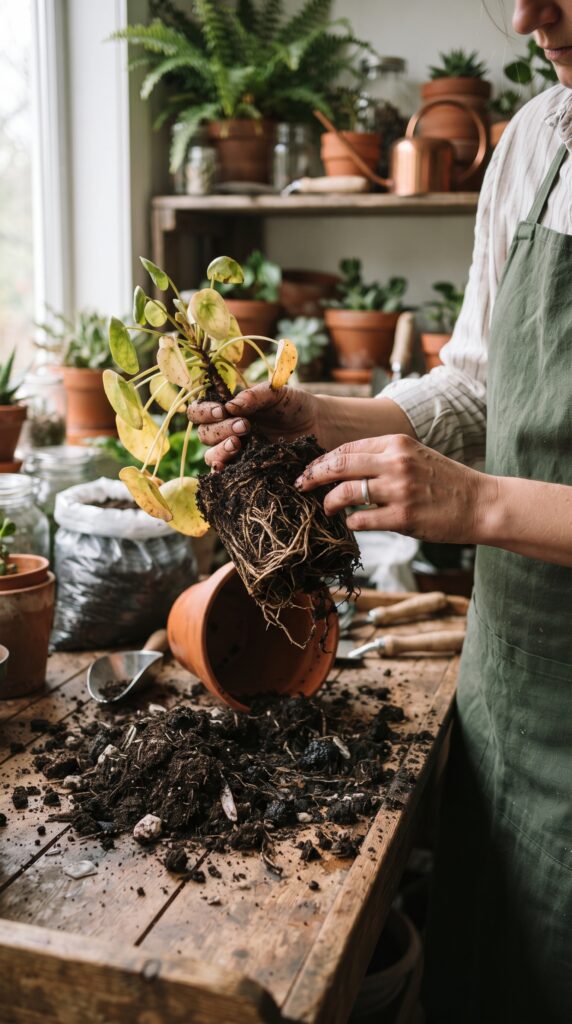
If a container plant continues to decline despite reasonable watering, carefully remove it from the pot and inspect the root system.
Healthy roots are generally firm and appropriately colored for the species. Mushy, foul-smelling, or severely deteriorated roots may indicate root problems.
If damaged roots are present, remove clearly dead material with clean tools.
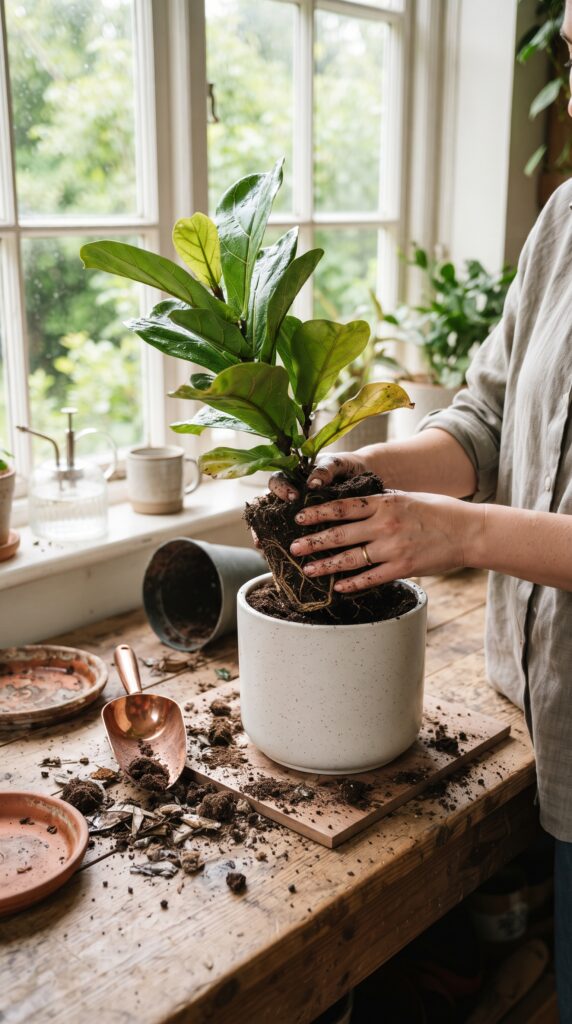
Repot the plant into a suitable container with fresh, well-draining growing medium if necessary.
Don’t automatically move every struggling plant into a larger pot. A much larger container can hold excess moisture and create additional problems.
5. Improve Drainage
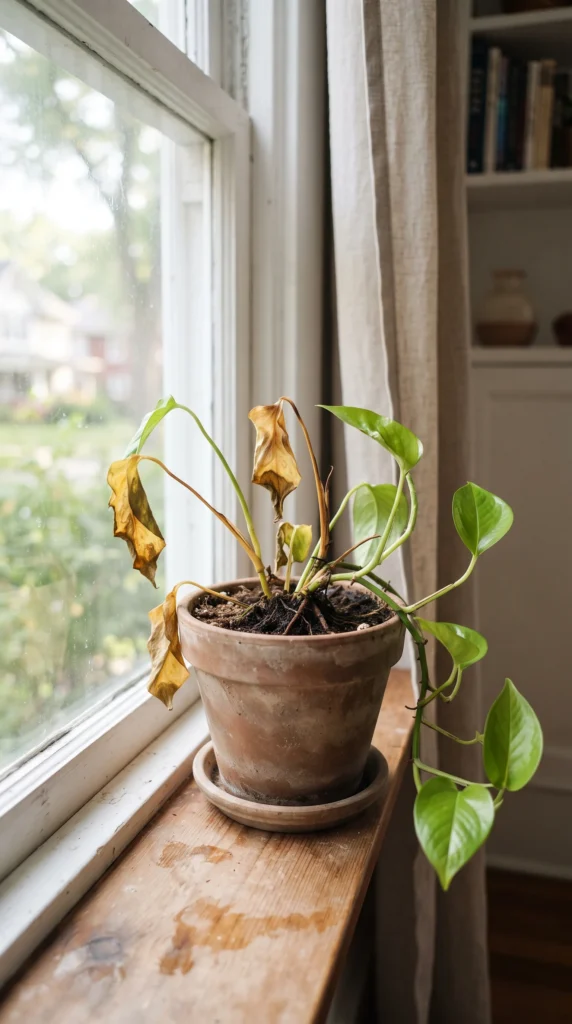
A plant can suffer even when you’re watering correctly if excess water cannot escape.
Check that containers have drainage holes.
If water sits in a decorative outer pot, remove excess water rather than allowing the plant to remain submerged.
For outdoor gardens, compacted or poorly drained soil can create similar problems.
Improving soil structure and choosing appropriate planting locations can help roots receive both moisture and oxygen.
6. Prune Dead or Severely Damaged Growth
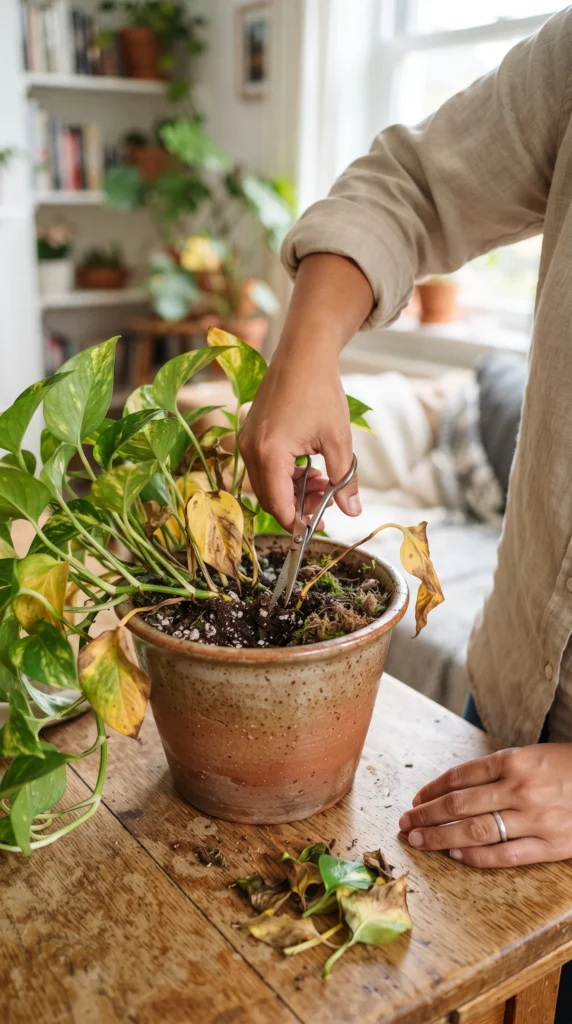
Removing dead material can help you see the plant’s healthy structure and redirect attention toward viable growth.
Use clean, sharp pruning tools to remove:
- Completely dead stems
- Severely damaged branches
- Diseased leaves when appropriate
- Dead flowers
- Brown, nonviable growth
However, don’t remove large amounts of green foliage unnecessarily.
Healthy leaves still contribute energy to the plant through photosynthesis.
When pruning diseased material, clean your tools between plants to reduce the chance of spreading pathogens.
7. Look for Pests
Pests can weaken an already stressed plant.
Inspect both the upper and lower surfaces of leaves.
Common signs include:
- Tiny insects
- Sticky residue
- Fine webbing
- Distorted leaves
- Holes
- Speckled foliage
- Clusters of insects around new growth
Common indoor and outdoor plant pests include aphids, scale insects, mealybugs, whiteflies, and spider mites.
Identify the pest before choosing a control method.
For a small infestation, physically removing pests or washing foliage with an appropriate stream of water may help. More serious infestations may require additional management.
8. Check for Plant Diseases
Disease can cause symptoms such as:
- Leaf spots
- Rot
- Wilting
- Stem lesions
- Discoloration
- Premature leaf drop
Not every yellow or brown leaf indicates disease. Environmental stress can produce similar symptoms.
Look at the pattern of damage.
If several plants develop similar symptoms at the same time, consider whether weather, watering, soil, or a shared pest or disease problem could be responsible.
Remove severely diseased material when appropriate and improve airflow around crowded plants.
9. Don’t Overfertilize a Weak Plant
When a plant looks unhealthy, adding lots of fertilizer may seem like an obvious solution.
It can actually make the situation worse.
Excess fertilizer can increase salt concentrations around roots and cause additional stress.
Before feeding a struggling plant, determine whether nutrients are actually lacking.
A soil test can be useful for garden plants, particularly when nutrient deficiencies are suspected.
If fertilizer is appropriate, follow the product’s recommended application rate rather than assuming more will produce faster recovery.
10. Give the Plant Time to Recover
One of the most important methods for reviving a dying plant is patience.
Plants don’t always recover immediately after conditions improve.
You may first notice that:
- Leaves stop declining
- New growth begins
- Stems become firmer
- Color improves
- The plant produces new roots
Avoid changing several major conditions every day.
For example, don’t move a plant repeatedly, dramatically increase watering, add fertilizer, repot it, and prune it all within a short period unless there is a clear reason.
Make the necessary correction and give the plant time to respond.
How to Revive an Overwatered Plant
Overwatering is a frequent problem, especially with indoor container plants.
If the soil remains saturated:
- Stop watering temporarily.
- Confirm that drainage holes are open.
- Remove standing water from outer containers.
- Inspect roots if the plant continues declining.
- Repot if the root system or growing medium is severely compromised.
- Resume watering only when appropriate for the plant.
Remember that overwatering is often about watering too frequently, not simply using too much water on a single occasion.
How to Revive an Underwatered Plant
A severely dry plant may wilt dramatically.
If the plant is still alive:
- Check whether the soil has become hydrophobic or extremely dry.
- Water thoroughly.
- Allow excess water to drain.
- Monitor moisture closely over the following days.
- Establish a watering routine based on the plant’s actual needs.
For extremely dry container soil, water may run down the sides without properly wetting the root ball. In such cases, gradual rehydration may be necessary.
How Long Does It Take to Revive a Plant?
There is no universal recovery time.
A mildly stressed plant may show improvement within days, while a plant with severe root damage can take weeks or longer to produce significant new growth.
Recovery depends on:
- Plant species
- Severity of damage
- Root health
- Temperature
- Light
- Humidity
- Watering
- Growing medium
- Pest or disease pressure
Focus on improving the conditions rather than expecting an exact recovery date.
Signs Your Plant Is Recovering
Look for positive changes rather than simply expecting old leaves to become perfect again.
Signs of recovery may include:
- New leaves
- New shoots
- Firmer stems
- Healthy root growth
- Reduced wilting
- Improved leaf color
- Stable soil moisture
- New flower buds
Old damaged leaves may never return to their original appearance. That’s okay.
Healthy new growth is often a better indicator of recovery.
Common Mistakes When Reviving Plants
Watering Too Much
Don’t compensate for dry soil by keeping it permanently wet.
Fertilizing Immediately
Stressed roots may be sensitive to excess fertilizer.
Repotting Without a Reason
Unnecessary repotting can add stress.
Removing All the Leaves
The plant may need its remaining healthy foliage to produce energy.
Changing Everything at Once
Identify the most likely problem and correct it systematically.
Final Thoughts
Learning how to revive a dying plant starts with identifying the real cause of the decline.
Check the soil, inspect the roots, evaluate light, look for pests and disease, improve drainage, and remove only genuinely dead or severely damaged growth. Avoid overwatering and overfertilizing in an attempt to force recovery.
Most importantly, give the plant time.
A struggling plant isn’t necessarily a lost plant. If living roots, stems, or growing points remain, correcting its environment may give it an opportunity to recover and produce healthy new growth.
With careful observation and consistent care, you may be surprised by how resilient a seemingly dying plant can be.