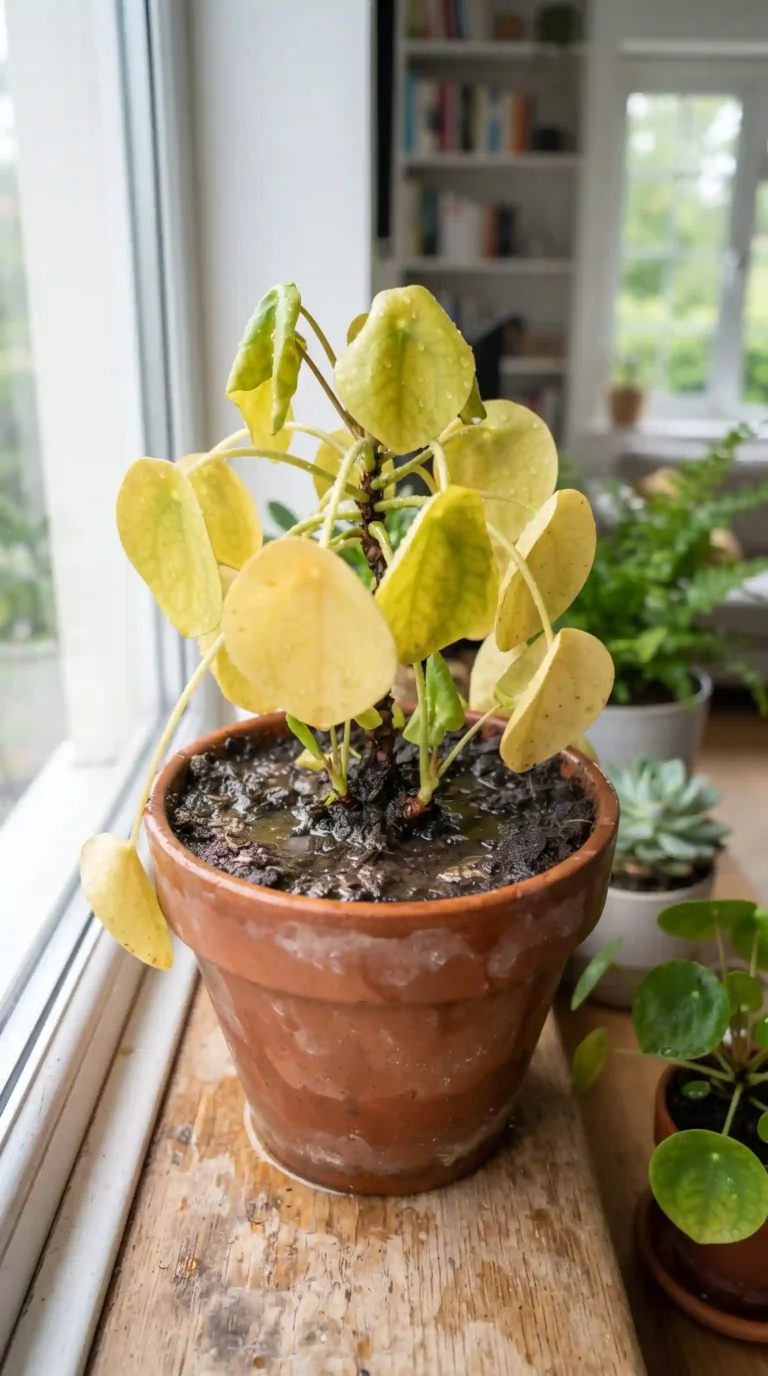
9 Reasons Your Tomato Leaves Are Turning Yellow
Seeing your tomato plant develop yellow leaves can be frustrating, especially when you’re expecting healthy green growth and a big harvest. But yellow tomato leaves don’t always mean your plant is dying.
Several issues can cause tomato leaves to turn yellow, including watering problems, nutrient deficiencies, pests, diseases, poor soil conditions, and natural aging. The good news is that many of these problems can be corrected once you identify the cause.
In this guide, we’ll explain 9 common reasons your tomato leaves are turning yellow, how to recognize each problem, and what you can do to help your plants recover.
1. Overwatering
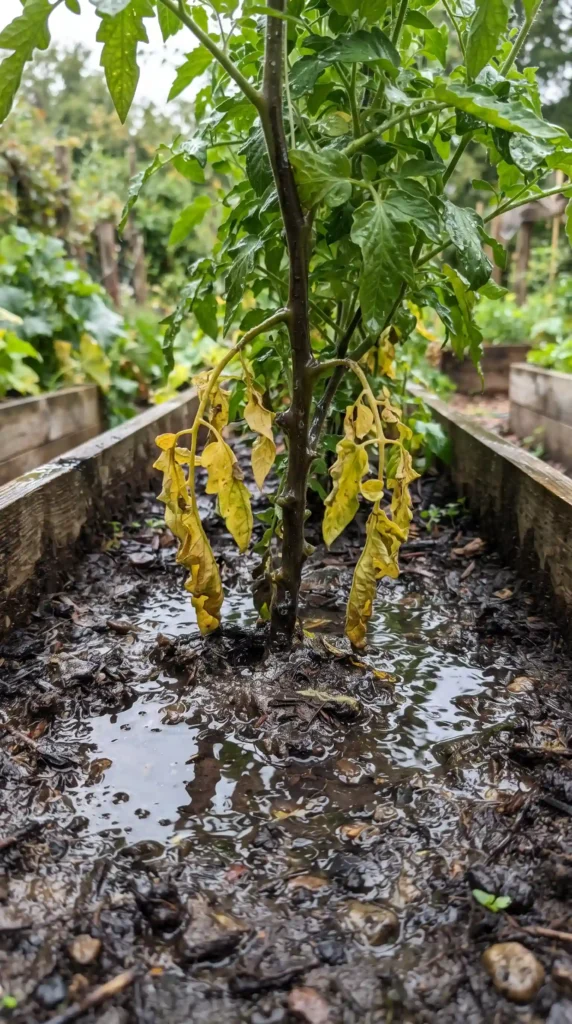
One of the most common causes of yellow tomato leaves is too much water.
Tomato plants need consistent moisture, but constantly wet soil can prevent roots from getting enough oxygen. Over time, stressed roots may struggle to absorb water and nutrients.
Signs of Overwatering
Look for:
- Yellow leaves throughout the plant
- Soil that remains wet for long periods
- Wilting despite wet soil
- Slow growth
- Soft or damaged roots
How to Fix It
Allow the soil to dry slightly between waterings. Check the soil several inches below the surface before watering again.
If your tomato is growing in a container, make sure the pot has drainage holes.
Avoid watering automatically every day. Instead, water according to soil moisture and weather conditions.
2. Underwatering
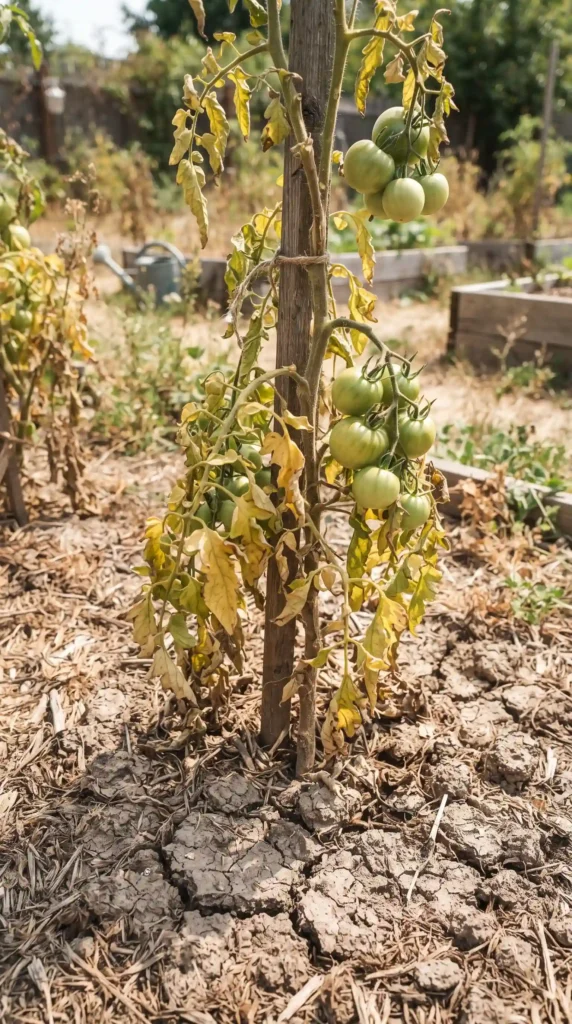
Too little water can also cause tomato leaves to turn yellow.
When the plant doesn’t receive enough moisture, it becomes stressed. Leaves may wilt, curl, dry around the edges, and eventually turn yellow or brown.
How to Fix It
Water deeply rather than giving the plant frequent, shallow drinks.
Apply water around the root zone and avoid relying only on rainfall if conditions are dry.
Adding organic mulch around the plant can help the soil retain moisture.
Keep mulch a few inches away from the stem to reduce the risk of moisture-related problems.
3. Nitrogen Deficiency
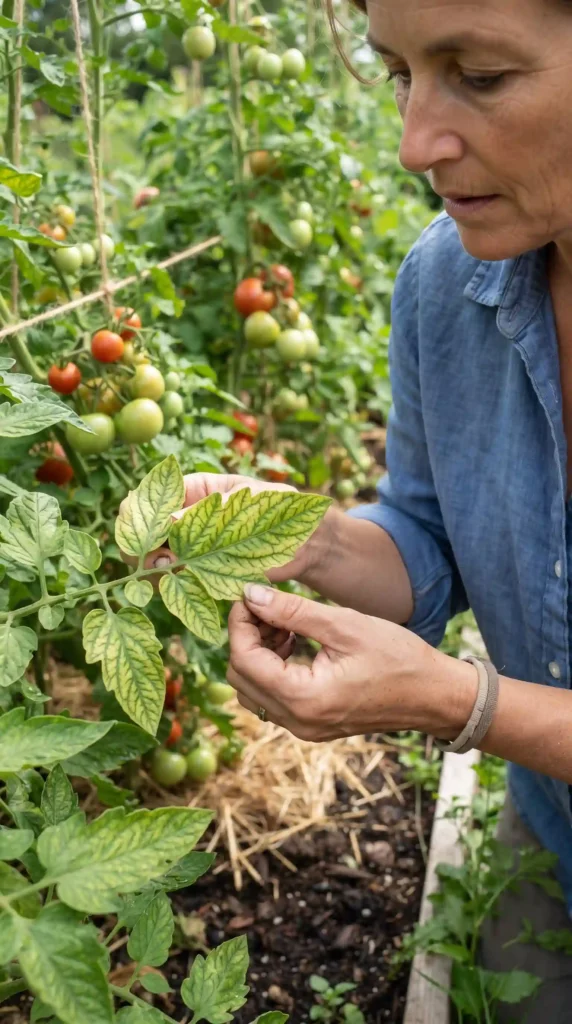
Tomatoes need nitrogen for healthy leaf and stem growth.
A nitrogen deficiency often causes older, lower leaves to turn pale green or yellow while newer growth remains greener.
What to Do
Test your soil if possible before adding fertilizer.
If a nitrogen deficiency is confirmed or strongly suspected, use an appropriate balanced or vegetable fertilizer according to the product label.
Avoid adding excessive nitrogen.
Too much nitrogen can encourage lots of leafy growth while reducing fruit production.
4. Nutrient Imbalances
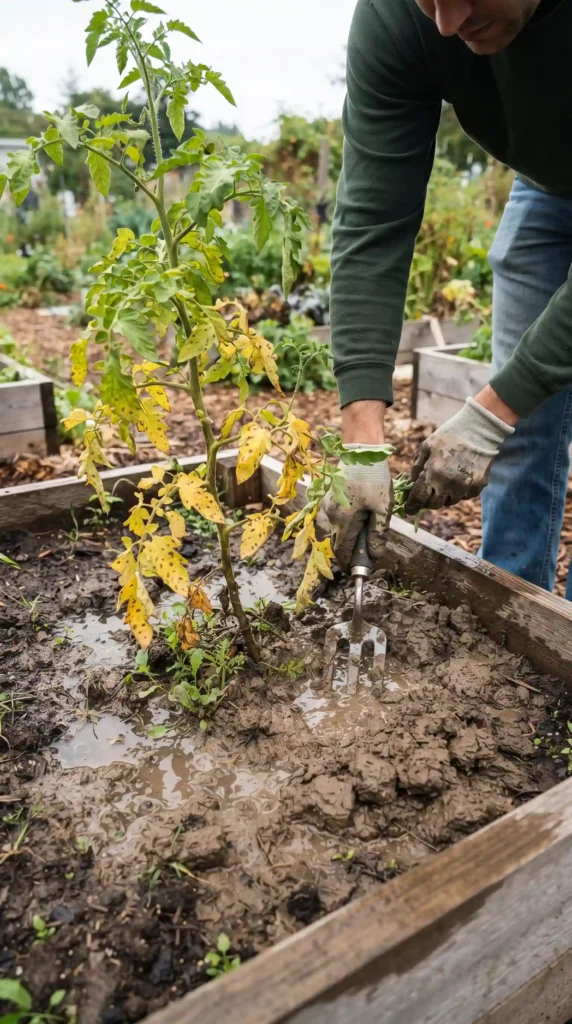
Nitrogen isn’t the only nutrient that can cause yellowing.
Deficiencies or imbalances involving nutrients such as magnesium or iron can also affect leaf color.
The pattern matters.
For example, interveinal chlorosis, where the areas between leaf veins turn yellow while the veins remain green, can indicate certain nutrient problems.
However, nutrient symptoms can look similar to disease, root stress, or environmental problems.
Best Solution
Instead of guessing, consider a soil test.
A soil test can provide useful information about nutrient levels and pH, helping you avoid unnecessary fertilizer applications.
5. Tomato Plant Diseases
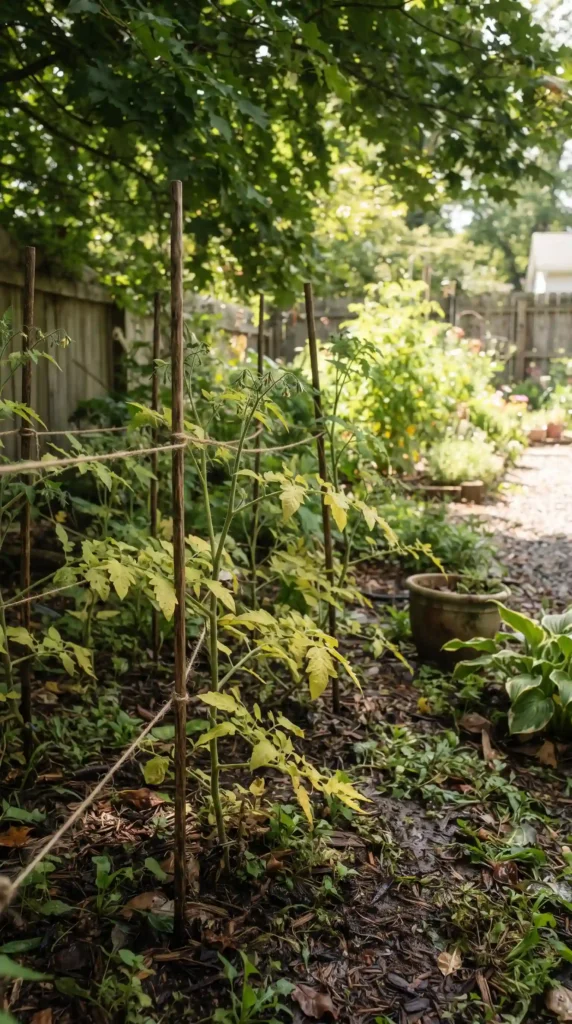
Some diseases can cause yellowing leaves.
Depending on the disease, yellowing may occur alongside:
- Brown spots
- Dark lesions
- Wilting
- Leaf curling
- Stem discoloration
- Stunted growth
- Fruit problems
Fungal, bacterial, and viral diseases can affect tomatoes.
What to Do
Remove severely affected plant material when appropriate and dispose of diseased material according to local recommendations.
Avoid working with wet foliage because moisture can help certain diseases spread.
Improve airflow by giving plants adequate spacing and pruning appropriately.
If you aren’t sure which disease you’re dealing with, take clear photographs and contact your local university extension service or gardening expert for identification.
6. Poor Drainage
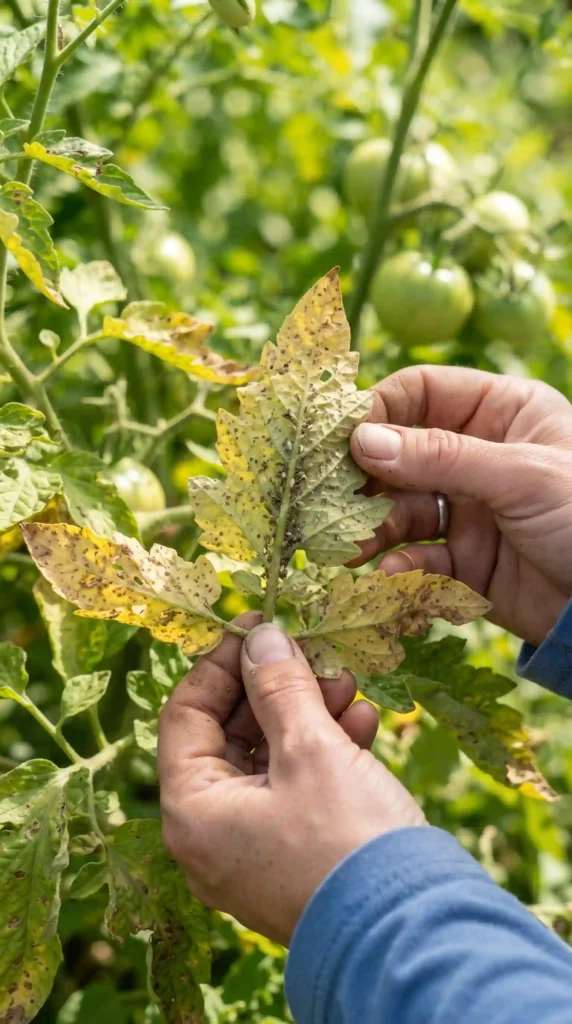
Even if you’re not overwatering, poorly drained soil can keep tomato roots wet for too long.
Heavy clay soil, compacted ground, or containers without sufficient drainage can all contribute to root stress.
Signs of Drainage Problems
You may notice:
- Persistent wet soil
- Yellow leaves
- Slow growth
- Wilting
- Root problems
How to Improve Drainage
Grow tomatoes in well-draining soil.
For garden beds, improve soil structure using appropriate organic matter.
For containers, use a suitable high-quality potting mix rather than heavy garden soil.
Make sure excess water can escape freely.
7. Pests Are Damaging the Leaves
Some pests feed on tomato foliage and can cause discoloration.
Common tomato pests include:
- Aphids
- Whiteflies
- Spider mites
- Thrips
- Tomato hornworms
Small sap-feeding insects can weaken plants and cause leaves to become distorted or discolored.
Spider mites may cause tiny pale or yellow speckles across leaves.
How to Check
Inspect the undersides of leaves regularly.
Look for insects, eggs, webbing, sticky residue, or unusual spots.
If you find pests, identify them before choosing a treatment.
Beneficial insects such as lady beetles, lacewings, and predatory insects can naturally help control some pest populations.
8. Too Much Sun or Heat Stress
Tomatoes love sunlight, but extreme heat can stress plants.
During periods of intense heat, leaves may wilt, curl, develop pale areas, or become damaged.
Container-grown tomatoes can be particularly vulnerable because their soil can heat up and dry out quickly.
How to Help
Water deeply when the soil is dry.
Provide temporary shade during extreme heat if appropriate for your climate.
Use mulch to help stabilize soil moisture and temperature.
Avoid drastic changes in watering.
9. Older Leaves Are Naturally Aging
Sometimes yellow tomato leaves are completely normal.
As tomato plants mature, older leaves near the bottom of the plant naturally age and may turn yellow before falling off.
If the plant is otherwise healthy, producing new green growth, and developing fruit normally, there’s often no reason to panic.
What to Do
Remove dead or heavily yellowed lower leaves with clean pruning tools if necessary.
Don’t remove large amounts of healthy foliage simply because the plant is getting older.
How to Tell Why Your Tomato Leaves Are Yellow
The location and pattern of yellowing can provide clues.
Yellow Lower Leaves
Possible causes include:
- Natural aging
- Nitrogen deficiency
- Overwatering
- Root problems
Yellow New Leaves
Possible causes include:
- Certain nutrient deficiencies
- Root problems
- Disease
Yellow Spots With Brown Centers
Disease may be involved.
Fine Yellow Speckling
Check carefully for spider mites or other pests.
Whole Plant Turning Pale
Consider watering, root health, nutrient availability, and disease.
Remember that symptoms can overlap, so use multiple clues instead of relying on leaf color alone.
Should You Remove Yellow Tomato Leaves?
If a leaf is completely yellow, damaged, or diseased, removing it may help improve airflow and reduce unnecessary plant material.
However, don’t remove every slightly yellow leaf immediately.
First determine why the leaf is changing color.
If disease is suspected, remove affected leaves carefully and avoid spreading contaminated plant material to healthy plants.
How to Prevent Yellow Tomato Leaves
Prevention starts with healthy growing conditions.
Water Correctly
Keep soil consistently moist but not constantly saturated.
Improve Drainage
Make sure roots have access to both water and oxygen.
Feed Appropriately
Use soil tests and follow fertilizer instructions.
Give Plants Enough Space
Good airflow can reduce humidity around foliage.
Inspect Plants Regularly
Early pest detection makes management easier.
Mulch the Soil
Organic mulch can help maintain more consistent moisture.
Rotate Crops
Avoid planting tomatoes and related crops in the same location repeatedly when disease pressure is a concern.
Common Mistakes Tomato Gardeners Make
Watering on a Fixed Schedule
Plants don’t always need the same amount of water every day.
Overfertilizing
More fertilizer doesn’t necessarily mean healthier plants.
Ignoring the Underside of Leaves
Many pests hide where they’re difficult to see.
Planting Too Closely
Crowded plants can have poor airflow.
Ignoring Soil Conditions
Healthy roots depend on appropriate soil structure, drainage, and nutrients.
When Should You Worry?
Yellow leaves deserve closer attention when the problem is spreading quickly or appears alongside serious symptoms.
Pay particular attention if you notice:
- Rapid leaf loss
- Severe wilting
- Brown or black lesions
- Stem damage
- Stunted growth
- Fruit problems
- Multiple plants developing the same symptoms
In these situations, identify the underlying cause rather than simply treating the yellow leaves.
Final Thoughts
If you’re wondering why your tomato leaves are turning yellow, don’t assume there’s one simple answer.
Yellowing can result from too much water, too little water, nutrient deficiencies, poor drainage, pests, disease, heat stress, or simply the natural aging of older leaves.
Start by examining where the yellowing occurs, checking soil moisture, inspecting the leaves for pests and disease symptoms, and considering recent weather conditions.
When you’re unsure, a soil test or professional plant diagnosis can save you from applying unnecessary fertilizer or treatments.
With consistent watering, healthy soil, adequate sunlight, good airflow, and regular inspection, you can give your tomato plants the best chance of producing strong growth and a healthy harvest.