8 Vertical Gardening Ideas for Small Spaces
Limited outdoor space doesn’t mean you have to give up on gardening. If you have a balcony, patio, small yard, rooftop, or even a sunny wall, vertical gardening can help you grow more plants without taking up much floor space.
Instead of spreading plants across the ground, vertical gardens use walls, trellises, shelves, hanging containers, and other structures to grow upward.
Whether you want fresh herbs, vegetables, flowers, or decorative greenery, there are plenty of creative ways to build a vertical garden.
Here are 8 vertical gardening ideas for small spaces that can help you make the most of every available inch.
What Is Vertical Gardening?
Vertical gardening is a growing method that encourages plants to grow upward instead of occupying a large horizontal area.
A vertical garden might use:
- Trellises
- Wall planters
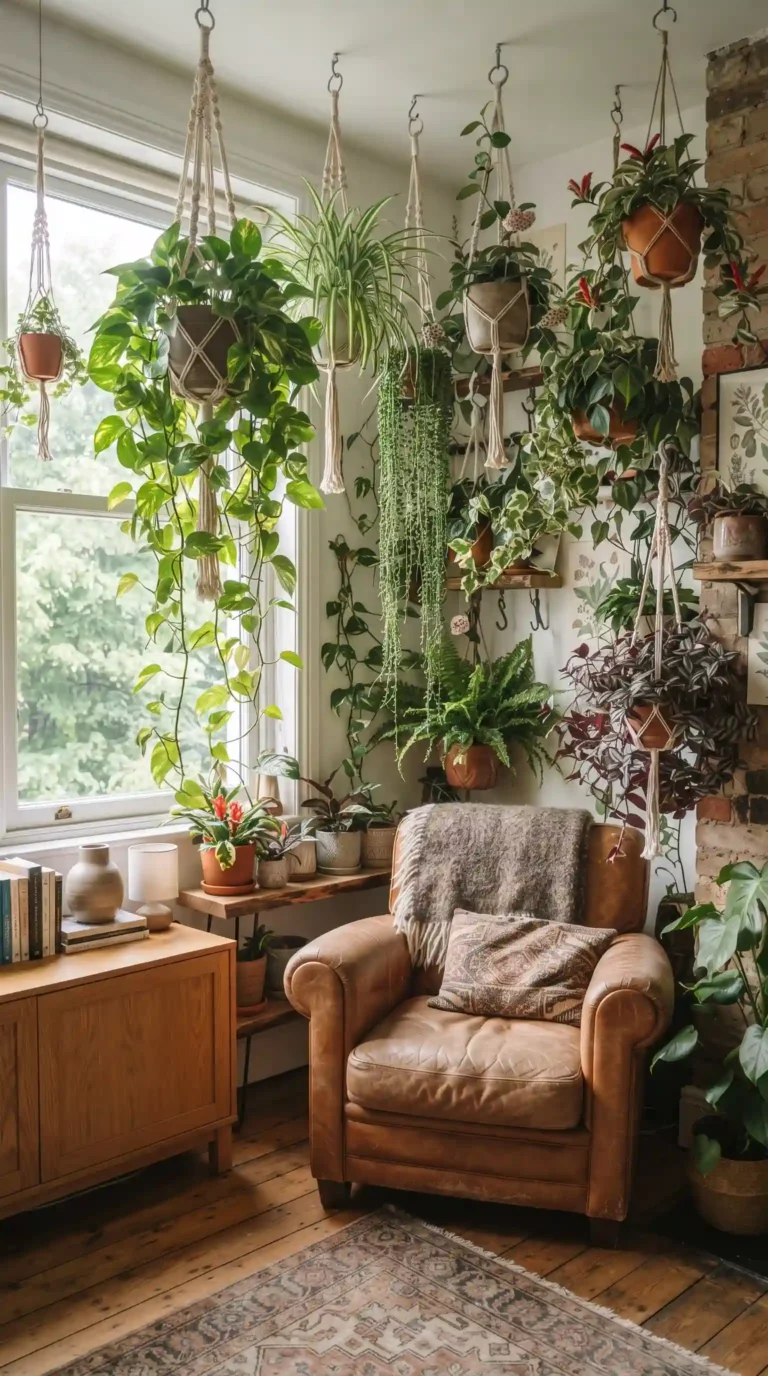
- Hanging baskets
- Shelving
- Pocket planters
- Recycled containers
- Garden arches
- Freestanding plant towers
The best design depends on your available space, sunlight, plants, and budget.
Before installing anything, check how much weight your wall, balcony, or structure can safely support.
1. Install a Trellis for Climbing Plants
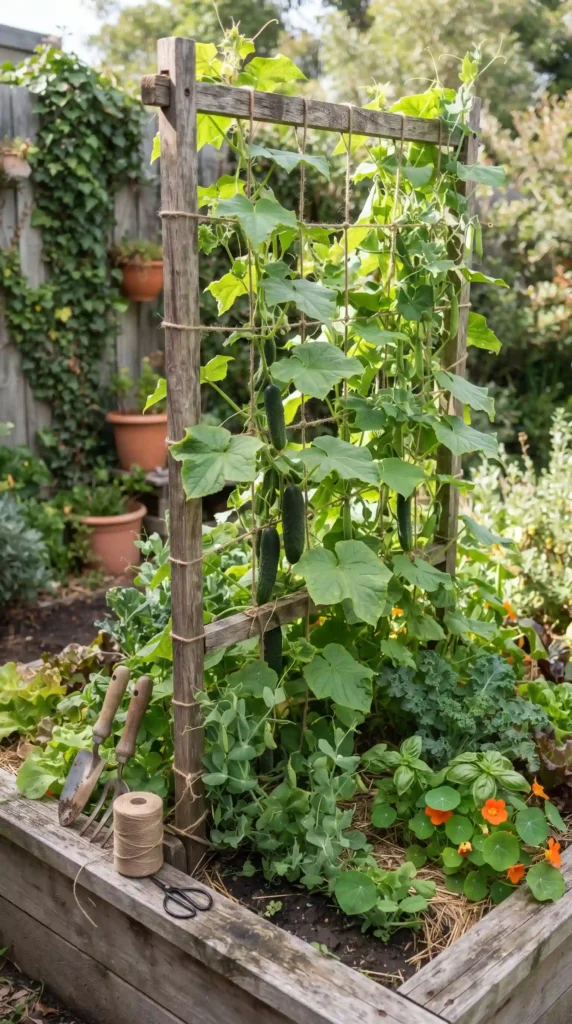
A trellis is one of the easiest ways to create a vertical garden.
Instead of allowing vines to spread across the ground, train them upward.
Good candidates include:
- Cucumbers
- Pole beans
- Peas
- Climbing roses
- Clematis
- Jasmine
- Certain small melons
A trellis can also create privacy or divide different areas of a patio.
Small-Space Tip
Place the trellis where the climbing plant receives appropriate sunlight, and make sure the structure is strong enough to support the mature plant.
For edible crops, harvesting can also become easier when fruits and foliage are elevated.
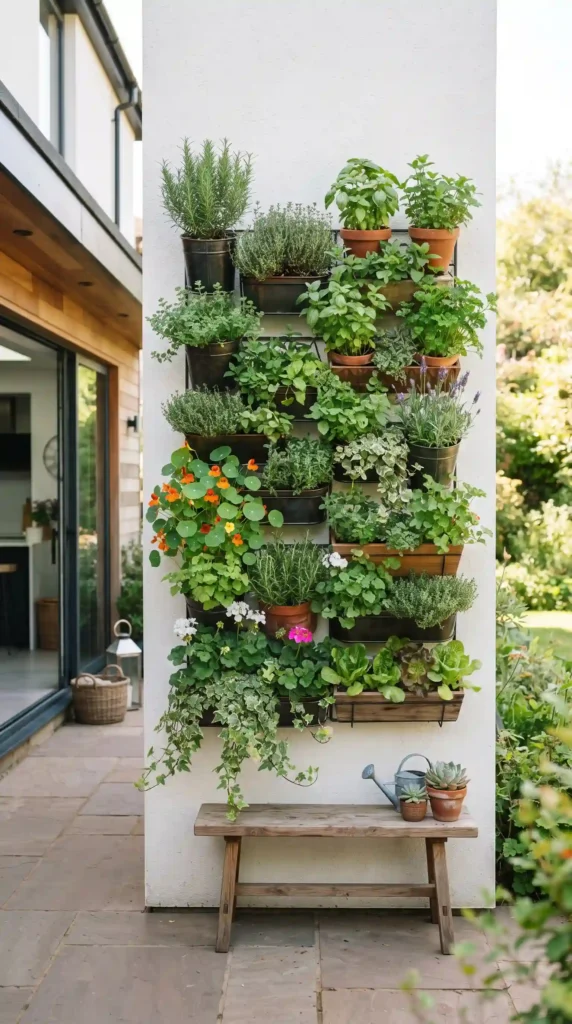
2. Create a Vertical Herb Garden
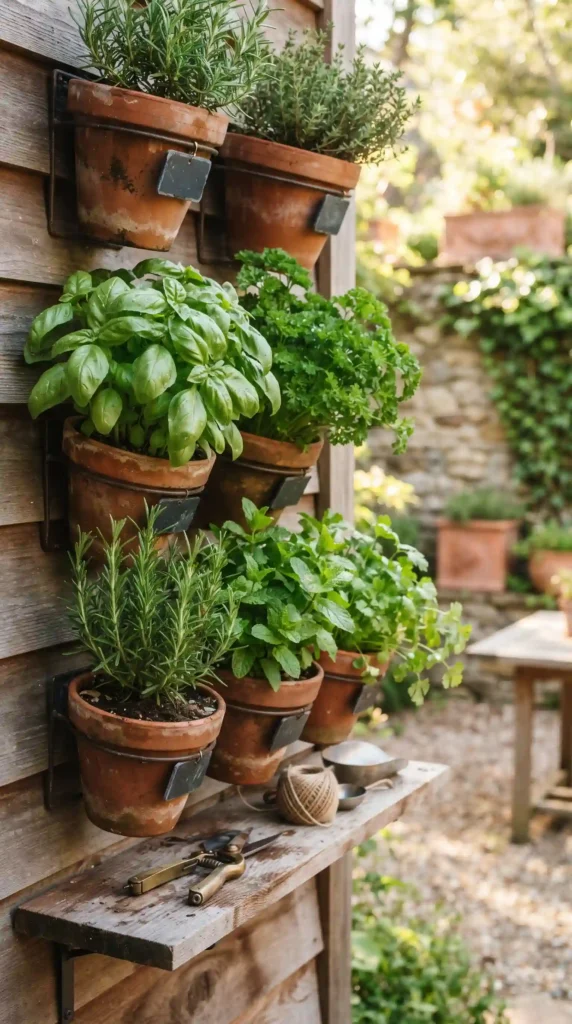
Herbs are perfect for small vertical gardens because many varieties don’t require large amounts of growing space.
You can use a wall-mounted planter, tiered shelf, hanging containers, or a narrow plant stand.
Consider growing:
- Basil
- Thyme
- Parsley
- Chives
- Mint
- Oregano
- Rosemary
- Cilantro
Place herbs according to their light requirements.
For example, herbs that need full sun should be positioned where they receive sufficient direct light.
Extra Benefit
A vertical herb garden can place fresh ingredients close to your kitchen, especially when grown on a sunny balcony or patio.
3. Use Hanging Baskets
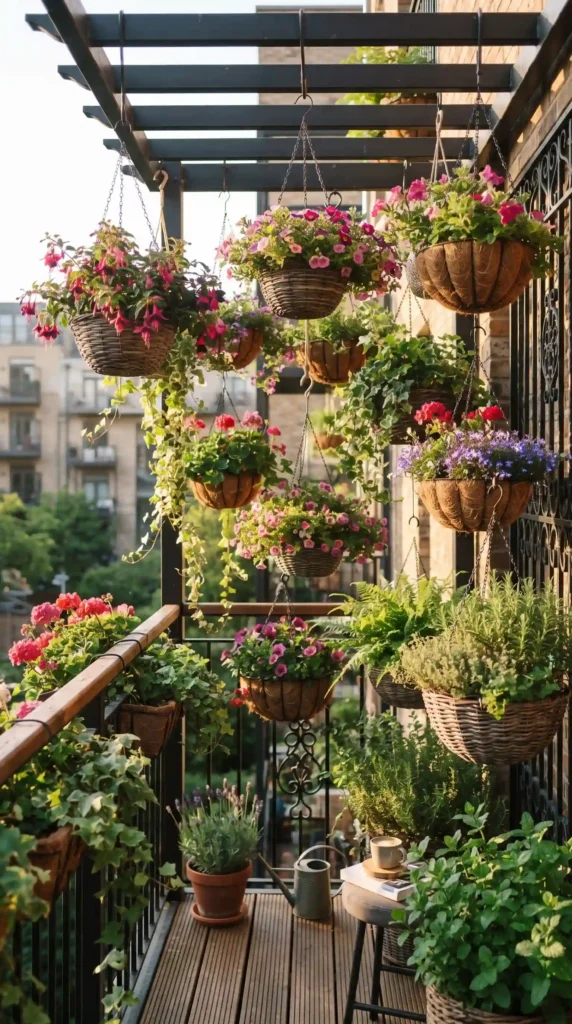
Hanging baskets allow you to take advantage of overhead space.
They work especially well for balconies, porches, patios, and small gardens.
Try plants with trailing growth habits such as:
- Strawberries
- Petunias
- Nasturtiums
- Trailing herbs
- Certain ornamental vines
Choose containers with adequate drainage and make sure the hanging structure can safely support the total weight of the container, soil, and mature plant.
Watering Tip
Hanging containers can dry out faster than plants growing in the ground.
Check their moisture regularly, especially during hot weather.
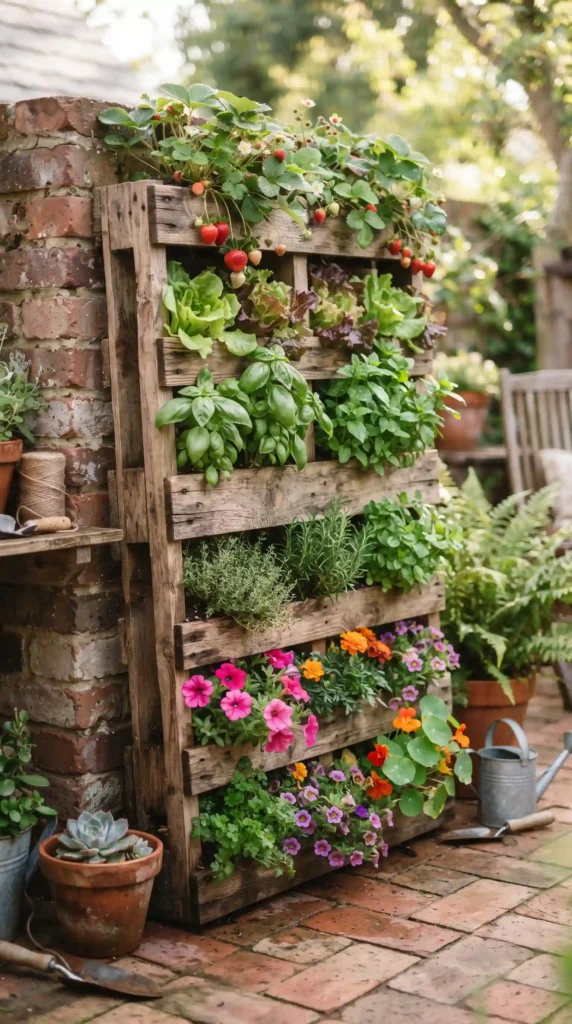
4. Build a Vertical Pallet Garden
A wooden pallet can sometimes be converted into a compact vertical planter.
Before using a pallet, make sure it is suitable for gardening and hasn’t been treated with potentially harmful chemicals.
You can attach appropriate containers or use the pallet structure to support plants.
A pallet garden can work well for:
- Herbs
- Flowers
- Lettuce
- Small greens
- Shallow-rooted plants
Don’t overload the structure.
Wet soil is heavy, so always consider the weight of the finished garden.
5. Try a Vertical Pocket Planter
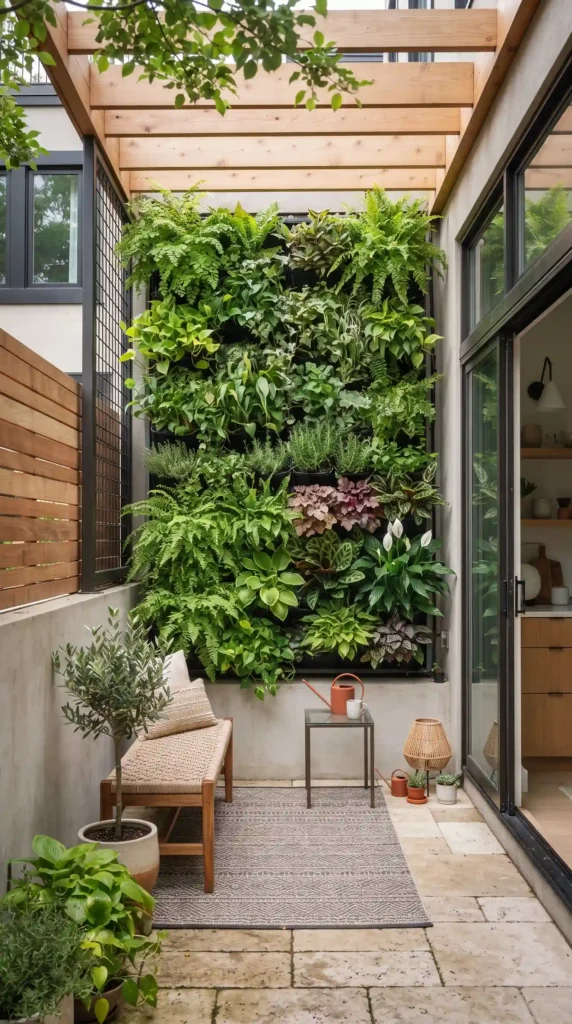
Fabric pocket planters are another space-saving solution.
These systems contain multiple pockets arranged vertically, allowing you to grow several plants in a small footprint.
They’re particularly useful for:
- Herbs
- Lettuce
- Small flowers
- Strawberries
- Compact houseplants
A pocket planter can be attached to a suitable wall or structure.
Important Consideration
Water can move downward through the pockets, so upper and lower plants may receive different amounts of moisture.
Monitor each pocket rather than assuming every plant is receiving identical conditions.
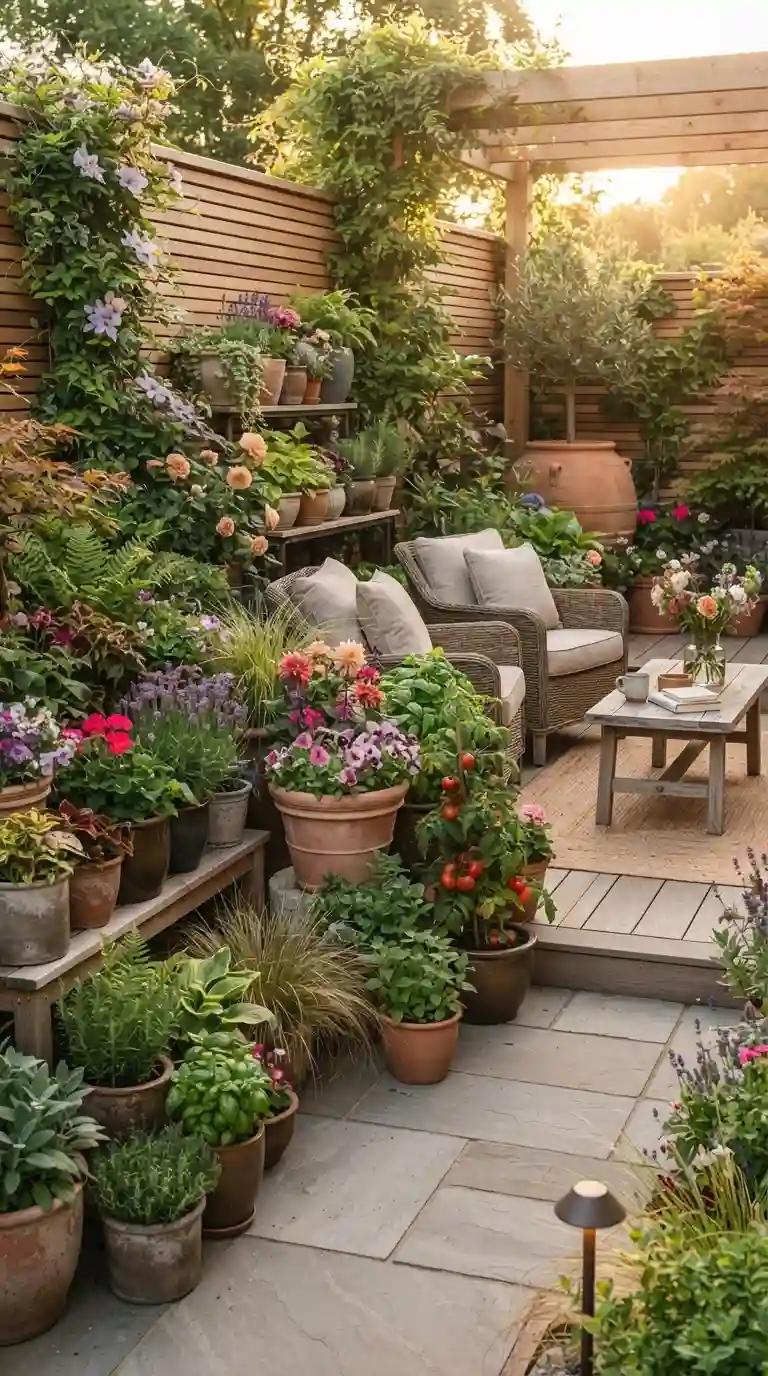
6. Create a Tiered Plant Shelf
If you don’t want to attach anything to your walls, use a freestanding plant shelf.
A tiered shelf provides multiple growing levels while keeping the overall footprint relatively small.
You can place:
Top: Sun-loving plants
Middle: Medium-light plants
Bottom: Shade-tolerant plants
However, sunlight changes throughout the day, so observe the location before deciding which plants belong on each level.
This method is particularly useful for renters because the structure can be moved without permanently modifying a wall.
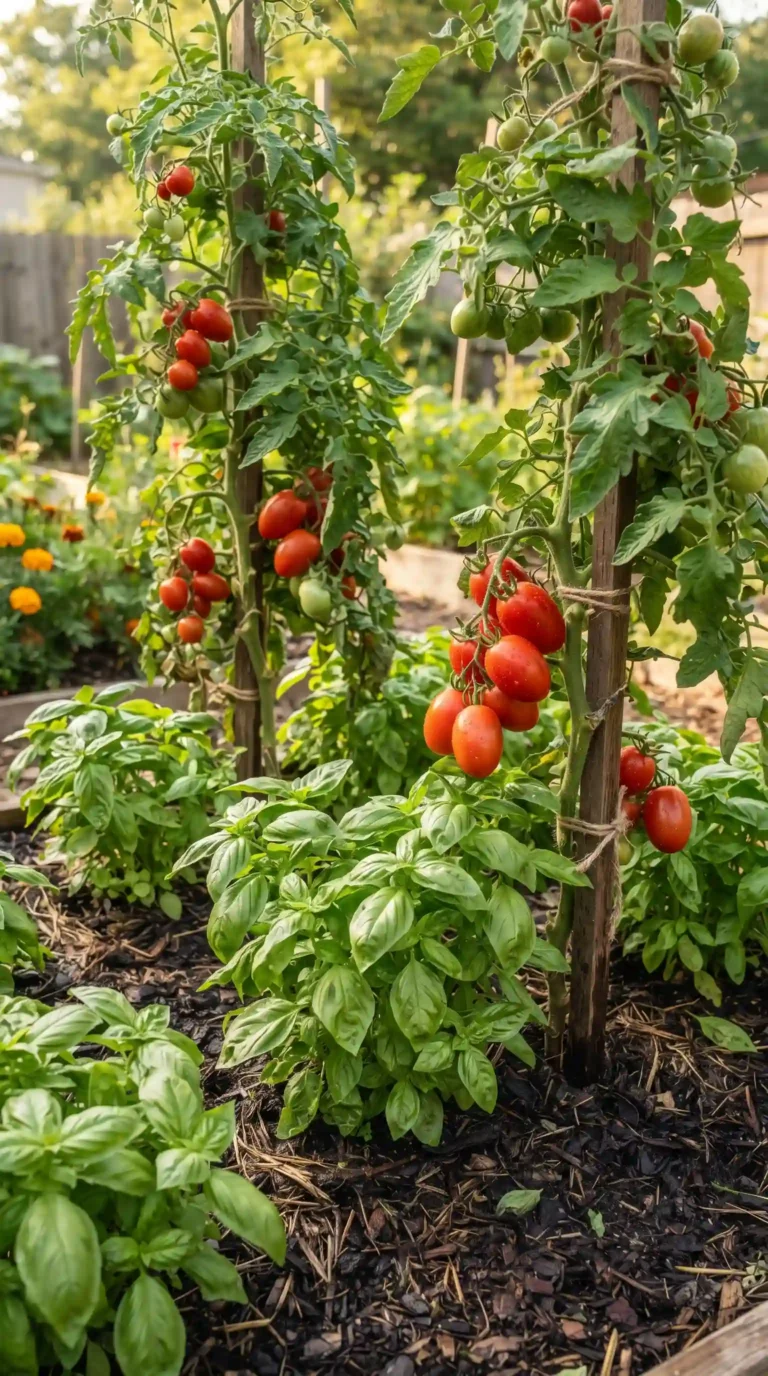
7. Grow Vegetables on a Trellis
Vertical gardening isn’t limited to decorative plants.
Many vegetables can grow upward with the right support.
Consider:
- Pole beans
- Peas
- Cucumbers
- Small-fruited squash varieties
- Certain tomatoes
Growing vertically can make harvesting easier and improve visibility of the fruit.
However, heavy crops may require additional support.
For example, large fruits or vegetables may need slings or additional ties to prevent excessive stress on the plant.
Keep Airflow in Mind
Dense vertical foliage can become crowded.
Give plants appropriate spacing and prune or train them as needed to maintain airflow.
8. Create a Living Green Wall
For a dramatic vertical garden, consider creating a living green wall.
A green wall can contain multiple planters or specialized modules arranged vertically.
You can use it for:
- Ornamental plants
- Herbs
- Compact vegetables
- Flowers
- Foliage plants
Living walls require more planning than a few hanging baskets.
You’ll need to consider irrigation, drainage, structural support, plant selection, and ongoing maintenance.
For beginners, start with a small modular system rather than attempting to cover an entire wall.
How to Choose Plants for a Vertical Garden
Not every plant is suitable for vertical growing.
Look for plants based on:
Mature Size
Avoid species that will quickly outgrow the available structure.
Root Depth
Shallow-rooted plants are generally easier to grow in small containers.
Weight
Large plants can become heavy, especially after watering.
Light Requirements
Place plants where they receive the amount of light they need.
Water Needs
Group plants with similar moisture requirements whenever possible.
Best Plants for Vertical Gardens
Depending on your climate and setup, consider:
Herbs
- Basil
- Thyme
- Chives
- Oregano
- Parsley
Vegetables
- Lettuce
- Peas
- Pole beans
- Cucumbers
- Compact tomatoes
Flowers
- Petunias
- Nasturtiums
- Marigolds
- Sweet alyssum
Fruit
- Strawberries
- Small-fruited varieties suitable for containers
Always check whether a particular variety is appropriate for your growing conditions.
How to Maintain a Vertical Garden
Vertical gardens often need more attention than plants growing directly in the ground.
Check Moisture Frequently
Containers can dry out quickly.
Fertilize Appropriately
Plants in containers have limited access to nutrients and may need supplemental feeding depending on the growing medium and plant type.
Prune Regularly
Remove dead or damaged growth and train vines where necessary.
Inspect for Pests
Check the underside of leaves and new growth.
Monitor Drainage
Make sure water can escape freely from containers.
Vertical Gardening Mistakes to Avoid
Overloading Walls
Wet soil and mature plants can be surprisingly heavy.
Ignoring Sunlight
A vertical garden can look attractive but fail if plants don’t receive enough light.
Choosing Huge Plants
Large plants can quickly overwhelm small containers.
Forgetting Irrigation
Upper and lower containers may dry at different rates.
Planting Too Closely
Crowded plants compete for light, water, and nutrients and may have poorer airflow.
Small Vertical Garden Layout
If you’re unsure where to begin, try a simple setup.
Top: Hanging basket with trailing flowers.
Middle: Wall-mounted herbs.
Bottom: Containers with lettuce or strawberries.
Side: Trellis with cucumber or beans.
This arrangement combines ornamental and edible plants while using very little floor space.
Benefits of Vertical Gardening
Vertical gardening can provide several advantages for small-space gardeners.
Saves Floor Space
Growing upward leaves more room for seating and other uses.
Improves Accessibility
Raised containers can be easier to reach than plants at ground level.
Adds Privacy
Trellises and climbing plants can create a natural screen.
Makes Small Areas More Attractive
A bare wall can become a living feature.
Supports Edible Gardening
Even balconies and patios can produce herbs, greens, vegetables, and fruit.
Final Thoughts
These vertical gardening ideas for small spaces show that you don’t need a large backyard to enjoy gardening.
A simple trellis, hanging basket, herb shelf, pocket planter, or tiered stand can turn a small balcony or patio into a productive growing area.
Start with plants that match your sunlight and available space. Make sure containers drain properly, structures are strong enough to support their load, and plants have enough room to grow.
The most successful vertical gardens aren’t necessarily the largest or most complicated. They’re the ones designed around the space, climate, and plants you actually want to grow.
With a little creativity, you can transform an unused wall, fence, balcony, or patio corner into a beautiful vertical garden.