What Is Xeriscaping? The Desert-Modern Garden Style Taking Over America
If you love beautiful gardens but don’t want to spend hours watering, mowing, and maintaining them, xeriscaping may be the landscaping style you’ve been looking for.
Xeriscaping is a water-conscious approach to landscape design that emphasizes plants suited to local conditions, efficient irrigation, thoughtful soil preparation, and reduced lawn areas. Although the style is strongly associated with dry regions of the American West, its principles can be adapted to many climates.
Today, xeriscaping is becoming increasingly popular as homeowners look for landscapes that use resources more efficiently while still looking modern, colorful, and inviting.
What Is Xeriscaping?
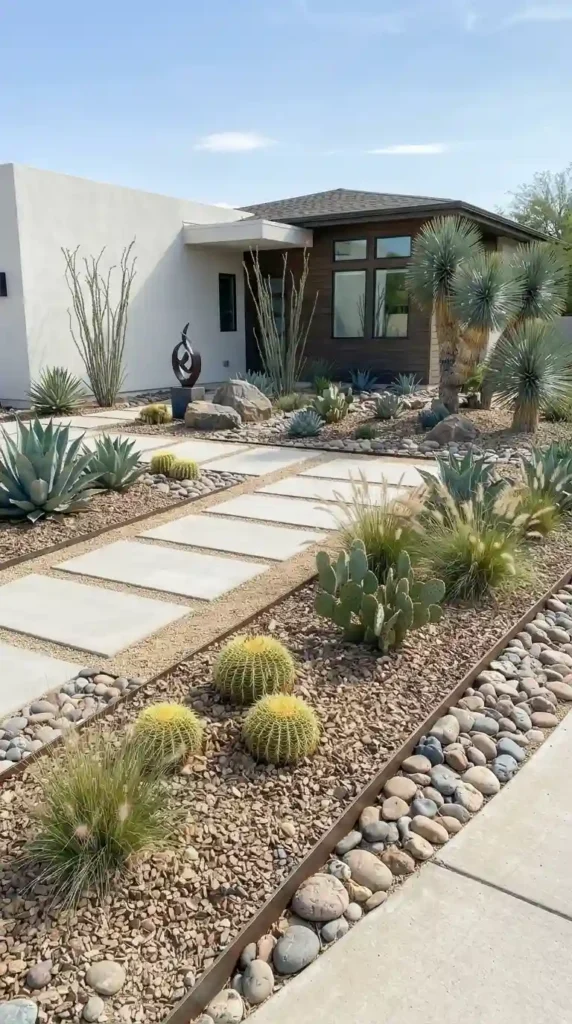
Xeriscaping is a landscaping approach designed to reduce the need for supplemental irrigation.
The word comes from the Greek word xeros, meaning “dry.” The concept was developed in response to water conservation needs, particularly in regions where traditional lawns and water-intensive landscapes require significant irrigation.
However, xeriscaping does not simply mean covering your yard with rocks and planting cacti.
A well-designed xeriscape can include colorful flowers, ornamental grasses, shrubs, trees, groundcovers, and other plants that are appropriate for the local climate.
The goal is to create a landscape that works with the environment rather than constantly fighting it.
Why Is Xeriscaping Becoming Popular?
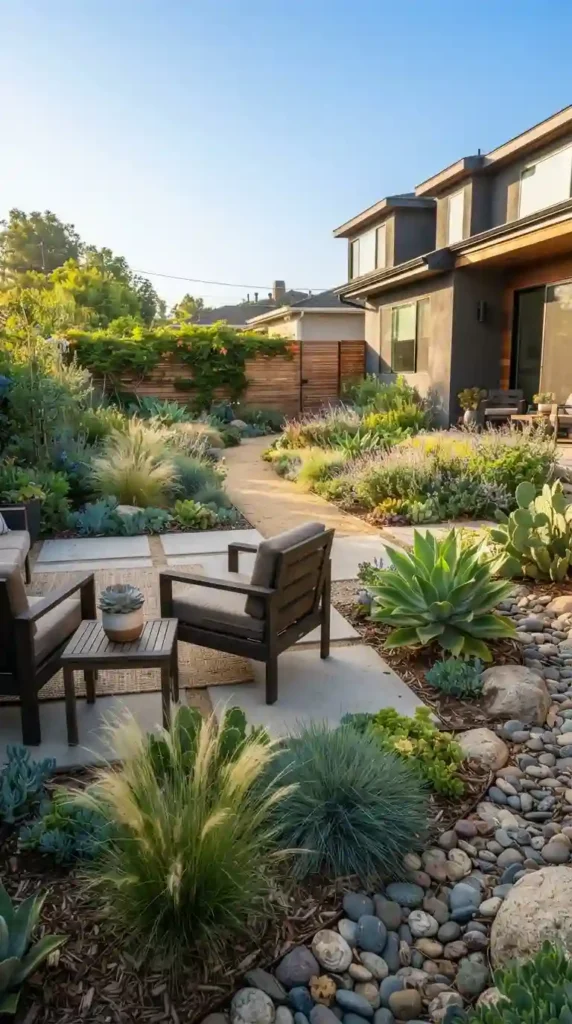
Several factors are driving interest in water-wise landscaping across the United States.
Many homeowners are dealing with hotter summers, periodic drought, water restrictions, or rising maintenance costs. At the same time, people are becoming more interested in sustainable gardening and landscapes that require less routine care.
Xeriscaping can help address these concerns by reducing unnecessary irrigation and replacing thirsty plants with species better suited to local conditions.
It can also reduce the amount of time spent mowing and maintaining large expanses of traditional turf.
The Seven Principles of Xeriscaping
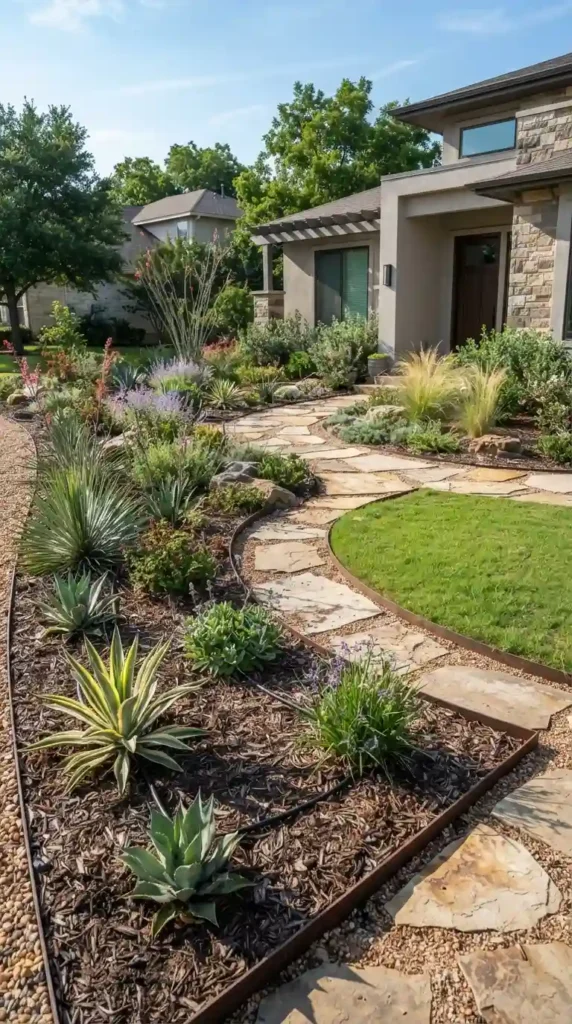
Although xeriscape designs vary considerably, the approach is commonly associated with several basic principles.
1. Plan and Design
Start by understanding your property.
Observe where sunlight falls, where water collects, which areas are exposed to wind, and how people use the yard.
Divide your landscape into practical zones instead of treating the entire property the same way.
For example, an area close to your home might contain plants with somewhat higher water needs, while outer areas can use drought-tolerant native species.
2. Improve the Soil
Healthy soil helps plants establish strong root systems and use available water efficiently.
Before planting, understand your soil type and improve it when appropriate for the plants you’re growing.
However, don’t assume every plant needs the same soil conditions. Some drought-adapted plants actually prefer relatively lean, well-drained soil.
3. Choose Appropriate Plants
Plant selection is at the heart of xeriscaping.
Look for drought-tolerant plants that are naturally adapted to your region.
Depending on where you live, possibilities may include:
- Native grasses
- Lavender
- Sage
- Yarrow
- Coneflowers
- Agave
- Succulents
- Native shrubs
- Drought-tolerant trees
The best plants depend on your climate. A drought-tolerant plant in Arizona may not be the right choice for a humid garden in the Southeast.
Whenever possible, prioritize plants that are native or well adapted to your local growing conditions.
4. Use Turfgrass Strategically
Xeriscaping doesn’t necessarily mean eliminating every patch of lawn.
Instead, consider whether you actually need large areas of turf.
A small lawn can remain useful for children, pets, recreation, or entertaining. The key is to avoid maintaining more turf than your household needs.
Replace unnecessary lawn with planting beds, groundcovers, pathways, patios, or other functional landscape features.
5. Irrigate Efficiently
A water-wise landscape still needs water, particularly during establishment.
Efficient irrigation can help deliver water directly where plants need it instead of spraying large areas unnecessarily.
Drip irrigation is commonly used in xeriscape gardens because it can deliver water close to plant root zones.
Water early in the morning or at other locally recommended times to reduce unnecessary evaporation, and adjust irrigation according to weather and seasonal conditions.
6. Use Mulch
Mulch can help reduce evaporation and moderate soil temperatures.
Organic mulches such as wood chips can also add organic matter as they break down. Inorganic options, including gravel or decorative stone, can be useful in certain xeriscape designs.
Choose mulch according to the plants, climate, fire risk, and local recommendations.
Keep mulch away from direct contact with building walls and woody plant trunks.
7. Maintain the Landscape
Even a low-water garden needs maintenance.
Regular tasks include:
- Removing weeds
- Pruning when appropriate
- Checking irrigation
- Replacing failed plants
- Monitoring mulch
- Removing dead plant material
- Adjusting watering as plants mature
The difference is that xeriscaping aims to make maintenance more efficient rather than eliminate it completely.
What Does a Modern Xeriscape Garden Look Like?
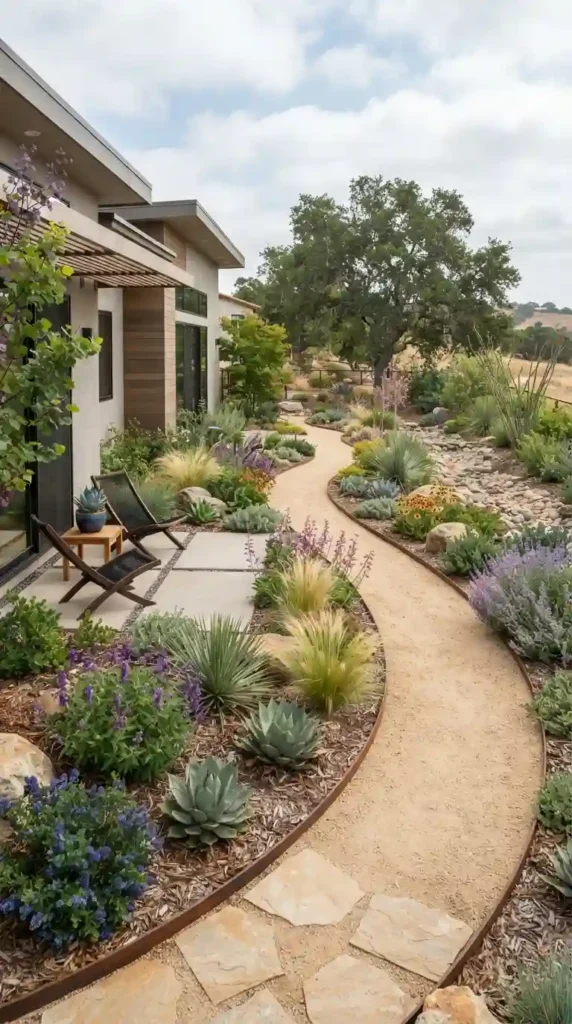
The modern version of xeriscaping is very different from the old idea of a yard covered entirely in gravel.
Today’s desert-modern garden design often combines natural textures with architectural plants and simple outdoor spaces.
Think:
- Sculptural succulents
- Ornamental grasses
- Native shrubs
- Gravel pathways
- Large boulders
- Concrete patios
- Weathered wood
- Minimalist planters
- Native flowering plants
The result can feel contemporary without looking sterile.
Best Plants for a Xeriscape Garden
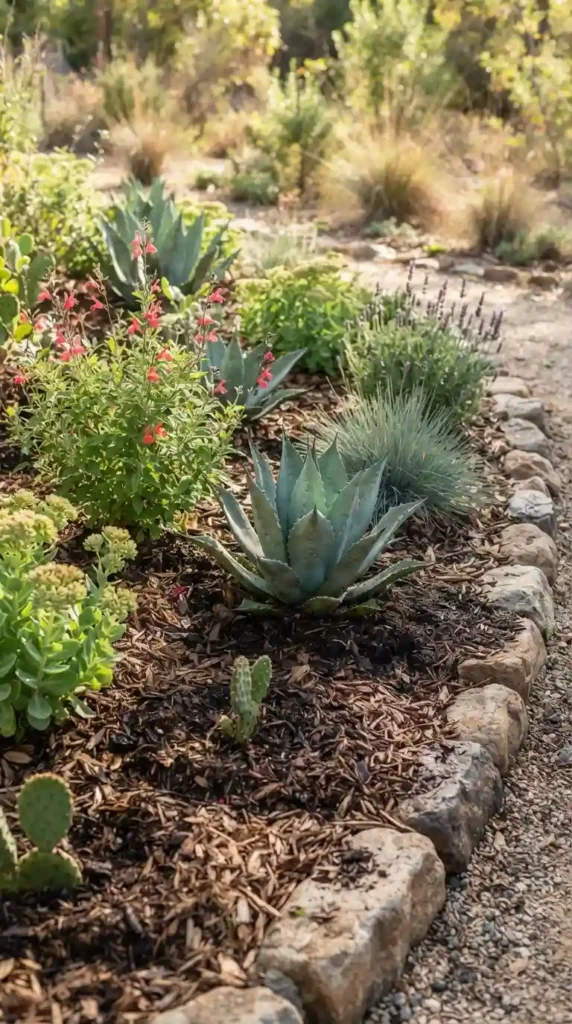
There is no universal list of “best xeriscape plants.” Your choices should reflect your local climate.
In dry western regions, gardeners may use plants such as agave, yucca, penstemon, sage, and native grasses.
In other regions, drought-tolerant native perennials and shrubs may be more appropriate.
When selecting plants, consider:
- Water requirements
- Mature size
- Sun exposure
- Soil drainage
- Winter hardiness
- Local native status
- Maintenance requirements
Grouping plants with similar water requirements is another important strategy.
Avoid placing a high-water plant next to species that prefer dry conditions simply because they look attractive together.
Xeriscaping vs. Desert Landscaping
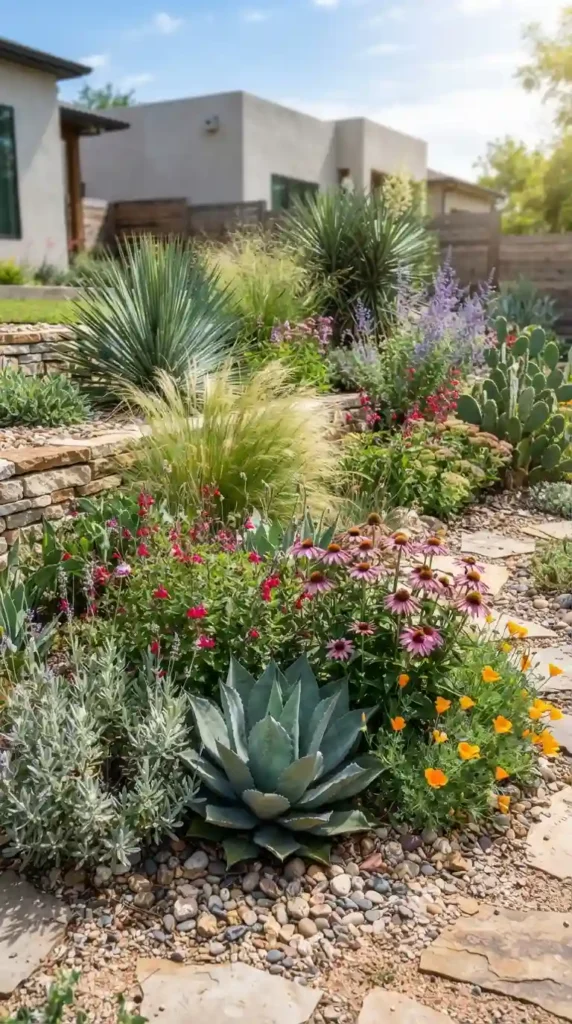
The terms xeriscaping and desert landscaping are sometimes used interchangeably, but they are not exactly the same.
Desert landscaping specifically reflects arid environments and may feature cacti, succulents, gravel, boulders, and desert-adapted plants.
Xeriscaping is broader.
A xeriscape garden can be designed in Colorado, California, Texas, Florida, or another region using plants suited to that particular environment.
The common thread is efficient water use—not a specific visual style.
Can You Xeriscape a Small Yard?
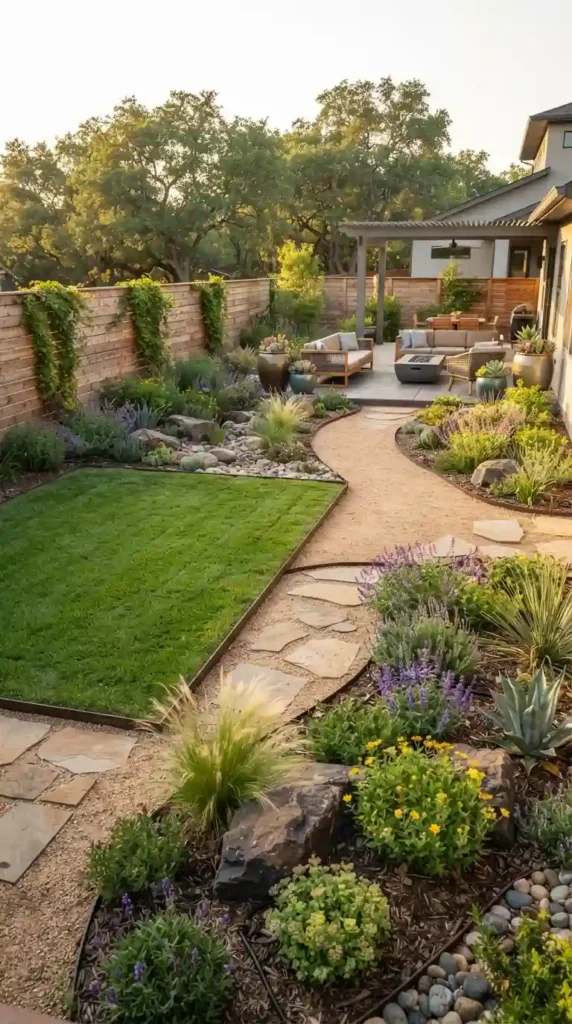
Absolutely.
In fact, a small yard can be an excellent place to experiment with xeriscaping.
Start by removing a small section of unnecessary lawn. Replace it with a combination of drought-tolerant plants, mulch, and a simple pathway.
Containers can also be used on patios and balconies, although container plants generally dry out faster than plants growing in the ground.
A small project allows you to learn which plants perform well before making larger changes.
Is Xeriscaping Expensive?
The initial cost depends on the condition of your existing landscape and the scale of the project.
Removing lawn, installing irrigation, improving soil, purchasing plants, and adding hardscape can require an upfront investment.
However, a thoughtfully designed water-wise garden may reduce ongoing expenses associated with irrigation, mowing, and maintenance.
You don’t have to convert your entire property at once. A gradual approach can make the transition more affordable.
Common Xeriscaping Mistakes
Avoid these common problems when planning your garden:
Choosing Plants Only for Appearance
A plant may look beautiful at the garden center but struggle in your climate.
Assuming Drought-Tolerant Means No Water
Newly planted plants need regular watering while establishing roots. Mature plants may also need supplemental water during extreme conditions.
Using Too Much Gravel
Stone can create a modern appearance, but excessive hardscape can increase heat and reduce habitat value.
Ignoring Local Conditions
Sun, soil, rainfall, temperature, and regional ecology all matter.
Removing Every Plant
Xeriscaping isn’t about creating a barren landscape. A successful design can support pollinators and wildlife with appropriate native plants.
Benefits of Xeriscaping
A well-planned xeriscape can offer several advantages:
- Reduced irrigation needs
- Lower lawn maintenance
- Potentially lower water bills
- Greater use of climate-adapted plants
- Less mowing
- More habitat opportunities
- Year-round visual interest
- Greater resilience during dry periods
The exact benefits depend on your climate, plant choices, irrigation system, and existing landscape.
Final Thoughts
So, what is xeriscaping? It is much more than a desert garden filled with rocks and cactus.
Xeriscaping is a thoughtful approach to landscape design that prioritizes efficient water use, climate-appropriate plants, healthy soil, practical irrigation, and sustainable maintenance.
The growing interest in desert-modern garden design is helping bring these principles into contemporary landscapes, but you don’t need to live in the desert to use them.
Start by reducing unnecessary lawn, choosing plants suited to your local conditions, grouping plants by water needs, and improving irrigation efficiency.
With the right planning, a xeriscape can be colorful, modern, wildlife-friendly, and surprisingly easy to maintain—while using water more thoughtfully.