12 DIY Compost Bin Designs for Small Spaces
Composting is a simple way to turn kitchen scraps and garden waste into useful organic material for your plants. However, many people living in apartments, small homes, or houses with limited outdoor areas think they do not have enough space for a compost bin.
The good news is that you do not need a large garden to start composting. With the right setup, you can create a compact compost system using simple materials and a small amount of space.
From plastic storage containers to wooden boxes and bucket systems, there are many DIY compost bin designs for small spaces that can fit on a balcony, patio, backyard, or even in a suitable indoor area.
In this guide, we will explore 12 practical compost bin ideas and explain how each design works, what materials you may need, and where it can be used.
Why Use a DIY Compost Bin?
A DIY compost bin gives you an affordable way to manage organic waste at home.
Instead of throwing vegetable scraps, fruit peels, coffee grounds, and suitable garden waste into the trash, you can turn them into compost that can improve soil structure.
Making your own bin also allows you to choose a size that matches your available space.
You can create a simple system from inexpensive or reused materials without buying a large commercial composter.
What Makes a Good Small Compost Bin?
A good compost bin does not need to be complicated. The most important features are proper airflow, suitable moisture, enough space for decomposition, and easy access for adding or removing material.
For a small-space compost bin, size is especially important.
Choose a container that fits your available area while still being large enough to manage easily. A bin that is too small may dry out quickly or become difficult to balance.
Drainage and ventilation holes are also important for many DIY designs.
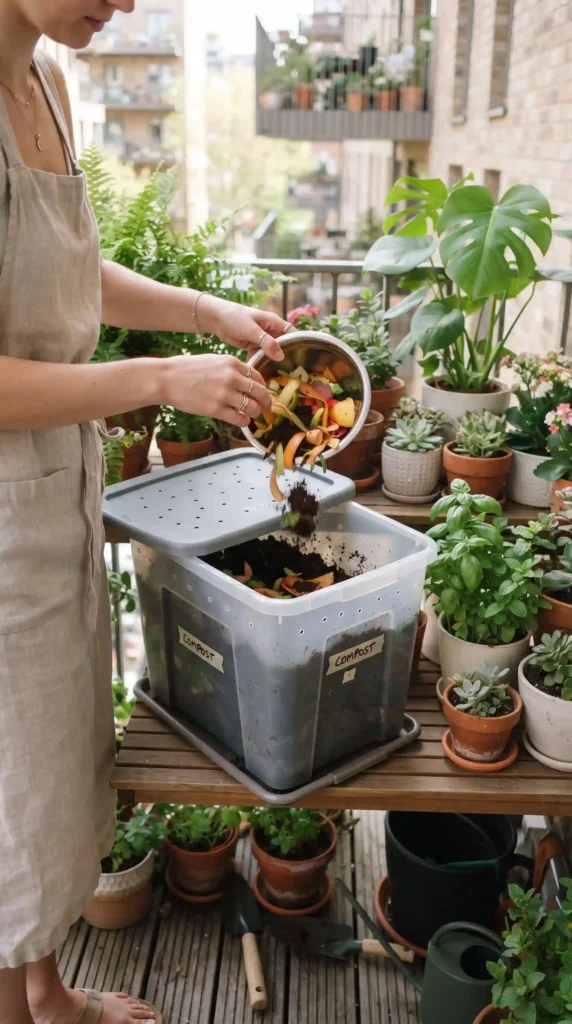
1. Plastic Storage Container Compost Bin
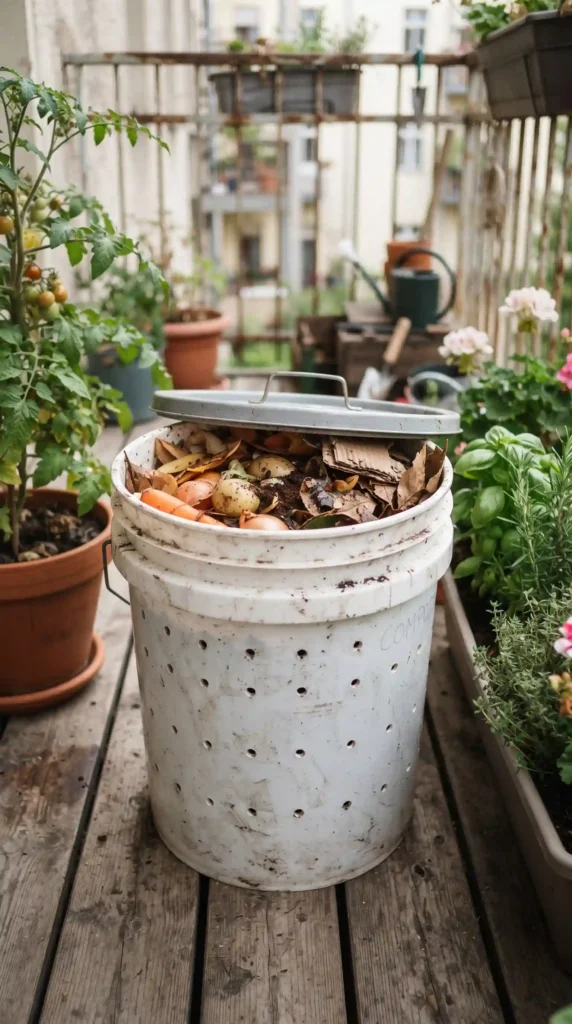
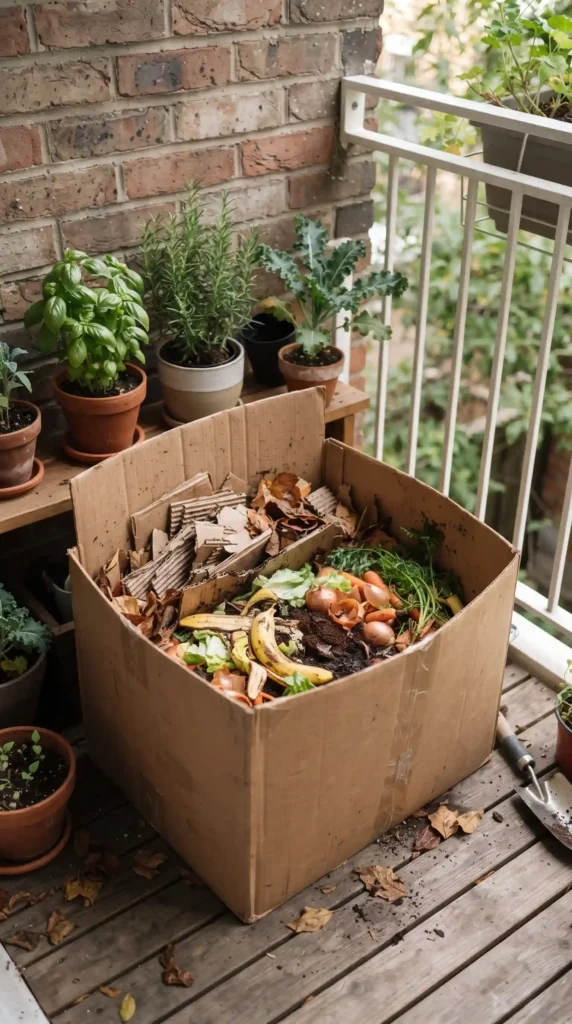
A plastic storage container can be turned into a simple compost bin with very little effort.
Choose a sturdy container with a lid. Add several small ventilation holes around the sides and, where appropriate, drainage holes near the bottom.
Place a layer of dry leaves, shredded cardboard, or another suitable brown material inside. Add food scraps and green material gradually, mixing them with dry material.
This design is useful for balconies, patios, and other small outdoor areas.
Make sure the container is kept in a suitable location where it will not interfere with daily activities.
2. DIY Bucket Compost Bin
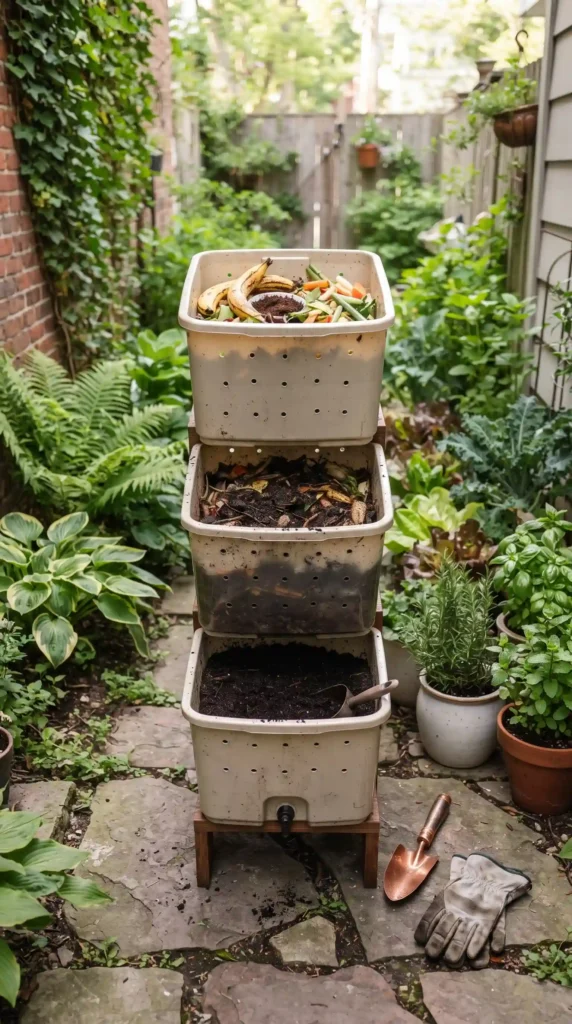
A bucket is another inexpensive option for small-space composting.
Use a clean food-safe or sturdy plastic bucket with a secure lid. Drill small ventilation holes around the sides and provide a way for excess moisture to escape.
Because buckets are compact, they are easy to move around.
A bucket compost bin can work well for people who produce a modest amount of kitchen waste.
Avoid filling it too quickly. Give the material enough time to break down while maintaining a reasonable balance of moist green material and dry brown material.
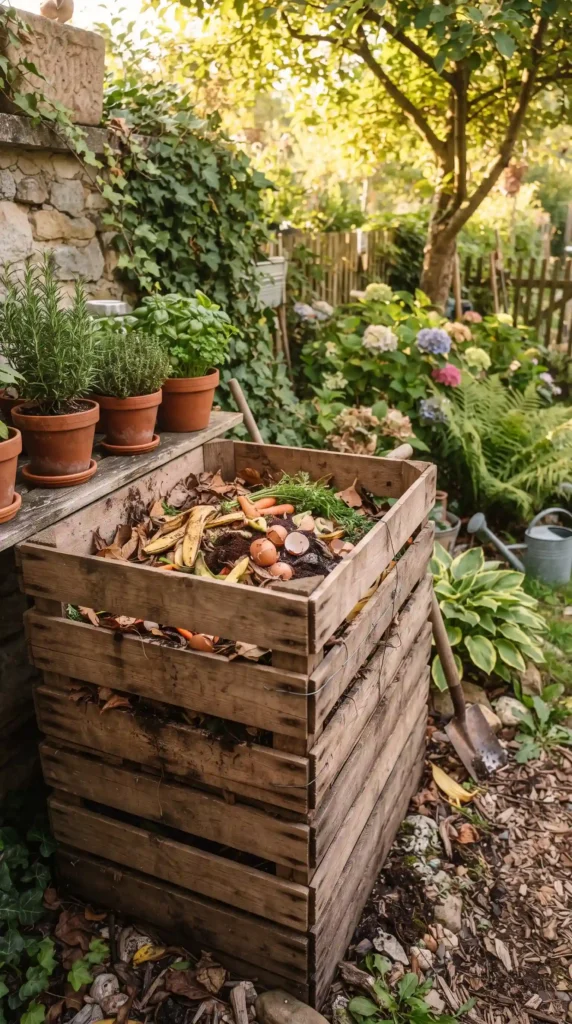
3. Wooden Crate Compost Bin
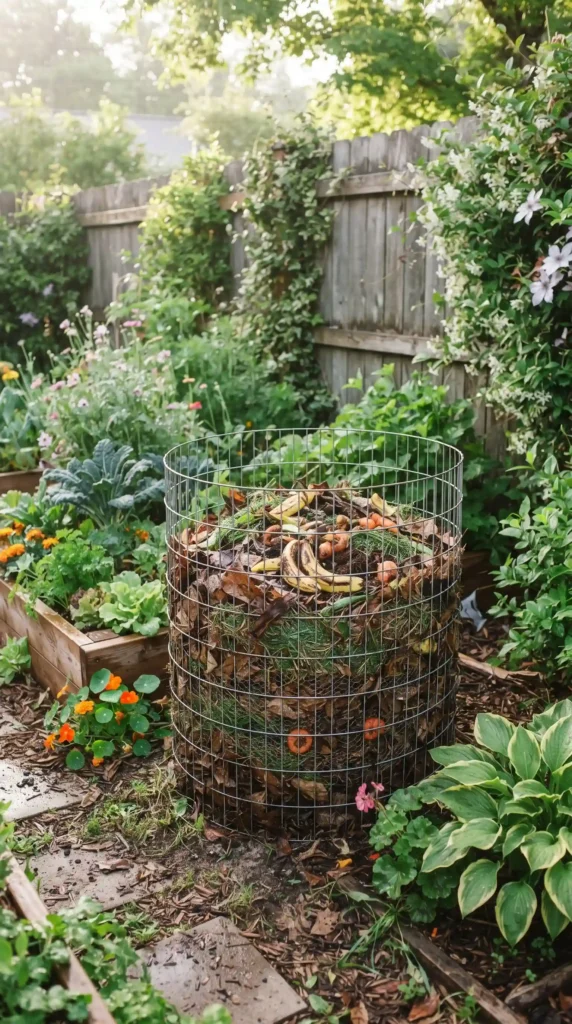
A wooden crate can make an attractive composting container for a small garden.
Look for a sturdy untreated wooden crate or build a simple box from suitable untreated wood.
Leave small spaces between boards to encourage airflow.
The open design makes it easy to turn the compost and inspect the material. You can place a simple cover on top to help protect the compost from excessive rain while still allowing ventilation.
This option works particularly well on patios and in compact backyard gardens.
4. Stackable Compost Box
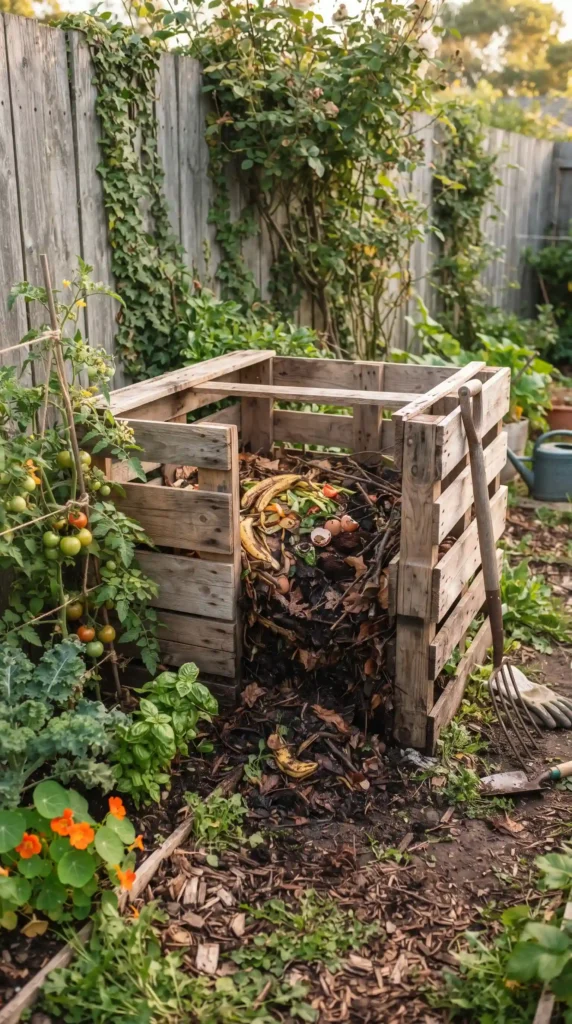
Stackable boxes are useful when floor space is limited.
Instead of spreading compost across a large area, you can build upward using multiple containers.
Each level can hold composting material at a different stage of decomposition.
As lower layers mature, you can access finished compost while continuing to add fresh material to the upper section.
This vertical approach is especially helpful for small gardens where horizontal space is limited.
5. Wire Mesh Compost Bin
Wire mesh can be used to create a lightweight compost enclosure.
Simply form the mesh into a cylinder or another suitable shape and secure it firmly.
This design provides excellent airflow and can be made in a narrow shape to fit a corner of a small yard.
However, small food scraps may fall through large mesh openings. Adding a finer inner lining or using mostly larger garden materials can help.
Keep the compost protected from unwanted animals where necessary.
6. Wooden Pallet Compost Bin
A few suitable wooden pallets can be assembled into a compact composting area.
Pallets provide natural airflow because of the gaps between the boards.
For a small-space version, you do not need a large structure. A simple three-sided enclosure can be enough.
Make sure the wood is appropriate for garden use and avoid pallets that have been treated with substances unsuitable for composting.
This design is more suitable for a backyard than a small indoor space.
7. Compost Tumbler From a Barrel
A small barrel or suitable rotating container can be transformed into a compost tumbler.
Add ventilation holes and secure the container properly. Mount it so that it can rotate safely.
The main advantage is easy mixing. Instead of using a fork or shovel to turn the compost, you can rotate the container.
A small tumbler can be particularly useful when you want a tidy composting system that does not require a large footprint.
8. Repurposed Trash Can Compost Bin
An old plastic trash can can become a practical compost container.
Drill ventilation holes around the sides and make sure the container can drain excess moisture appropriately.
A secure lid helps keep the compost contained and protects it from heavy rain.
Because trash cans come in different sizes, you can choose one that fits your available space.
This is a useful option for a small backyard or patio where you want a closed composting system.
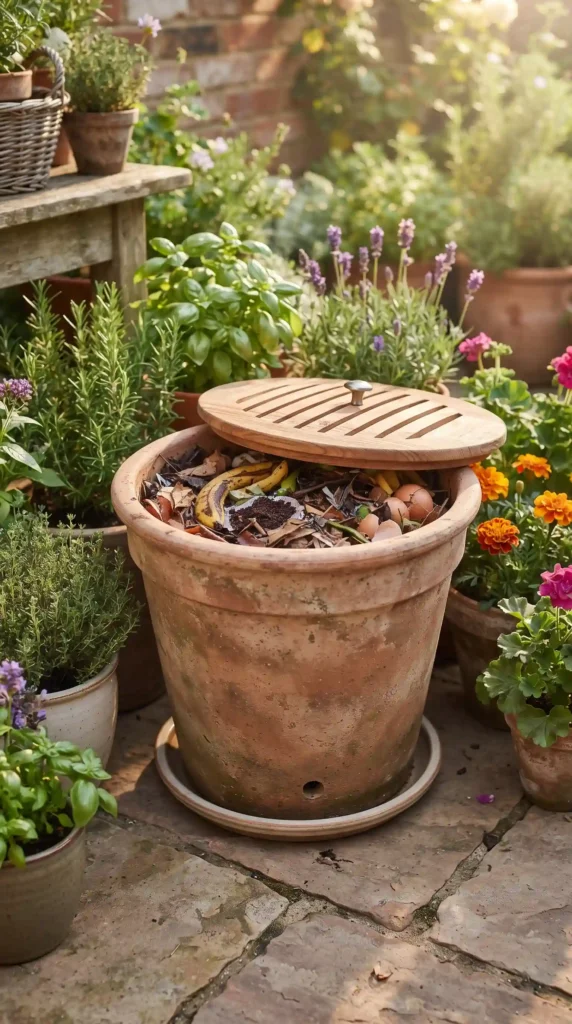
9. Terracotta Pot Compost Bin
A large terracotta pot can provide a simple and attractive composting solution.
The natural appearance of terracotta makes it easy to blend with other garden containers.
Choose a pot with suitable drainage and add organic material gradually.
Because terracotta can dry out more quickly than some plastic containers, monitor moisture carefully.
This design is better suited to small amounts of compostable material rather than large quantities of garden waste.
10. Mini Compost Bin for Kitchen Scraps
If outdoor space is extremely limited, consider a small countertop collection bin.
This container is not necessarily where the entire composting process takes place. Instead, it can temporarily hold suitable kitchen scraps before they are moved to an outdoor composting system.
Use a container with a lid and empty it regularly.
This helps keep food waste organized and makes composting easier for people living in apartments or homes without large gardens.
11. DIY Worm Composting Bin
Worm composting, also called vermicomposting, can be a practical option for small spaces.
A worm bin uses composting worms to help break down suitable organic material.
You can create a simple multi-level system using appropriate containers with ventilation and drainage.
Worm bins need suitable bedding, moisture, airflow, and food scraps.
They should also be protected from extreme temperatures.
Because vermicomposting can be compact, it is an option worth considering when traditional compost bins are difficult to fit into your available space.
12. Vertical Compost Bin
A vertical composting system is designed specifically to save floor space.
Instead of using one wide container, you can use a tall structure with separate sections or stacked containers.
This design works well in narrow balconies, small patios, and compact garden corners.
Make sure every section receives enough airflow and that excess moisture can drain appropriately.
A vertical design can also make it easier to organize compost at different stages.
How to Choose the Right DIY Compost Bin
The best compost bin depends on your available space, the amount of organic waste you produce, and the type of material you want to compost.
For a small apartment, a compact collection container or worm bin may be more practical.
For a balcony, a bucket, storage container, or small vertical system can work well.
For a backyard, a wooden crate, wire enclosure, or small tumbler may provide more capacity.
Think about how often you can maintain the bin before choosing its size.
What Can You Put in a Compost Bin?
Many common organic materials can be composted.
Suitable materials may include fruit and vegetable scraps, coffee grounds, tea leaves, crushed eggshells, dry leaves, untreated paper, shredded cardboard, and grass clippings in suitable amounts.
A healthy compost mixture generally includes a combination of nitrogen-rich green materials and carbon-rich brown materials.
Avoid adding materials that can create odors, attract pests, or interfere with the composting process.
Always check the requirements of your chosen composting method.
How to Balance Green and Brown Materials
A successful compost pile needs a reasonable balance between green and brown materials.
Green materials are generally moist and nitrogen-rich, such as fresh vegetable scraps and grass clippings.
Brown materials are usually dry and carbon-rich, such as dried leaves, shredded cardboard, and untreated paper.
If the compost is too wet and smells unpleasant, add more dry brown material and improve airflow.
If it becomes extremely dry, a small amount of moisture may be needed.
How to Control Compost Moisture
Moisture is an important part of decomposition.
Compost should generally feel moist rather than completely soaked.
Too much water can reduce airflow and create unpleasant odors. Too little moisture can slow decomposition.
Small compost bins can change moisture levels quickly, especially in hot weather.
Check the material regularly and adjust it by adding dry materials or a little moisture when necessary.
How to Improve Airflow
Good airflow helps beneficial organisms break down organic material.
Compact bins can sometimes become compressed, especially when wet kitchen scraps are added repeatedly.
Mix or turn the compost periodically when your system allows it.
Ventilation holes in enclosed containers can also improve airflow.
Avoid packing material tightly into a container.
Where to Place a Small Compost Bin
Choose a location that is convenient but also suitable for composting.
An outdoor area with some shade can help prevent the compost from becoming excessively hot or dry.
Keep the bin away from areas where strong odors or insects would be a problem.
For balcony composting, make sure the container is stable and cannot fall or spill.
Always consider local rules and the specific requirements of your composting method.
Common DIY Composting Mistakes
One common mistake is adding too much food waste without enough dry material.
Another is keeping the compost too wet. Poor ventilation can also create problems.
Some people fill a small bin too quickly without giving the material time to decompose.
Avoid adding unsuitable materials simply because they are organic. Not everything that was once living belongs in a home composting system.
Regular observation can help you identify problems early.
How to Keep a Small Compost Bin Odor-Free
A healthy compost system should not have a strong rotten smell.
Bad odors often indicate too much moisture, poor airflow, or an imbalance between green and brown materials.
Add dry leaves, shredded cardboard, or another appropriate brown material when the mixture is too wet.
Turn the compost when possible to introduce more air.
Avoid adding large quantities of one type of food waste at once.
How Long Does DIY Compost Take?
The time required to create finished compost varies considerably.
Temperature, moisture, airflow, material size, composting method, and the green-to-brown balance all affect decomposition speed.
A well-managed system may break down suitable materials relatively quickly, while a small or cool system can take longer.
Do not rush the process. Allow organic material enough time to become dark, crumbly, and earthy-smelling before using it as finished compost.
Benefits of Composting in Small Spaces
Small-space composting offers several useful benefits.
It can reduce the amount of suitable organic waste sent to the trash while creating a valuable soil amendment.
Compost can help improve soil structure, moisture retention, and organic matter when used appropriately.
DIY systems can also be inexpensive and easy to customize.
Most importantly, you can start small. You do not need a large backyard or expensive equipment to begin composting.
Final Thoughts on
You do not need a large garden to start composting. The right DIY compost bin designs for small spaces can help you manage organic waste even when you have only a balcony, patio, small backyard, or limited corner available.Plastic containers, buckets, wooden crates,stackablboxes, wire mesh, small tumblers, trash cans, terracotta pots, worm bins, and vertical systems all provide different ways to compost at home.
Choose a design based on your available space, the amount of waste you produce, and the amount of maintenance you can provide.
With proper airflow, moisture, drainage, and a suitable mix of materials, a compact composting system can become a useful part of your home gardening routine.