How to Grow Cut Flowers at Home and Actually Sell Them
Have you ever looked at a beautiful bouquet and wondered whether you could grow those flowers yourself—and actually make money from them? The good news is that you don’t need a huge farm to start a small cut-flower business. With the right flowers, growing methods, and selling strategy, you can grow cut flowers at home and sell them locally for extra income.
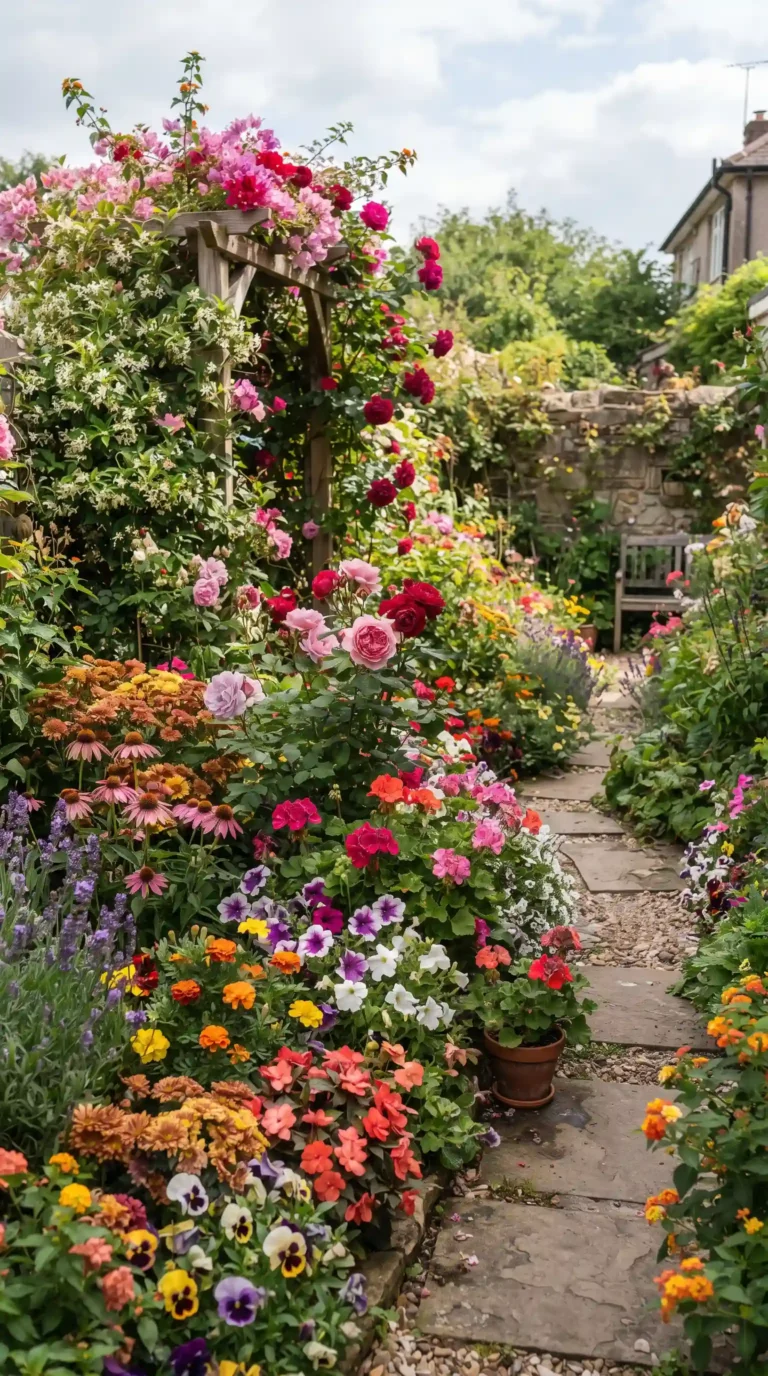
A home-based cut-flower garden can turn a backyard, side garden, balcony, or small growing space into a productive source of fresh flowers. The key is choosing varieties that produce plenty of quality stems, planning your planting schedule, and growing flowers that customers actually want to buy.
In this guide, you’ll learn how to grow cut flowers at home, which flowers are easiest to sell, how to harvest and care for them, and practical ways to turn your garden into a small cut-flower business.
Why Grow Cut Flowers to Sell?
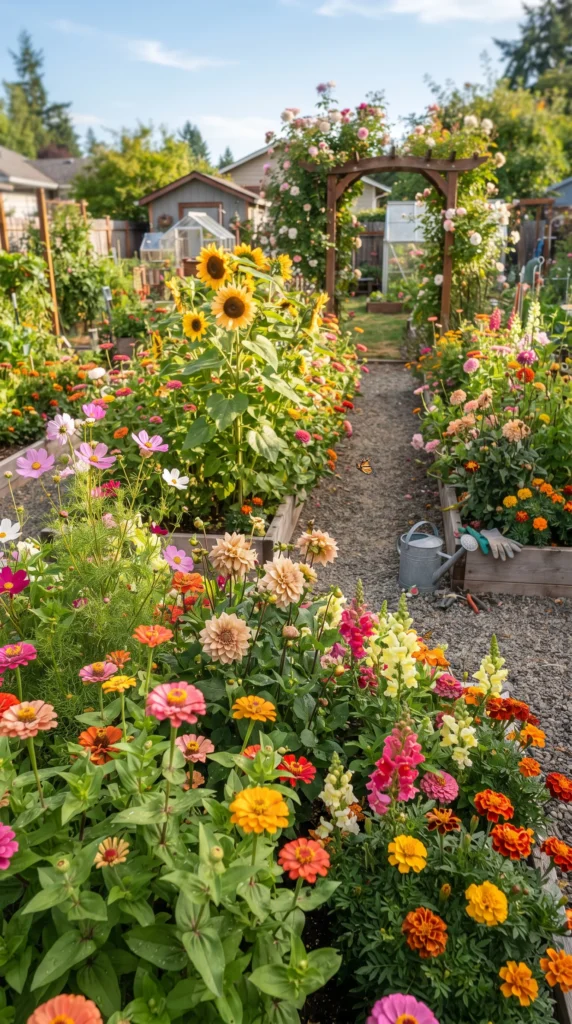
Growing flowers for bouquets can be more profitable than simply growing ornamental plants for your own enjoyment.
Unlike flowers grown purely for landscaping, cut flowers are grown specifically for their stems, colors, shapes, fragrance, and vase life. Customers may purchase individual bunches, mixed bouquets, event flowers, or weekly subscriptions.
A small garden also allows you to offer something large flower businesses often can’t: locally grown, seasonal, fresh flowers.
You can start small, learn what sells in your area, and gradually increase production as demand grows.
Choose the Right Cut Flowers
One of the most important steps in starting a home cut-flower garden is selecting varieties that are productive, attractive, and relatively easy to grow.
Some popular options include:
- Zinnias
- Sunflowers
- Cosmos
- Marigolds
- Celosia
- Snapdragons
- Dahlias
- Sweet peas
- Calendula
- Amaranth
Zinnias are particularly useful for beginners because they can produce numerous stems over a long growing season. Sunflowers are another excellent option because they grow quickly and make an eye-catching addition to bouquets.
Dahlias can produce highly desirable flowers, although they generally require more attention than some beginner-friendly varieties.
Before buying seeds, research which flowers perform well in your local climate. A flower that thrives in one region may struggle in another.
Plan Your Cut Flower Garden

A productive cut-flower garden needs more planning than a typical ornamental flower bed.
Instead of spacing plants mainly for visual appearance, think about flower production per square foot.
Choose a sunny location where plants receive several hours of direct sunlight. Most cut flowers perform best in fertile, well-drained soil.
Create organized rows or growing blocks so you can easily plant, weed, water, harvest, and inspect your crops.
You don’t need a massive garden. Start with a manageable area and focus on producing consistent quality rather than growing dozens of different varieties.
Prepare the Soil
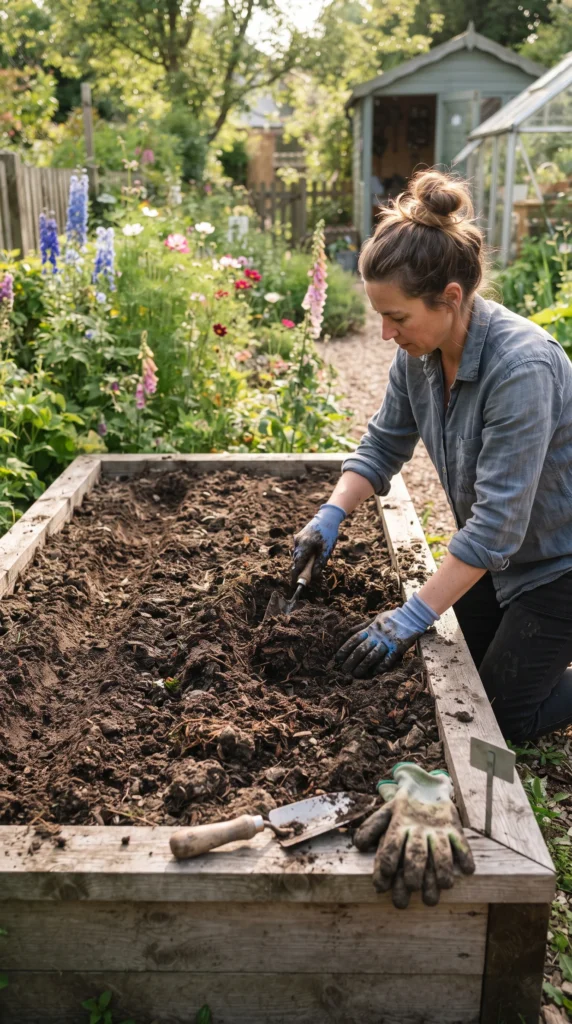
Healthy soil is the foundation of a successful cut-flower garden.
Before planting, remove weeds and loosen compacted soil. Adding mature compost or other suitable organic matter can improve soil structure and provide nutrients.
A soil test can also help you understand the fertility and pH of your growing area.
Avoid adding large amounts of fertilizer without knowing what your soil actually needs. Excessive nitrogen, for example, can encourage leafy growth at the expense of desirable flowers in some situations.
Good soil drainage is particularly important because many flowering plants perform poorly when their roots remain constantly wet.
Start Seeds at the Right Time
Timing is critical when you’re growing flowers to sell.
Different flowers have different germination and growing requirements. Some can be sown directly outdoors, while others benefit from being started indoors or in a protected growing area.
Check the recommended planting dates for your climate and plan backward from when you want flowers to be ready for harvest.
Succession planting can help you maintain a steady supply of flowers. Instead of planting everything at once, sow certain fast-growing varieties at intervals.
This can spread production over a longer period and reduce the risk of having too many flowers mature at the same time.
Grow for Stems, Not Just Blooms
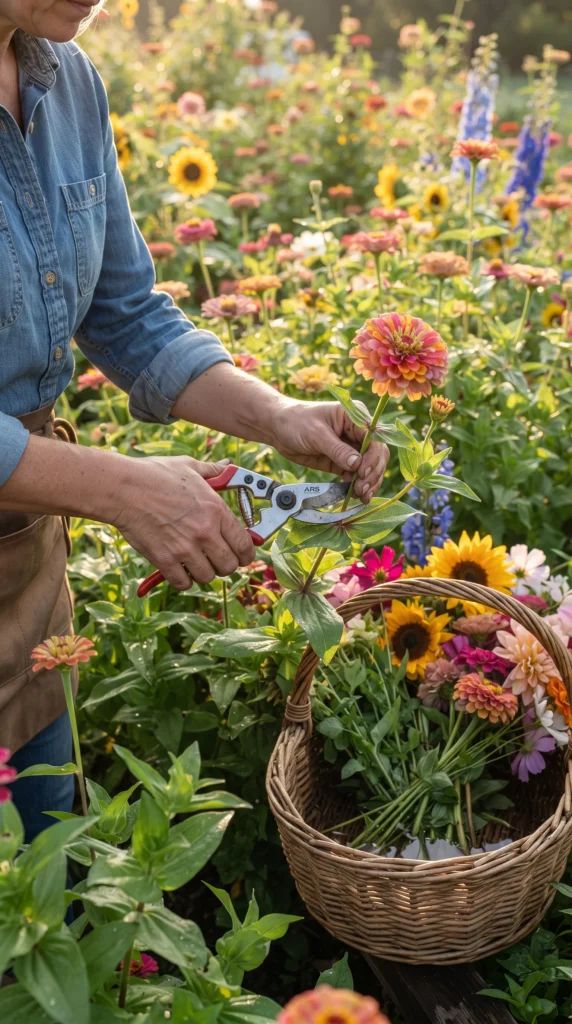
When growing cut flowers commercially, the flower itself isn’t the only thing that matters.
You want strong, straight stems that are long enough for bouquets and arrangements.
Certain plants benefit from pinching or pruning to encourage branching and produce more usable stems. Regular harvesting can also stimulate some plants to continue producing flowers.
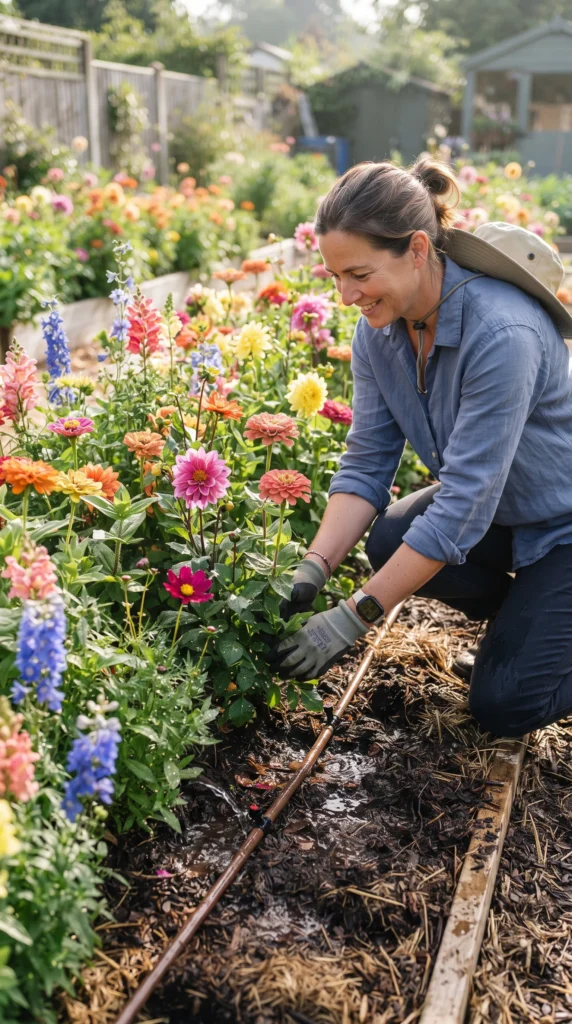
Keep plants adequately watered during active growth, particularly during hot or dry weather. Mulching around plants can help conserve moisture and suppress weeds.
Support tall varieties when necessary to prevent stems from bending or breaking.
Harvest Cut Flowers Correctly
Harvesting at the right stage can make a major difference in flower quality and vase life.
Generally, harvest during the cooler part of the day, such as early morning, when plants are well hydrated.
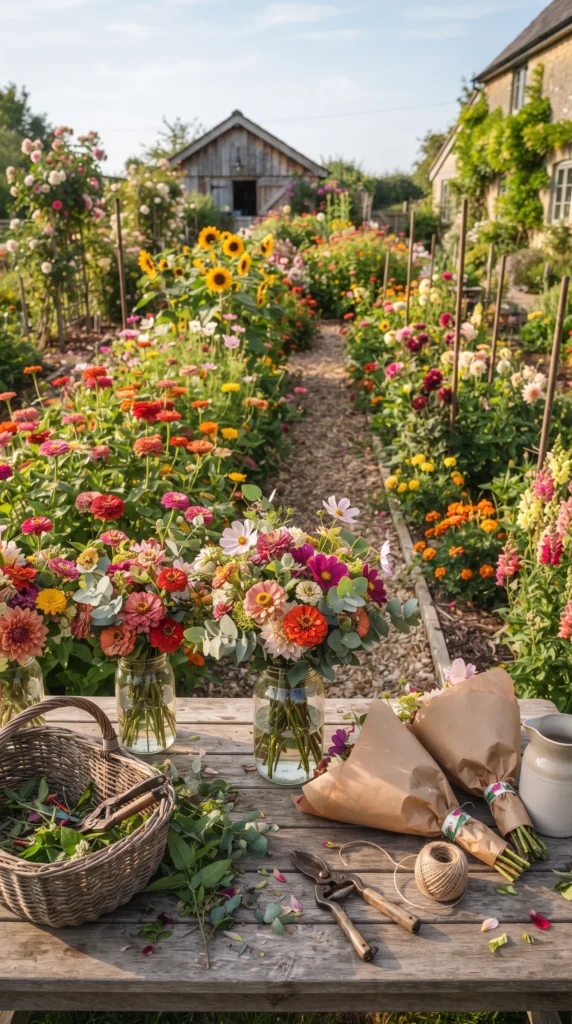
Use clean, sharp scissors or floral snips to make clean cuts. Immediately place harvested stems into clean water.
Different flowers should be harvested at different stages. Some are best harvested when buds are partially open, while others should be more developed.
Experiment with a few stems before harvesting large quantities. Track which stage gives you the best combination of appearance and vase life.
Condition Flowers Before Selling
Freshly harvested flowers aren’t necessarily ready to sell immediately.
Remove damaged leaves and foliage that would sit below the waterline. Recut stems if necessary and place flowers in clean containers filled with fresh water.
Keep harvested flowers cool and protected from direct sunlight while preparing bouquets.
Clean buckets and tools are important because dirty equipment or contaminated water can reduce flower longevity.
The better your post-harvest handling, the more professional your finished product will look.
Create Attractive Bouquets
Customers aren’t just buying flowers—they’re buying the finished experience.
Combine different flower shapes, colors, textures, and foliage to create attractive arrangements.
You can offer several bouquet sizes, such as:
- Small everyday bouquets
- Medium mixed bouquets
- Premium seasonal bouquets
- Single-flower bunches
- Custom arrangements
Simple, consistent bouquet designs can make your small business easier to manage.
Consider wrapping bouquets in attractive but practical packaging. A simple paper wrap, ribbon, or branded label can make home-grown flowers feel much more professional.
How to Sell Cut Flowers From Home
Once your flowers are growing, you need a reliable way to reach customers.
Start with people and businesses in your local community.
Potential customers include:
- Friends and neighbors
- Local households
- Cafés and restaurants
- Florists
- Event planners
- Wedding customers
- Farmers’ markets
- Small gift shops
- Offices and businesses
Social media can also be extremely useful for showing customers what’s currently blooming.
Post photographs of freshly harvested flowers, bouquet options, seasonal availability, and upcoming order dates.
Rather than simply posting “flowers for sale,” explain what makes your flowers different. For example, emphasize that they are locally grown, freshly harvested, seasonal, or available in limited quantities.
Sell Subscriptions for Recurring Income
One of the smartest ways to create predictable revenue is through a flower subscription.
Customers can pay in advance or on a recurring schedule to receive a fresh bouquet every week, every two weeks, or once a month during the growing season.
Subscriptions can help you estimate demand and plan your planting more effectively.
For example, if you have ten weekly subscribers, you know you need enough flowers to create ten bouquets each week.
This type of recurring business can be particularly useful for a small home-based flower grower.
Price Your Flowers Properly
Don’t make the mistake of pricing your bouquets based only on what you think feels affordable.
Your price needs to account for your actual costs.
Consider:
- Seeds and planting materials
- Soil amendments
- Water
- Fertilizer
- Containers
- Packaging
- Labels
- Market fees
- Transportation
- Tools and equipment
- Your time
- Flowers lost to pests or weather
Keep records from the beginning. Track how much you spend and how many sellable stems or bouquets you produce.
Over time, you’ll learn which flowers provide the best return for your growing space.
Start Small and Test Demand
You don’t need to transform your entire garden into a commercial flower farm immediately.
Start with a small selection of reliable varieties. Grow enough to create sample bouquets and test your local market.
Ask customers which colors and flower types they prefer. Pay attention to which bouquets sell quickly and which ones remain unsold.
Use that information to decide what to plant more of next season.
This approach reduces financial risk and helps you build a flower business based on actual customer demand rather than guesswork.
Common Mistakes to Avoid
New cut-flower growers often make several avoidable mistakes.
One is growing too many varieties at once. While a huge selection sounds appealing, managing many crops can quickly become overwhelming.
Another mistake is planting without considering harvest timing. If everything blooms simultaneously, you may have more flowers than you can sell.
Poor post-harvest handling is another common problem. Even beautiful flowers can lose value if they wilt quickly.
Finally, don’t ignore marketing. Growing excellent flowers is only half the business. You also need to consistently tell potential customers what you have available and make ordering easy.
Final Thoughts
Learning how to grow cut flowers at home and actually sell them can be both rewarding and profitable when approached as a small business rather than simply a gardening hobby.
Start with productive, easy-to-grow varieties such as zinnias, sunflowers, cosmos, and marigolds. Prepare your soil, plan succession planting, harvest carefully, and pay close attention to post-harvest care.
Most importantly, find out what customers want before expanding your garden.
A successful home cut-flower business doesn’t necessarily require acres of land. It requires good planning, consistent flower production, quality presentation, and customers who value fresh, locally grown blooms.
Start small, learn from each growing season, and reinvest your profits into the flowers and equipment that perform best. With patience and smart planning, your backyard garden can become much more than a place to grow flowers—it can become a small and sustainable source of income.