25 Best Vegetables to Grow in Containers
1. Tomatoes
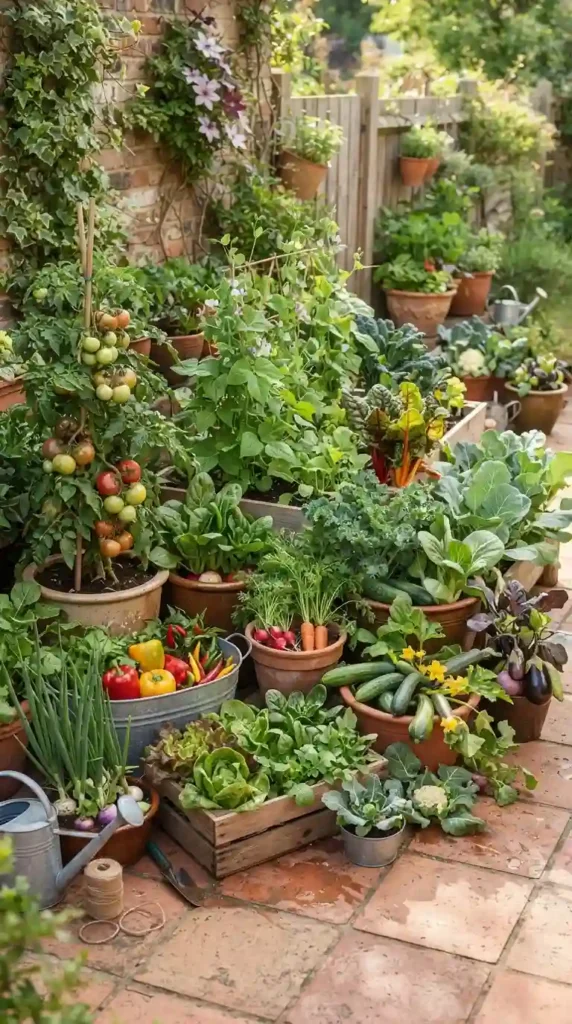
Tomatoes are among the most popular container vegetables.
Choose compact or patio varieties for smaller pots. Larger indeterminate tomatoes need substantial containers and sturdy support.
Provide plenty of sunlight and consistent moisture.
2. Peppers
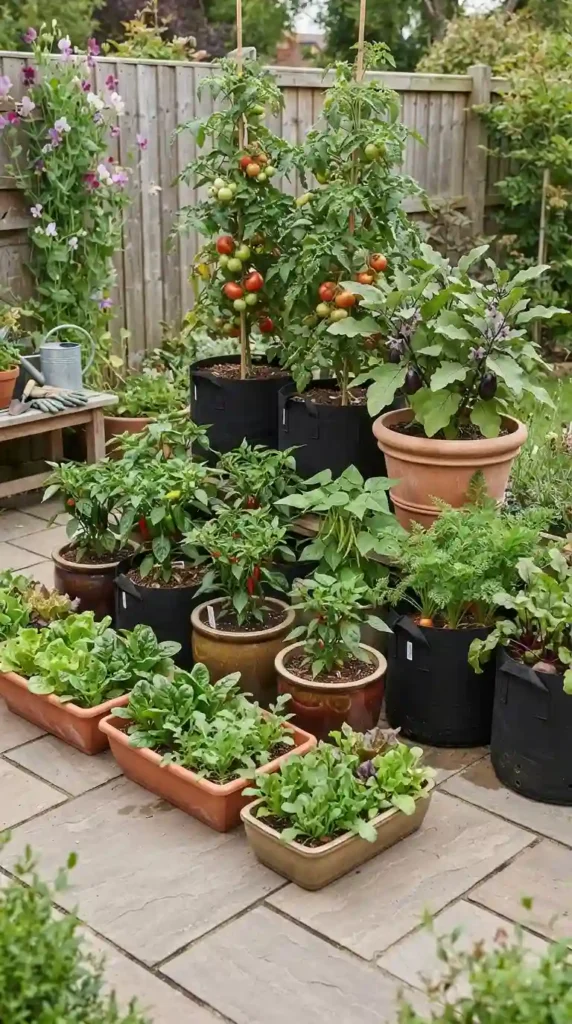
Bell peppers and hot peppers are excellent container crops.
They generally remain relatively compact and can produce well when grown in a sunny location.
Use a container with good drainage and avoid allowing the soil to remain constantly saturated.
3. Lettuce
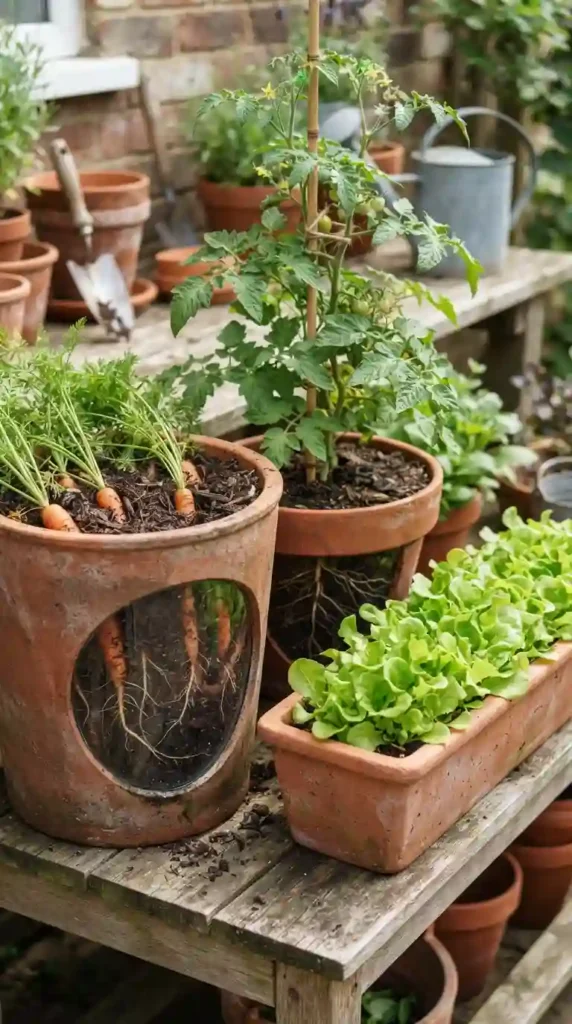
Lettuce is one of the easiest vegetables for container gardening.
It has relatively shallow roots and can grow in window boxes, bowls, and shallow containers.
Plant several varieties for a continuous supply of fresh leaves.
4. Radishes
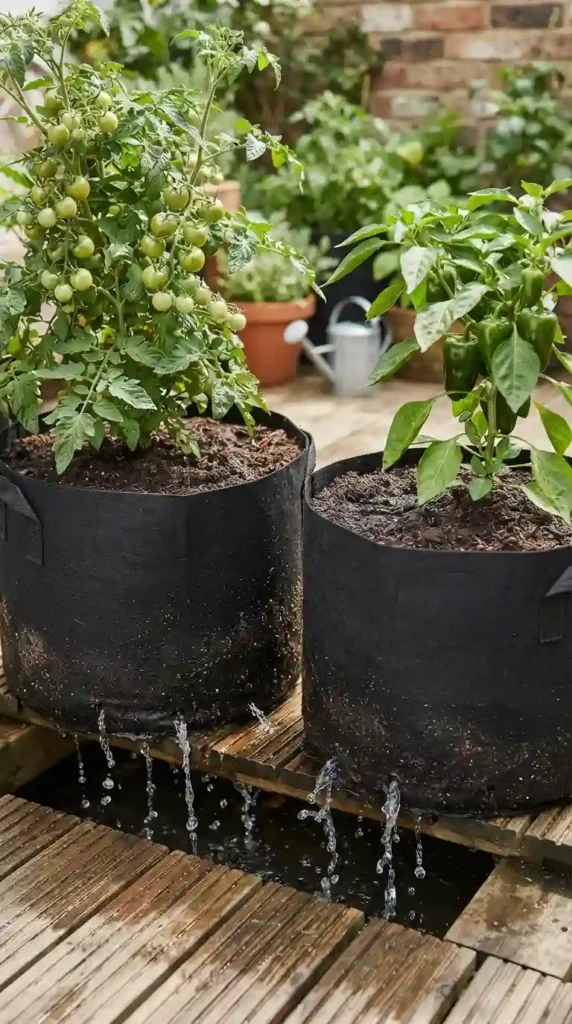
Radishes mature quickly and don’t require extremely deep containers.
They’re a great choice for beginners and small-space gardeners.
Sow seeds directly into the pot and keep the soil evenly moist.
5. Carrots
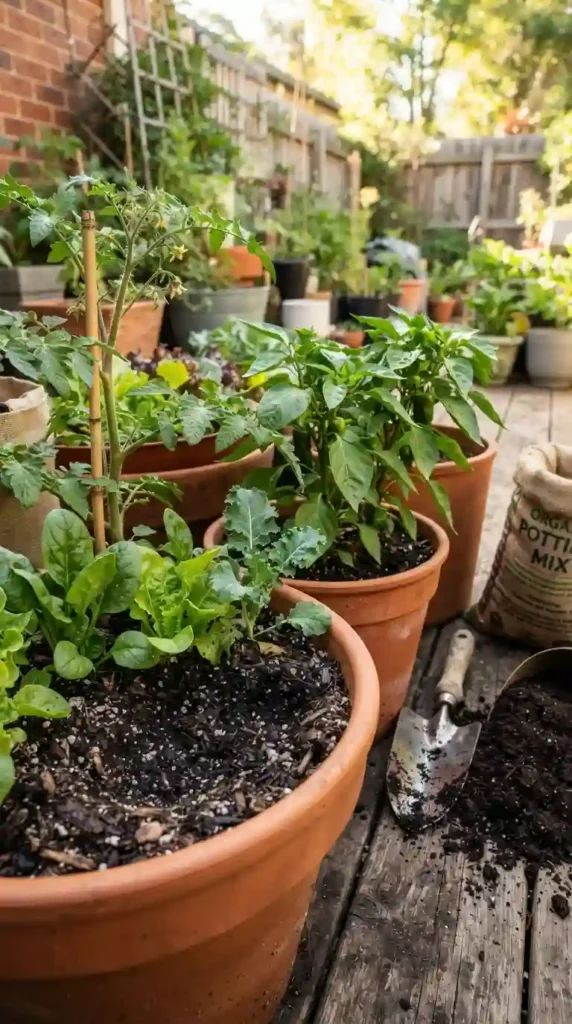
Carrots can grow successfully in containers when the pot is deep enough.
Choose shorter varieties such as round or mini carrots for smaller containers.
Use loose, stone-free growing medium so the roots can develop properly.
6. Bush Beans
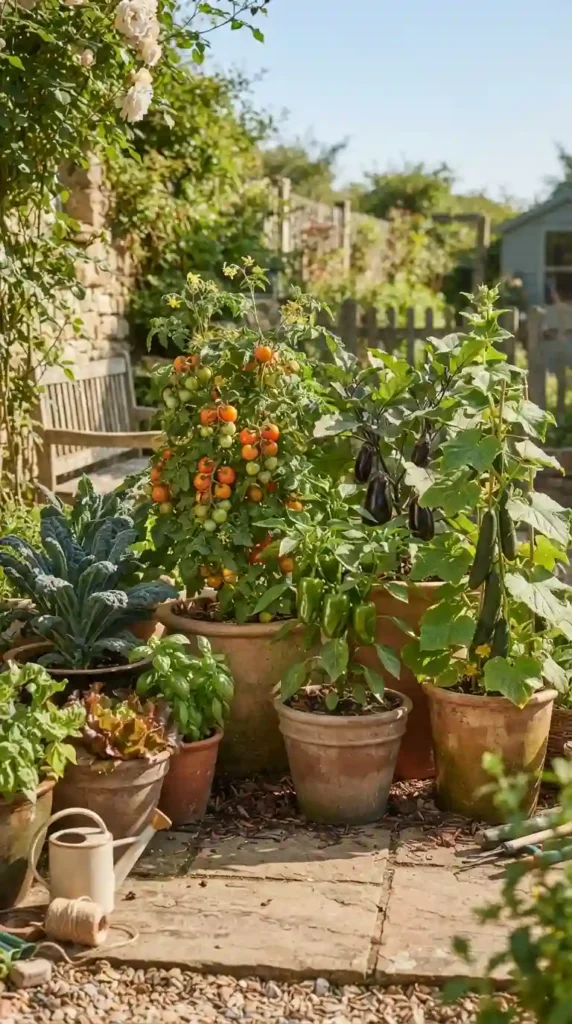
Bush beans are productive and relatively compact.
They don’t usually require the same type of tall support as pole beans, making them suitable for patios and balconies.
Harvest pods regularly to encourage continued production.
7. Peas
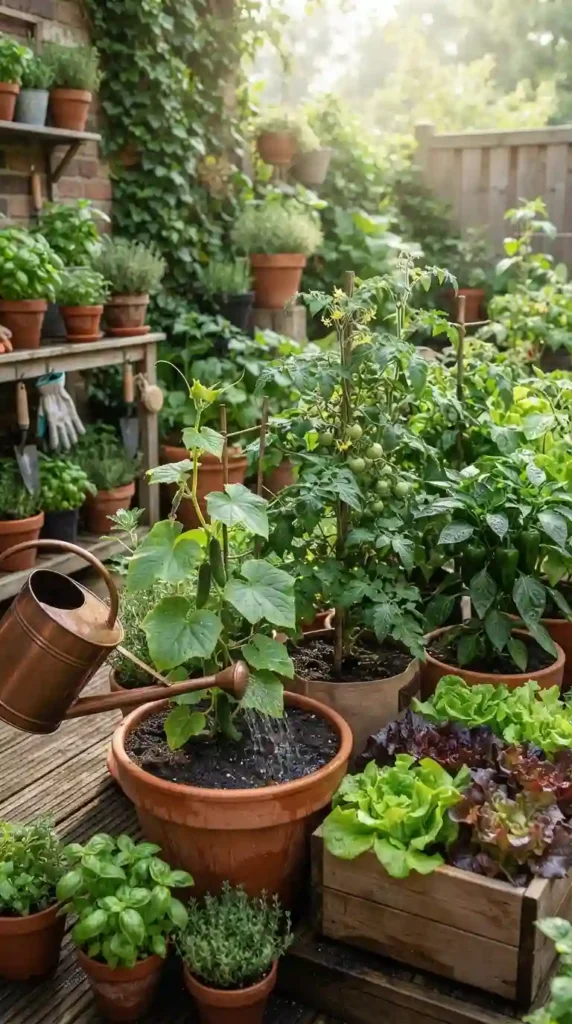
Peas can be grown in containers during suitable cool weather.
Provide a trellis or other support for climbing varieties.
Keep containers evenly watered, particularly during flowering and pod development.
8. Cucumbers
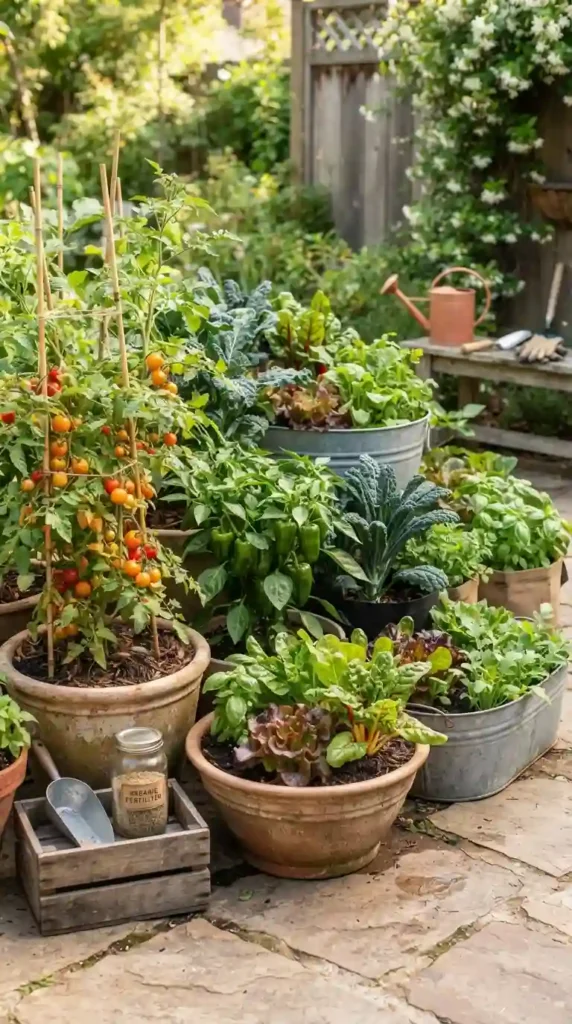
Cucumbers can produce well in containers if you choose a compact variety.
A trellis helps train vines upward and saves valuable floor space.
Use a large container because cucumber roots need adequate room.
9. Zucchini
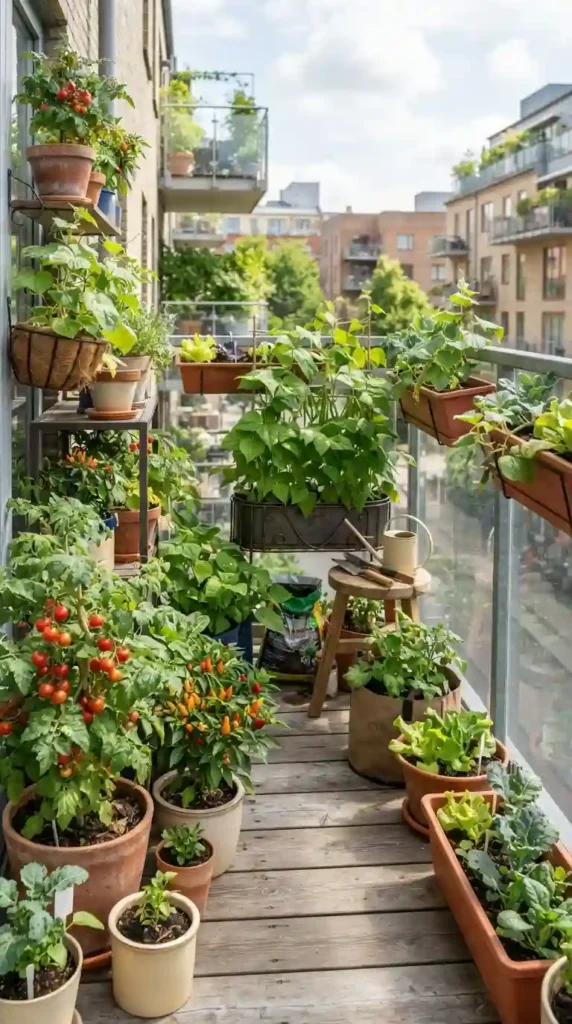
Zucchini plants can become large, but compact varieties are suitable for sufficiently large containers.
Give the plant plenty of sunlight and room for its leaves to spread.
Regular harvesting encourages continued production.
10. Spinach
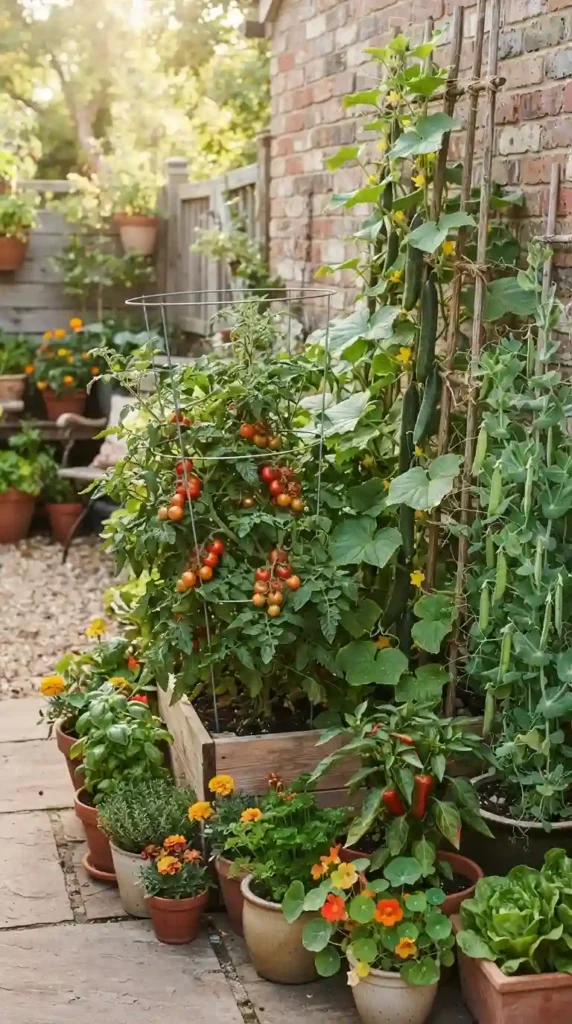
Spinach is a useful cool-season container crop.
It doesn’t require a particularly deep pot and can be harvested gradually by picking outer leaves.
Provide suitable temperatures and partial shade when conditions become hot.
11. Kale
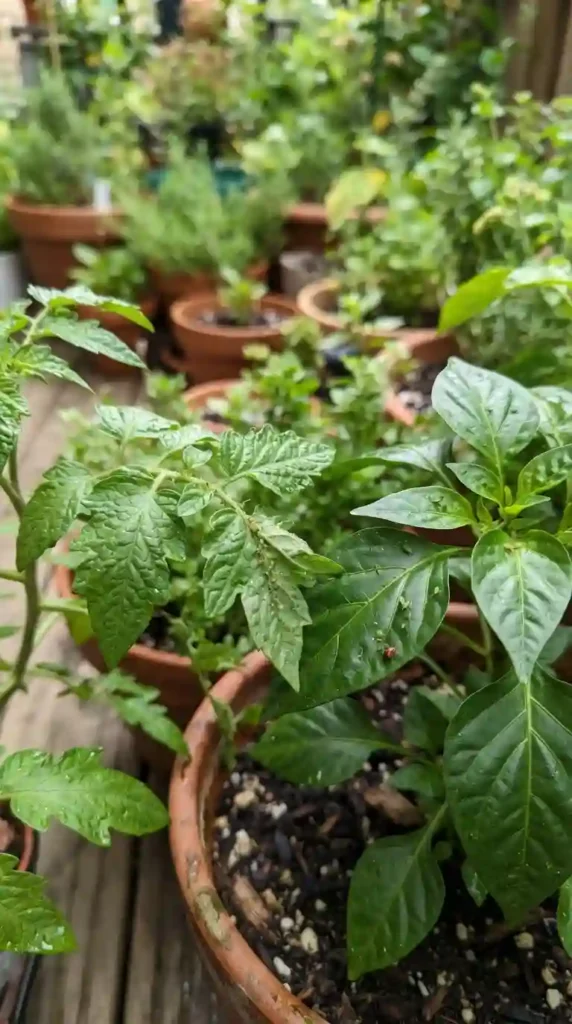
Kale is another excellent vegetable for containers.
It can produce a long harvest when leaves are harvested gradually.
Choose a container large enough to support mature plants and provide adequate drainage.
12. Swiss Chard
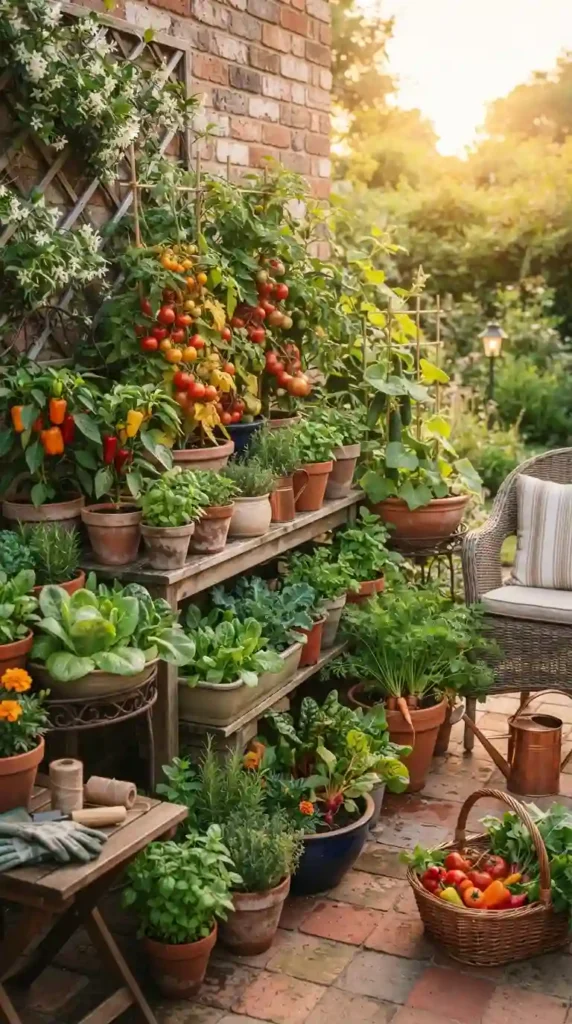
Swiss chard is both productive and attractive.
Its colorful stems can add visual interest to a patio or balcony garden.
Harvest individual outer leaves while allowing the center to continue producing new growth.
13. Arugula
Arugula grows quickly and works well in shallow containers.
Its peppery leaves are ideal for salads, sandwiches, and other dishes.
Sow small batches regularly for a continuous harvest.
14. Green Onions
Green onions require relatively little space.
They can grow in small containers or alongside other compatible crops.
Harvest the green tops as needed or grow them specifically for young onions.
15. Garlic
Garlic can be grown in containers as long as the pot is deep enough and drainage is good.
Plant individual cloves with the appropriate orientation and give them a sunny location.
Harvest timing depends on the variety and growing conditions.
16. Beets
Beets can grow successfully in containers with sufficient depth.
Both the roots and young leaves are edible.
Thin seedlings appropriately so the developing roots have enough space.
17. Turnips
Turnips are another root crop suitable for container gardening.
Choose a deep enough container and use loose growing medium.
Harvest young roots for a tender texture.
18. Broccoli
Compact broccoli varieties can grow in large containers.
Broccoli requires adequate nutrients, water, and sunlight.
Because mature plants can become fairly large, avoid overcrowding the container.
19. Cauliflower
Cauliflower can also be grown in containers when provided with enough space.
It generally needs consistent care and adequate nutrition.
Choose varieties appropriate for your growing season and climate.
20. Eggplant
Eggplant is a strong candidate for warm-season container gardening.
Compact varieties can produce attractive fruits in a large pot.
Provide full sun, consistent moisture, and support if necessary.
21. Bok Choy
Bok choy grows quickly and is well suited to containers.
It’s especially useful for cool-season gardening.
Harvest young plants for tender leaves or allow them to mature depending on the variety.
22. Collard Greens
Collards can produce substantial leaves in containers.
Choose a sufficiently large pot and harvest outer leaves gradually.
They perform best when temperatures aren’t excessively hot.
23. Mustard Greens
Mustard greens grow quickly and can provide flavorful leaves.
They work well in containers and can be harvested young for a milder flavor.
Plant them during cooler weather for better growth.
24. Turnip Greens
Turnip greens don’t require a huge amount of space.
Grow them in containers and harvest young leaves regularly.
If you’re also growing turnips for their roots, give the plants enough space to develop.
25. Scallions
Scallions are among the easiest vegetables for container gardening.
They need little space and can be grown in narrow pots, window boxes, or mixed containers.
Harvest individual stalks as needed.
How to Choose the Right Container
Choosing the right container is essential for successful vegetable gardening.
Container Depth
Root vegetables such as carrots and beets need deeper containers.
Leafy greens can generally grow in shallower pots.
Drainage
Every container should have adequate drainage holes.
Excess water can deprive roots of oxygen and contribute to root problems.
Material
Plastic, ceramic, fabric, wood, and other containers can work.
Each material has different characteristics regarding weight, moisture retention, and temperature.
Best Soil for Container Vegetables
Avoid filling vegetable containers with heavy garden soil alone.
A quality container growing medium provides better drainage and aeration.
Choose a mix designed for containers and consider the nutrient requirements of the crops you’re growing.
How Much Sun Do Container Vegetables Need?
Many fruiting vegetables, including tomatoes, peppers, cucumbers, eggplants, and beans, generally perform best with plenty of sunlight.
Leafy vegetables such as lettuce and spinach can tolerate less intense conditions and may benefit from some protection during hot weather.
Always check the specific requirements of your variety.
Container Vegetable Gardening Tips
Water Consistently
Containers can dry out faster than garden beds.
Check soil moisture regularly, especially during hot weather.
Fertilize Appropriately
Container plants have limited access to nutrients.
Depending on the growing medium and crop, supplemental fertilizer may be needed during the growing season.
Follow product instructions rather than applying excessive amounts.
Choose Compact Varieties
Look for terms such as:
- Patio
- Dwarf
- Compact
- Bush
- Miniature
These varieties are often easier to manage in containers.
Provide Support
Tomatoes, cucumbers, peas, and other climbing plants may require stakes, cages, or trellises.
Install support early so you don’t disturb established roots later.
Watch for Pests
Inspect leaves regularly for aphids, caterpillars, spider mites, and other pests.
Early detection makes problems easier to manage.
Final Thoughts
Growing vegetables in containers is an excellent way to produce fresh food when you don’t have a traditional garden.
From tomatoes, peppers, and cucumbers to lettuce, radishes, carrots, and green onions, there are plenty of vegetables that can thrive in pots when given suitable growing conditions.
The key is choosing the right container, providing good drainage, using an appropriate growing medium, and matching each vegetable with its sunlight and space requirements.
Start with a few easy crops, learn how your containers behave in your climate, and gradually expand your garden. With a little planning, even a small balcony or patio can become a productive container vegetable garden.