Beyond Pakistan vs India — The Other Hong Kong Sixes Groups Nobody Should Ignore
Everyone will be watching Pakistan against India — the biggest fixture in the tournament, on day one, featuring the defending champions against their fiercest rivals. But the Hong Kong Sixes 2026 is a 12-team tournament across four groups, and anyone who only watches Group C will miss most of the story.
The format first: why any group can explode
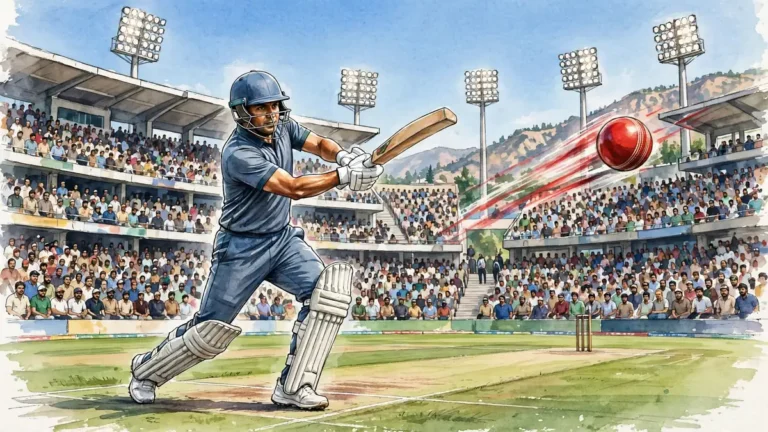
Before the groups, a quick reminder of why this tournament is so unpredictable: six players a side, six overs a side — 36 balls per innings, every player involved, no time to recover from a bad over.
In that format, reputation matters less than it does in a full T20. One batter in form can win a match alone, one bowler who lands two good overs can strangle a chase, and one dropped catch — with only six fielders — can be the difference between a trophy and an early flight home.
Our Hong Kong Sixes 2026 format explained guide sets out the rules in full, including how the short format changes tactics completely.
Group A: Australia, England, Hong Kong, China
Group A is the group of old rivalries and home hope. Australia and England need no introduction to each other, and in a six-a-side shootout their rivalry becomes even more volatile — no long-format safety net, just two proud cricket nations swinging from ball one.
The hosts are the group’s most interesting subplot: Hong Kong, playing at home at Tin Kwong Road, carry local support and local knowledge no visiting team can match.
China complete the group — exactly the kind of team the Sixes format is built for, since with only six players needed, a developing nation can compete far more credibly than in an eleven-a-side match.
Group B: Bangladesh, Scotland, Sri Lanka
Group B is the most open group in the tournament — and therefore the most dangerous for anyone predicting the semi-finalists. With only three teams, every match carries huge weight and there is no room for a bad day.
Sri Lanka bring Sixes pedigree and a style that suits the format: inventive batting and clever variations. Bangladesh bring passion, power and a habit of rising for big occasions. Scotland bring organisation, discipline and a team that knows how to punch above its weight in short formats.
In a three-team group, the maths is brutal: lose first and you are immediately chasing the tournament; win and you are one result from the knockouts. Expect Group B to be decided late, with at least one surprise result.
Group C: India, Pakistan, UAE — the headline group
Group C is the group everyone knows. Defending champions Pakistan, six-time winners, face India on 30 October, listed at 11:15am HKT / 8:45am IST, in the fixture that sets the tone for the whole weekend.
Pakistan’s title defence is led by captain Muhammad Abbas Afridi, whose 52 off 11 balls won last year’s final against Kuwait by 43 runs. The full schedule and groups guide covers the champions’ fixtures in detail.
India, now captained by Krunal Pandya after Bhuvneshwar Kumar joined India’s New Zealand T20I squad, then face the UAE on 31 October, listed at 7:35am HKT / 5:05am IST. The UAE should not be overlooked either: in a six-over match, a team with nothing to lose and two hitters in form can beat anyone on a given morning.
Group D: South Africa, Afghanistan, Oman
Group D might just be the group of death. South Africa bring athleticism, power hitting and a fast-bowling tradition that translates well to any format. Afghanistan bring the most exciting brand of fearless cricket in the world game right now. Oman bring structure, experience in Asian conditions and a team that knows how to win short-format games against bigger names.
Another three-team group means the same brutal maths as Group B: no second chances, every ball carrying knockout weight. Afghanistan in particular are a nightmare Sixes opponent — their batters attack from the first ball, their bowlers have the variations to survive when batters are swinging, and they play with a freedom that suits a festival tournament perfectly.
South Africa will start as favourites in the group, but favourites have a poor record of comfort in Hong Kong. In a six-a-side game, the gap between favourite and underdog shrinks to almost nothing — and Group D is where that truth is most likely to bite.
The bottom line
The tournament runs from 30 October to 1 November. The headline fixture gets the attention — but the trophy is won across all four groups, and the team that lifts it will have survived far more than one big match. See our Hong Kong Sixes players to watch guide for the names most likely to light up the weekend.





One Comment