The Two-Day Ashes Test: Head’s 69-Ball Hundred, Starc’s Ten Wickets and England’s Nightmare in Perth
The first Ashes Test of the 2025-26 series lasted just two days — and it produced one of the most extraordinary days in the history of the rivalry. Australia beat England by eight wickets at Optus Stadium in Perth on Saturday, chasing 205 in just 28.2 overs after a day of chaos that saw both sides collapse and then one man turn the match on its head.
It was the first Ashes Test to finish inside two days in 100 years. And it was decided, in the end, by a makeshift opener playing the innings of his life.
Head’s hundred turns the Test
Travis Head was not supposed to open the batting. The left-hander was promoted from No. 5 to partner debutant Jake Weatherald only because veteran Usman Khawaja was still suffering the back spasms that had kept him off the field on the first day. What followed was one of the great Ashes innings.
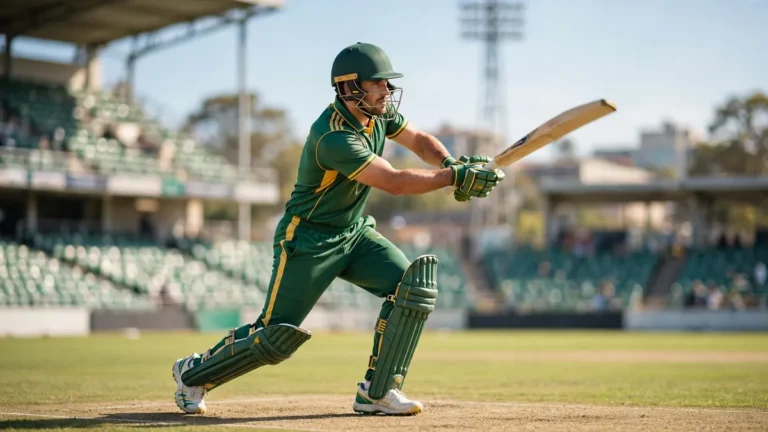
Chasing 205 to win, Head smashed 123 off just 83 balls, reaching his hundred off 69 balls — the fastest fourth-innings century in Test history and the fastest Ashes century ever by an opener. He struck 16 fours and four sixes, taking England’s express quicks apart all around Perth Stadium, and was only dismissed by Brydon Carse with 13 runs still needed. Marnus Labuschagne finished unbeaten on 51, and captain Steve Smith hit the winning runs.
England head coach Brendon McCullum could only applaud. He called it “one of the best knocks I’ve seen” — high praise from the man who invented the aggressive batting style Head used to destroy his own team.
Starc’s ten wickets set it up
If Head won the match, Mitchell Starc set it up. The left-arm quick took a career-best 7 for 58 in England’s first innings and added 3 for 55 in the second, finishing with a ten-wicket match haul for the third time in his career and taking the player-of-the-match award.
England’s batting told the story of the match. They were bowled out for 172 in the first innings, with Harry Brook’s 52 the only fifty of the match for the visitors, and then collapsed in the second. At 1-65 just after lunch on day two, with a lead of 105, England looked headed for a win that would have ended a 15-Test winless streak in Australia stretching back to January 2011.
Instead, they lost 6 for 39 in 11 overs and 9 for 105 in the second session, bowled out for 164 in 34.4 overs. Scott Boland took 4 for 33, Ben Stokes took 5 for 23 with the ball but could not save his side with the bat, and Gus Atkinson’s 37 was England’s second-highest score of the innings. It was a collapse of historic proportions — and it handed Australia a target they never looked like missing.
A Test like no other
The numbers from Perth barely seem real. The first three innings of the match all started with a wicket falling on the first ball — the first time that has ever happened in Test history. Only one England batter passed fifty in the entire match. And Australia, who had been bowled out for 132 in their first innings to concede a 40-run lead, won the match by eight wickets inside six sessions.
It was, as one Australian report put it, a Test match that belonged to a long-ago time of uncovered wickets — except that it happened on a hard Perth pitch that offered some seam but hardly any swing. Both teams will look back at the match and wonder how they lost it, and how they won it, in the space of a single session.
What it means for the series
Australia lead the five-match series 1-0, and the momentum is entirely with the hosts. The second Test is at the Gabba in Brisbane from 4 December, and there is encouraging news for Australia: captain Pat Cummins is a strong chance to return after missing the opener.
For England, the questions are familiar and uncomfortable. The batting collapsed twice, the bowling could not defend 205 on a good pitch, and the winless streak in Australia now stretches to 16 Tests. McCullum’s side have talked all tour about playing their own way; in Perth, Australia played it better. The next big date on the cricket calendar is the IPL 2027 auction, with 1,220 players registered — but for England, the only date that matters now is 4 December, and the Gabba.
India face a similar winner-takes-all decider of their own this week, with the second Test against New Zealand starting on Friday in Christchurch. South Africa’s innings win over Bangladesh showed what a ruthless home side can do when it smells blood — and in Perth, Australia did exactly that.